For beekeepers, hive management isn’t just about honey production—it’s about creating an environment where colonies thrive. One often-overlooked detail, the center hole in inner covers, plays a pivotal role in hive thermodynamics, colony resilience, and seasonal adaptability. This article breaks down the science behind this design feature and its practical benefits, backed by expert insights and real-world applications.
The Role of the Center Hole in Hive Thermodynamics
Bees are masterful architects of microclimates. The center hole in inner covers isn’t just a passive opening; it’s a strategic tool for thermoregulation and air exchange.
How Bees Use Airflow for Thermoregulation
Research shows that bees actively regulate hive temperatures to maintain brood health. The center hole:
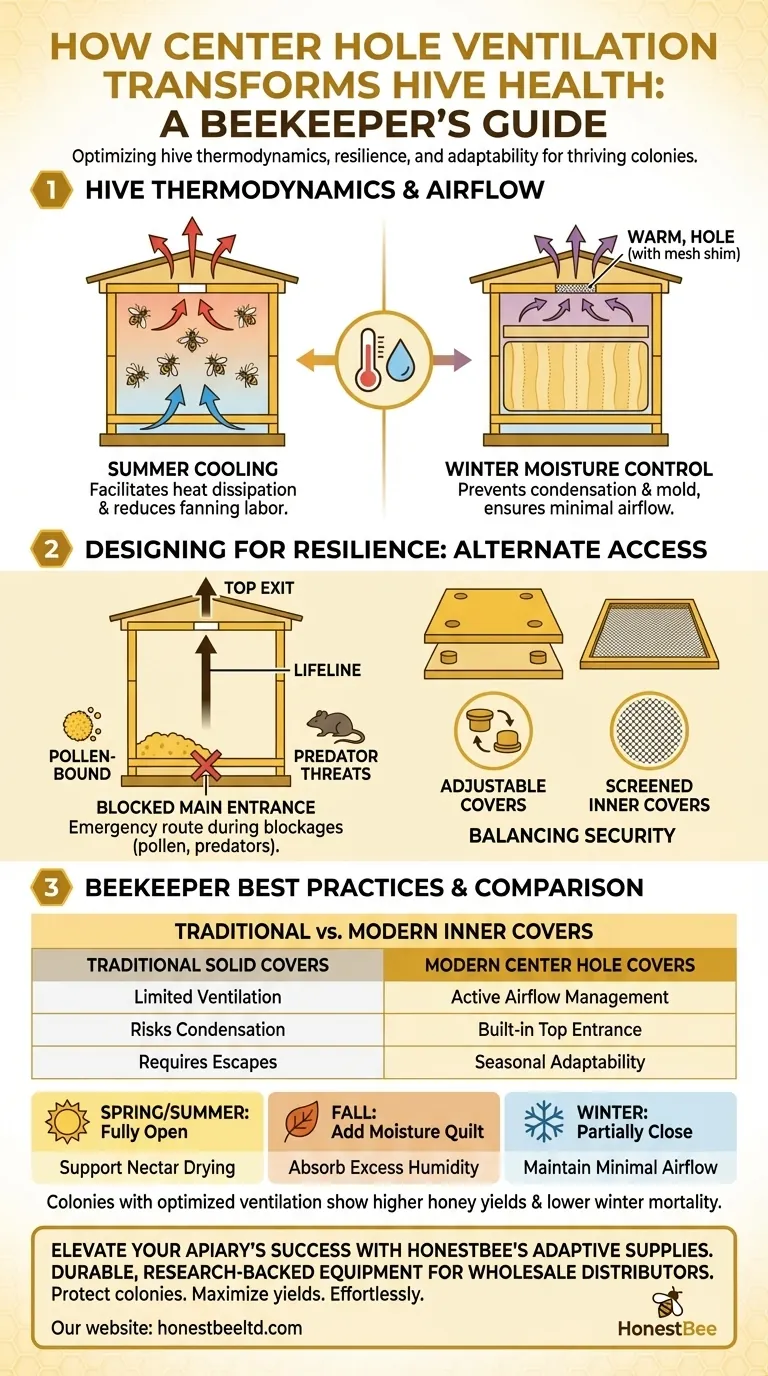
- Facilitates heat dissipation in summer by allowing hot air to rise and escape.
- Reduces moisture buildup in winter, preventing condensation that can lead to mold or chilled brood.
Without proper ventilation, hives can overheat (causing wax meltdowns) or trap excess humidity (weakening bee immunity).
Summer Cooling vs. Winter Condensation Risks
- Summer: Open center holes mimic natural tree cavities’ airflow, reducing fanning labor for worker bees.
- Winter: Partially blocking the hole (with mesh or a shim) maintains airflow while minimizing cold drafts.
Pro Tip: In humid climates, a center hole with an upper entrance reduces condensation-related diseases like nosema.
Designing for Resilience: Alternate Access Points
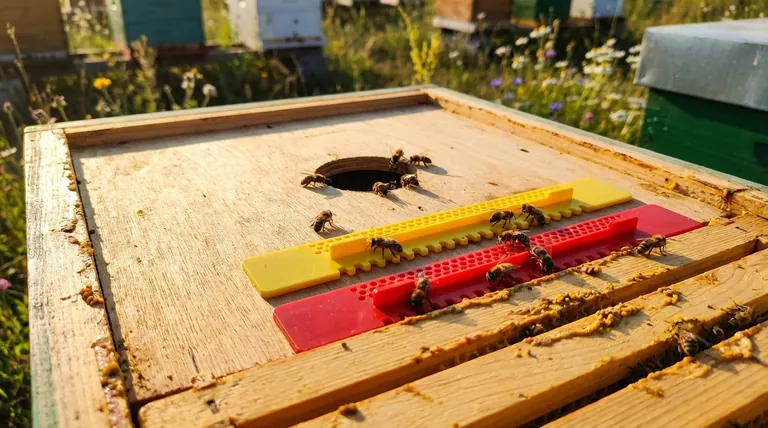
A blocked main entrance can spell disaster for a colony. The center hole serves as a lifeline during emergencies, offering bees an alternate route.
Case Studies: Blocked Entrances and Colony Survival
- Pollen-bound entrances: During heavy pollen flows, bees clog main entrances. A top exit prevents traffic jams.
- Predator threats: Mice or wasps blocking the front? The center hole lets bees bypass the obstruction.
Balancing Ventilation and Hive Security
While ventilation is critical, unchecked openings can invite robbers or pests. Solutions include:
- Adjustable covers: Use removable plugs or reducers for seasonal control.
- Screened inner covers: Allow airflow while deterring invaders.
Comparative Insights and Beekeeper Best Practices
Traditional vs. Modern Inner Cover Designs
| Feature | Traditional Solid Covers | Modern Center Hole Covers |
|---|---|---|
| Ventilation | Limited, risks condensation | Active airflow management |
| Harvesting | Requires additional escapes | Built-in top entrance utility |
| Flexibility | Static design | Seasonal adaptability |
Expert Recommendations for Seasonal Adjustments
- Spring/Summer: Fully open the hole to support nectar drying and cooling.
- Fall: Add a moisture quilt above the inner cover to absorb excess humidity.
- Winter: Partially close the hole but ensure minimal airflow remains.
Did you know? Colonies with optimized ventilation show higher honey yields and lower winter mortality rates.
Elevate Your Apiary’s Success with Smart Ventilation
The center hole is a small feature with outsized impact—enhancing bee health, simplifying hive checks, and boosting productivity. For commercial apiaries, investing in adaptive inner covers means fewer losses and more consistent harvests.
Ready to optimize your hive’s performance? Explore HONESTBEE’s durable, research-backed beekeeping supplies designed for wholesale distributors and large-scale operations. From ventilated inner covers to seasonal maintenance kits, our equipment helps you protect colonies and maximize yields—effortlessly.
Because in beekeeping, the smallest details often deliver the biggest returns.
Visual Guide
Related Products
- Stainless Steel Round Beehive Air Vents for Ventilation
- Inner Beehive Cover for Beekeeping Bee Hive Inner Cover
- Professional Reversible Beehive Hive Entrance
- Steel Round Disc Entrance Reducer for Flexzion Bee Hive Nuc Box Gate
- Professional Insulated Plastic Bee Hives
Related Articles
- How to Optimize Beehive Ventilation: Prevent Disease and Boost Colony Health
- The Silent Killer in the Hive: Why Moisture, Not Cold, Is Winter's Greatest Threat
- Beyond the Bee Box: Why Your First Apiary Investment Determines Your Success
- The Precision of Chaos: Navigating the Biological Risks of Commercial Beehive Transportation
- Beyond the Box: Why Hive Architecture Is Your Apiary's Core Operating System