The Harvest's Imperfect Truth
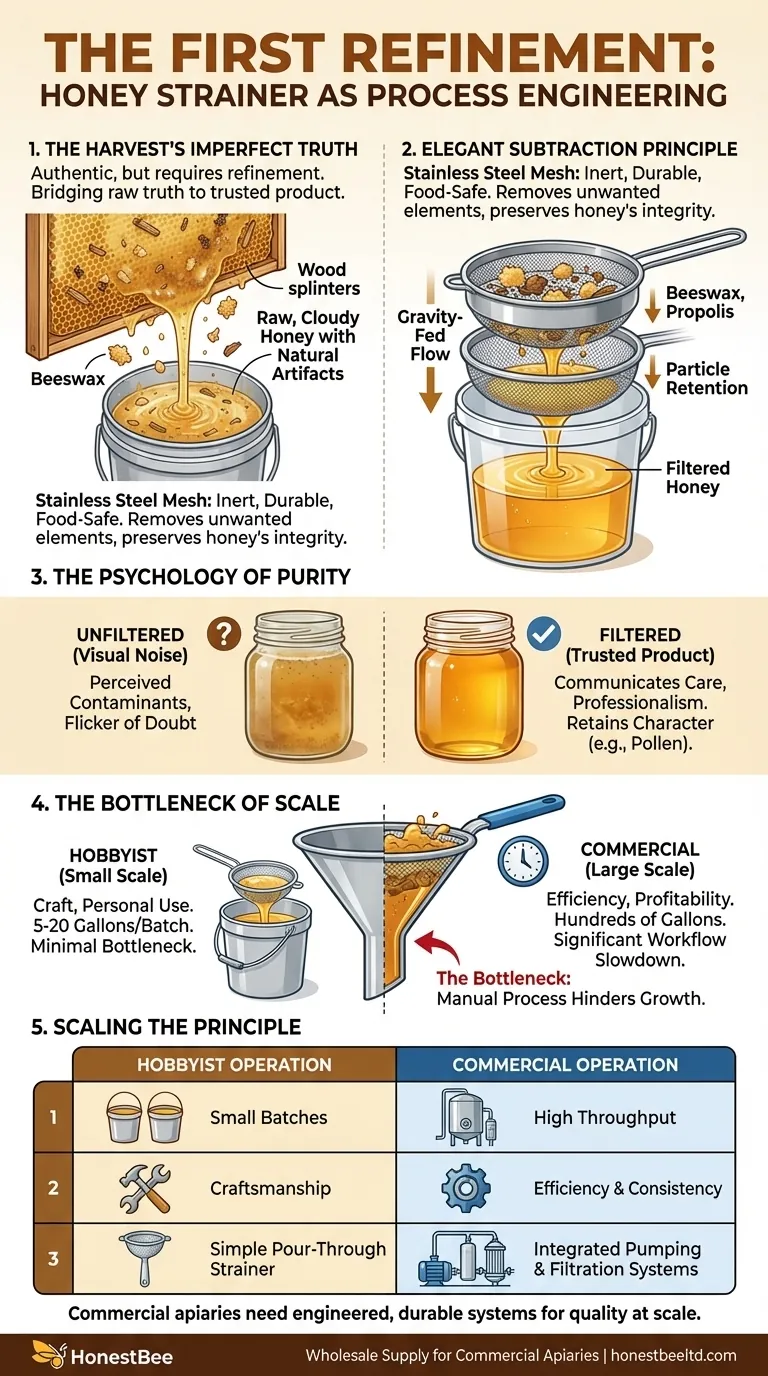
After a long season of tireless work—from the bees and the beekeeper—comes the harvest. The reward is a bucket of liquid gold, fresh from the extractor. But it’s not the pristine, clear honey you see on a store shelf.
It’s cloudy. It contains tiny specks of beeswax, fragments of propolis, wood splinters from the frames, and other natural artifacts from the hive.
This isn’t a sign of failure. It’s a sign of authenticity. This raw, unfiltered state is the starting point. The fundamental challenge for every beekeeper, from the backyard hobbyist to the commercial apiary, is bridging the gap between this raw truth and a refined, trusted product. The first step in that journey is a deceptively simple tool: the honey strainer.
The Principle of Elegant Subtraction
At its core, a honey strainer is a tool of subtraction. It is designed to remove what doesn't belong without altering what does.
A Simple, Effective Design
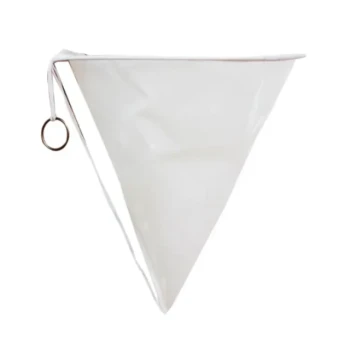
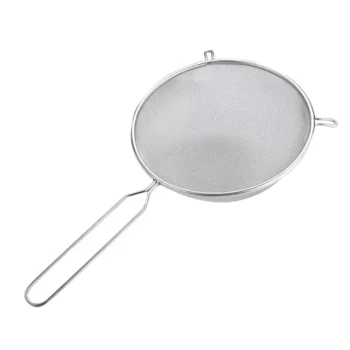
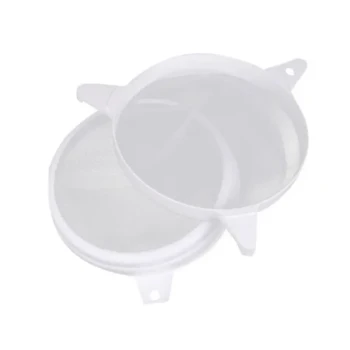
The mechanics are beautifully straightforward. A stainless steel mesh screen is set within a frame, which rests perfectly on a standard food-grade bucket. Raw honey is poured through the top.
Gravity does the work. The liquid honey passes through, while the larger, unwanted particles—the evidence of the hive's beautiful, messy process—are caught in the mesh. It’s a physical gatekeeper, separating the product from the process.
The Right Tool for the Job
The choice of materials is not accidental. Stainless steel is the standard for the mesh because it is inert, food-safe, durable, and easy to clean. It imparts no flavor and withstands the slight acidity of honey, ensuring the purity of the product batch after batch. It’s a small detail that reflects a commitment to quality.
The Psychology of Purity
Why is this simple step so critical? Because we don't just buy food; we buy trust.
A consumer expects honey to be a clear, glistening liquid. Visible flecks, no matter how natural, can be perceived as contaminants. They introduce a question, a flicker of doubt, into the consumer’s mind.
Straining is an act of communication. It tells the customer, "This product has been cared for. It has been prepared professionally." It removes visual noise, allowing the honey's natural color and quality to shine through. It’s the difference between a homemade craft and an artisanal product.
Crucially, standard straining does not remove the microscopic elements that make honey what it is, like pollen. This differentiates it from industrial ultra-filtration, a process that strips honey of its character. Straining cleans; it doesn't sterilize.
The Bottleneck of Success: When Simplicity Meets Scale
The honey strainer is the perfect solution for the hobbyist or small-scale beekeeper. For processing a few gallons, its manual nature is part of the craft.
But what happens when success means you're no longer processing a few gallons, but hundreds?
The elegant, simple tool becomes an elegant, simple bottleneck. The very process that ensures quality at a small scale now hinders growth. Time spent slowly pouring batch after batch is time that isn't spent managing hives or the business. For a commercial operation, this is an engineering problem that must be solved.
Scaling the Principle, Not Just the Tool
Commercial apiaries and distributors face a different set of challenges. The goal isn't just to produce clean honey, but to do so consistently, efficiently, and at a large volume.
| Feature | Hobbyist Operation | Commercial Operation |
|---|---|---|
| Volume | Small batches (e.g., 5-20 gallons) | High throughput (e.g., hundreds of gallons) |
| Priority | Craftsmanship, personal use | Efficiency, consistency, profitability |
| Bottleneck | Minimal; part of the process | Significant; slows down the entire workflow |
| Equipment | Simple Pour-Through Strainer | Integrated Pumping & Filtration Systems |
Large-scale operations don't abandon the principle of straining; they engineer a more robust system to execute it. They require durable, high-throughput equipment that maintains the integrity of the honey while meeting the demands of production. The foundational lesson taught by the humble strainer—the importance of the first refinement—remains the core principle.
For businesses built on the promise of quality at scale, having a reliable supply of professional-grade equipment is not a luxury; it's the bedrock of your operation. As a wholesale supplier, HONESTBEE is dedicated to providing commercial apiaries and equipment distributors with the durable, food-grade supplies needed to turn a passion into a profession.
Ready to move beyond the bottleneck and scale your operations with equipment designed for performance and reliability? Contact Our Experts
Visual Guide
Related Products
- Stainless Steel Triangle Support Honey Strainer and Filters
- Nylon Honey Strainer Square Filter Cloth for Honey Filters
- Professional Cone-Shaped Honey Filter with Reinforced Steel Ring
- Stainless Steel Double Layer Honey Strainer Sieve Filters
- Conical Nylon Honey Strainer Filter Bag for Beekeeping and Honey Filtration
Related Articles
- The Last Gate: Why a Simple Strainer Defines Honey Quality at Any Scale
- How to Strain Honey Like a Pro: Science-Backed Methods for Maximum Purity
- The Unseen Bottleneck: How Strainer Mesh Size Dictates Your Honey Harvest's Success
- The Strainer's Dilemma: How Simple Filtration Defines Your Honey's Identity
- Clarity and Craft: The Critical Role of the Honey Strainer in Beekeeping