The Catastrophic Sound of a Misunderstood Force
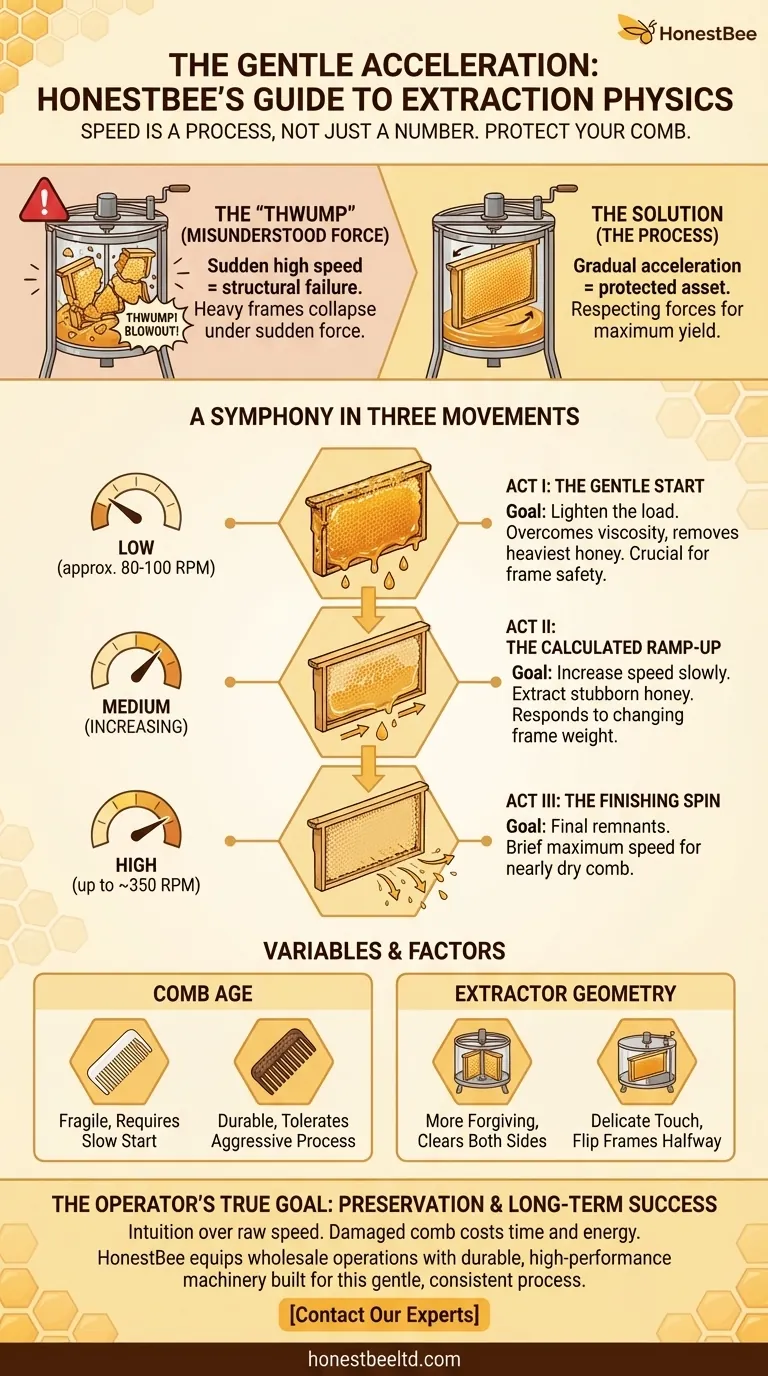
It's a sound every beekeeper dreads. A dull, wet thwump from inside the spinning extractor, followed by a sudden imbalance. You kill the power and open the lid, only to find a shattered, mangled frame—a beautiful work of wax architecture reduced to ruin.
This isn't a mechanical failure. It's a failure to understand physics.
The most common mistake in honey extraction is a psychological one: we equate speed with efficiency. We want the job done fast, so we crank up the dial. But in the world of beekeeping, true efficiency comes not from raw speed, but from a deep respect for the delicate balance of forces at play.
The Invisible Force in the Drum
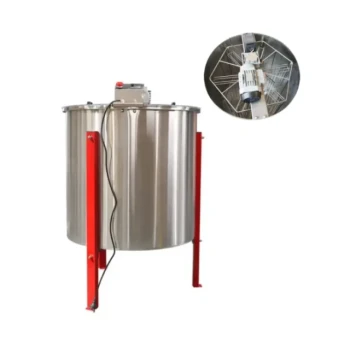
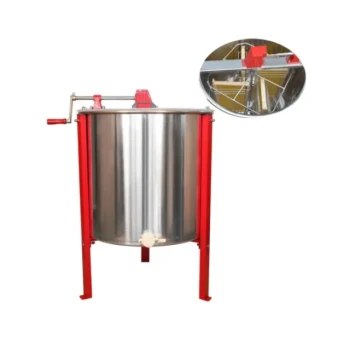
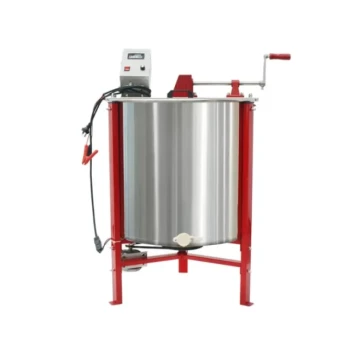
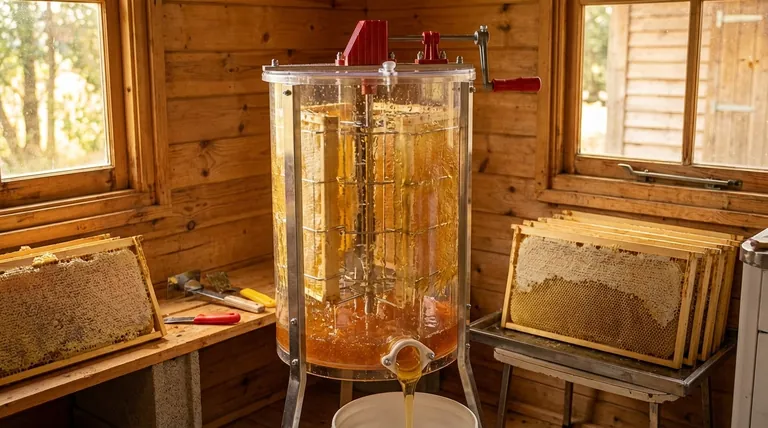
A honey extractor doesn't "suck" the honey out. It uses centrifugal force to sling it out. Think of it as creating artificial gravity that pulls the honey outward, away from the center of the frame.
The problem is, this force acts on everything—the honey and the wax comb holding it. A full frame of honey is heavy. When you start the spin, the comb must bear the entire inertial load of that honey.
Starting at high speed is like flooring the accelerator with a heavy, unsecured load in the back of a truck. The force is too sudden, the stress too great. The delicate wax walls, the very foundation of the hive's future, collapse under the weight of the treasure they hold.
A Symphony in Three Movements
The correct approach isn't a single setting, but a process—a gradual acceleration that works with the physics, not against it. Think of it as a three-act play.
Act I: The Gentle Start (approx. 80-100 RPM)
The first spin is the most critical. At this slow speed, the centrifugal force is just enough to overcome the honey's viscosity and start slinging out the heaviest portion from the cells.
This initial stage dramatically lightens the frame, relieving the immense structural stress on the wax. You are not trying to get all the honey out. You are simply making it safe to proceed.
Act II: The Calculated Ramp-Up
As the frame lightens, the comb can withstand greater force. Now, you can begin to slowly and smoothly increase the rotational speed.
This gradual increase allows you to extract the more stubborn honey clinging to the cell walls without introducing the sudden, destructive shock that causes blowouts. You are observing the flow, listening to the machine, and responding to the changing weight of the frames.
Act III: The Finishing Spin (up to ~350 RPM)
Maximum speed should only be used briefly, at the very end of the cycle. This final, powerful spin extracts the last remnants of honey, leaving the comb nearly dry.
Applying this force too early is the classic mistake. By waiting until the comb is light and structurally secure, you get maximum yield without risking the asset itself.
Why Your Numbers Will Vary
The RPM numbers are just a guide. The actual force depends on several variables, forcing the operator to think like an engineer, not just a machine operator.
-
The Age of the Comb: Newly drawn, white wax is incredibly fragile. It requires a slower start and a more patient ramp-up. Older, darker brood comb, reinforced over seasons with pupal cocoons, is far more durable and can tolerate a more aggressive process.
-
The Scale of the Machine: A larger diameter extractor generates significantly more force at the same RPM as a smaller one. A 350 RPM spin on a small hobbyist extractor might feel gentle, while the same speed on a large commercial machine could be catastrophic.
-
The Geometry of Extraction:
- Radial extractors spin frames with the top bar facing out, clearing both sides at once. They are generally more forgiving.
- Tangential extractors place one side of the comb facing out. This requires an even more delicate touch. You must spin the first side very slowly to remove about half the weight, then flip the frames to extract the second side, before flipping back to finish the first.
The Operator's True Goal
Ultimately, mastering the honey extractor is about developing an intuition. It’s about trading the desire for speed for a focus on preservation. Damaged comb costs time and honey production in the long run. The bees must spend energy rebuilding wax instead of foraging for nectar.
For commercial apiaries, this isn't just a craft—it's a crucial economic calculation. A reliable, well-designed extractor isn't just a capital expense; it's risk management. It’s the tool that allows skilled operators to apply these physical principles consistently across thousands of frames, protecting the hive's most valuable asset season after season. At HONESTBEE, we equip wholesale operations with precisely this kind of durable, high-performance machinery, built for those who understand that long-term success is a gentle acceleration.
Visual Guide
Related Products
- HONESTBEE 72 Frame Industrial Electric Honey Extractor for Beekeeping
- Commercial Electric 12 Frame Honey Extractor Spinner Motorized Honey Extractor
- HONESTBEE 3-Frame Manual Acrylic Honey Extractor
- electric honey extractor honey centrifuge 3 frame honey extractor stainless steel honey frame extractor
- HONESTBEE 6 Frame Self Reversing Electric Honey Extractor for Beekeeping
Related Articles
- How to Clean Your Honey Extractor Safely Without Compromising Honey Quality
- Beyond the Harvest: The Critical Discipline of Cleaning Your Honey Extractor
- How to Prevent Honey Extractor Failures: Balancing Loads and Choosing Durable Frames
- How to Harvest Honey Efficiently While Protecting Bee Health
- The Bottleneck in the Bee Yard: How Extractor Physics Dictates Apiary Scale