The Tale of Two Hives
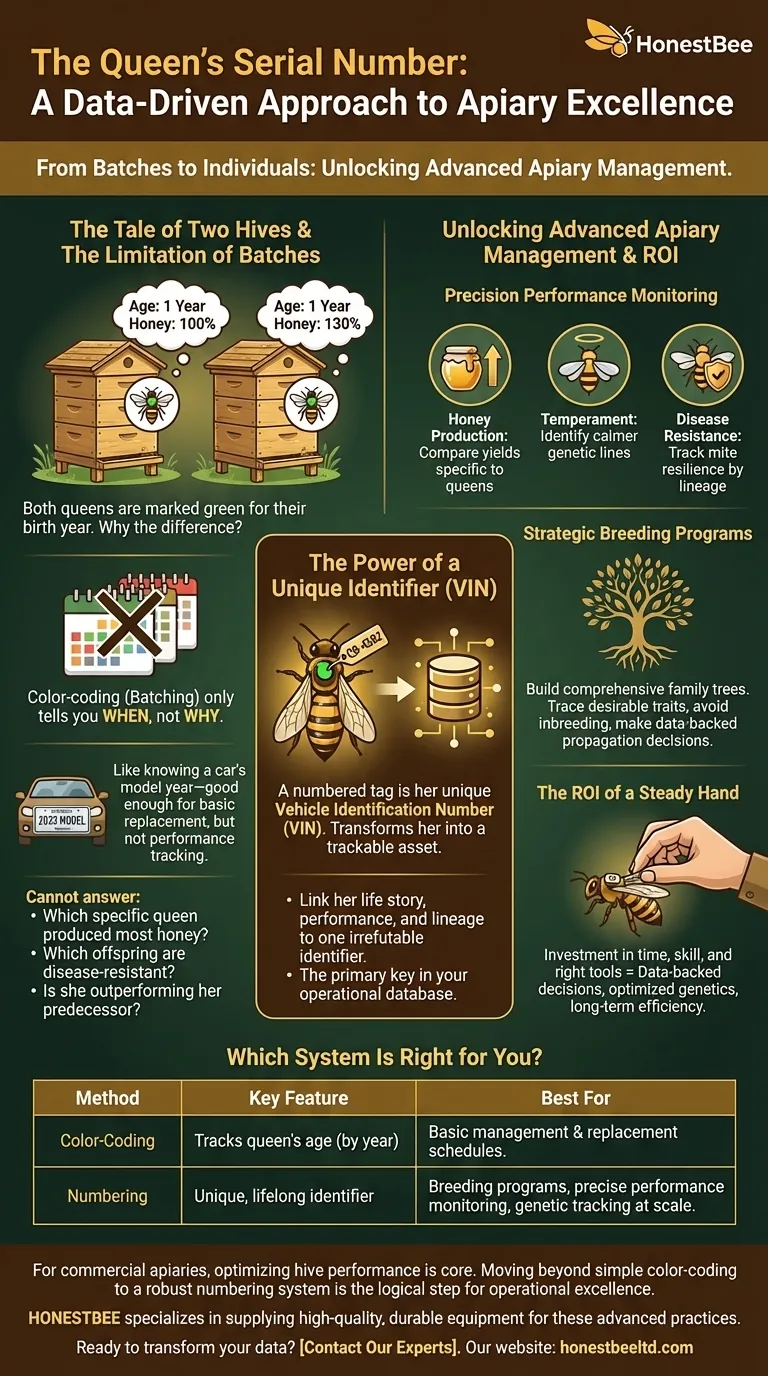
Imagine a commercial beekeeper standing between two hives. Both are thriving. Both queens were introduced last spring, marked with the same confident green dot, indicating their birth year.
Yet, one hive consistently produces 30% more honey. Its colony is calmer, more resilient to varroa mites. The other, despite having a queen of the same age and stock, lags behind.
The green dot tells the beekeeper when the queen started. It tells him nothing about why her colony performs differently. This is the fundamental limit of a simple system. It's the moment a beekeeper realizes they are not just managing an age bracket; they are managing individuals.
The Cognitive Cost of Precision
The human mind prefers simplicity. Color-coding queens is an elegant, industry-standard system that is easy to implement and understand. It provides "good enough" data for many.
Moving to a numbered system introduces friction. It requires more time, a steadier hand, specialized equipment, and a small but real risk to the queen. It feels like an unnecessary complication.
This is a classic psychological trap: we often favor the immediate comfort of a simple system over the long-term, compounding benefits of a more complex one. But for a commercial operation, "good enough" data eventually becomes a ceiling on growth and efficiency.
From Batches to Individuals: The VIN Number for Your Queen
The shift from color-coding to numbering is a systemic leap. It's the difference between knowing a car's model year and knowing its unique Vehicle Identification Number (VIN).
The Limitation of Batches
Color-coding is a batching system. Every queen born in a year shares the same color. It's excellent for answering one question: "Is this queen old enough to be replaced?"
But it cannot answer more valuable questions:
- Which specific queen produced my most productive hive last year?
- Which queen's offspring shows the highest disease resistance?
- Is this new queen outperforming the one she replaced, or is she underperforming?
The Power of a Unique Identifier
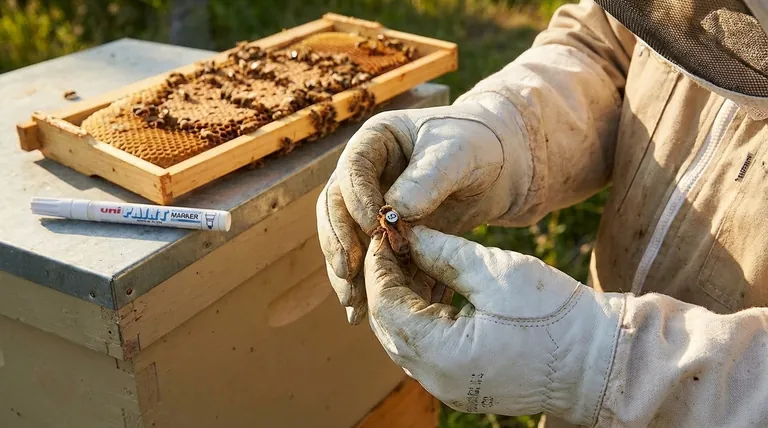
A numbered tag transforms the queen from an anonymous member of a cohort into a distinct, trackable asset. Her number becomes a primary key in your operational database.
You can now link her entire life story—and the performance of her colony—to a single, irrefutable identifier.
Unlocking Advanced Apiary Management
This shift from batch-level to individual-level data unlocks a new tier of professional beekeeping. It turns intuition into measurable insight.
Precision Performance Monitoring
With numbered queens, you can run A/B tests on your genetics. You can definitively track metrics over a queen's entire lifecycle:
- Honey Production: Compare yields between colonies led by specific queens.
- Temperament: Note which genetic lines produce calmer, more manageable bees.
- Disease Resistance: Track mite counts and resilience to chalkbrood, linking it directly to the queen's lineage.
Strategic Breeding Programs
For any operation involved in queen rearing, unique identifiers are non-negotiable. Numbering allows you to build a comprehensive family tree for your apiary. You can:
- Trace desirable traits across multiple generations.
- Avoid inbreeding with certainty.
- Make data-backed decisions on which genetic lines to propagate, optimizing for the traits most valuable to your business.
The ROI of a Steady Hand
The decision to number queens is an investment decision, not just a procedural one. The upfront costs are time, skill development, and the right tools. The risk of handling the queen is real, but manageable with proper technique and equipment.
The return on this investment is the ability to make decisions that were previously impossible. It's the difference between guessing which hives are your best and knowing which genetic lines build the foundation of your entire operation.
This level of professionalism demands reliable tools. Applying a numbered disc requires non-toxic adhesive and precisely manufactured tags, supplied by partners who understand the stakes of commercial beekeeping.
Which System Is Right for You?
The right record-keeping method is the one that serves your operational goals.
| Method | Key Feature | Best For |
|---|---|---|
| Color-Coding | Tracks queen's age (by year) | Basic management and replacement schedules. |
| Numbering | Provides a unique, lifelong identifier | Breeding programs, precise performance monitoring, genetic tracking at scale. |
For commercial apiaries and distributors who supply them, optimizing hive performance is the core of the business. Moving beyond simple color-coding to a robust numbering system is the logical next step toward operational excellence. HONESTBEE specializes in supplying the high-quality, durable equipment needed to implement these advanced practices reliably and at scale.
If you are ready to transform your data from a simple age indicator into a powerful management tool, we have the tools you need. Contact Our Experts
Visual Guide
Related Products
- Premium Nicot Style Cell Bar Holder and Queen Cell Cup Holder System
- JZBZ Langstroth Queen Rearing Frame for Beekeeping
- Plastic Long Marker Device for Catching and Marking Bees Queen Bee Marking Tube and Cage
- No Grafting Queen Rearing Kit: System for Royal Jelly Production and Queen Rearing
- Queen Bee Marking Tube Cage Bottle Catcher Holder with Clear Plastic Plunger Marker
Related Articles
- How to Replace Queen Cells in Nucleus Hives Without Triggering Bee Drifting
- The Bottleneck in the Apiary: How Cell Cup Choice Dictates Queen Rearing at Scale
- How to Successfully Introduce Queen Cells to Beehives: A Beekeeper’s Guide
- Manufacturing Royalty: The Precise Architecture of Queen Rearing
- The Architect of the Hive: Turning Queen Rearing from Art to Engineering