The Optimism of a Busy Hive
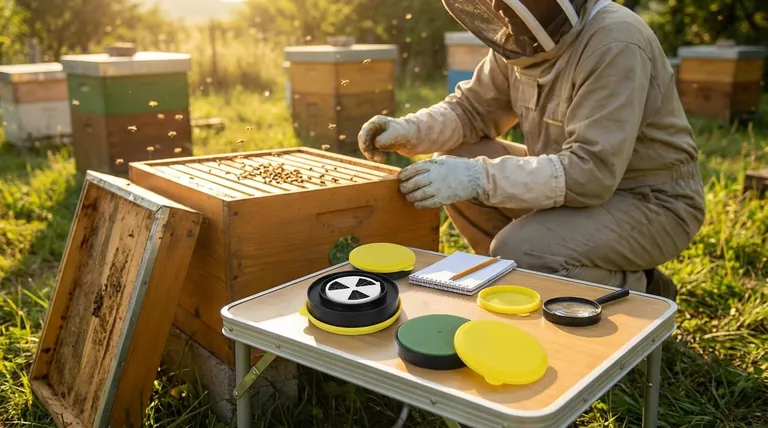
It’s a familiar scene in late summer. A hive boils with activity. Bees pour from the entrance, foragers returning heavy with pollen. The colony looks strong, productive—invincible.
Then, weeks later, it’s silent. The population has crashed, the brood pattern is gone, and the colony is too weak to survive winter.
This isn't a random tragedy. It's a failure of perception. We are psychologically wired to trust what we see, and a busy hive looks healthy. The greatest threat to that hive, however, operates on a level we cannot see.
The Cognitive Trap of Visual Inspection
The Varroa destructor mite does its most devastating work out of sight, within the sealed brood cells. It feeds on the developing bees, weakening them and transmitting deadly viruses.
By the time a colony looks sick—with signs like deformed wings or a dwindling population—the infestation has already crossed a critical threshold. The damage is done.
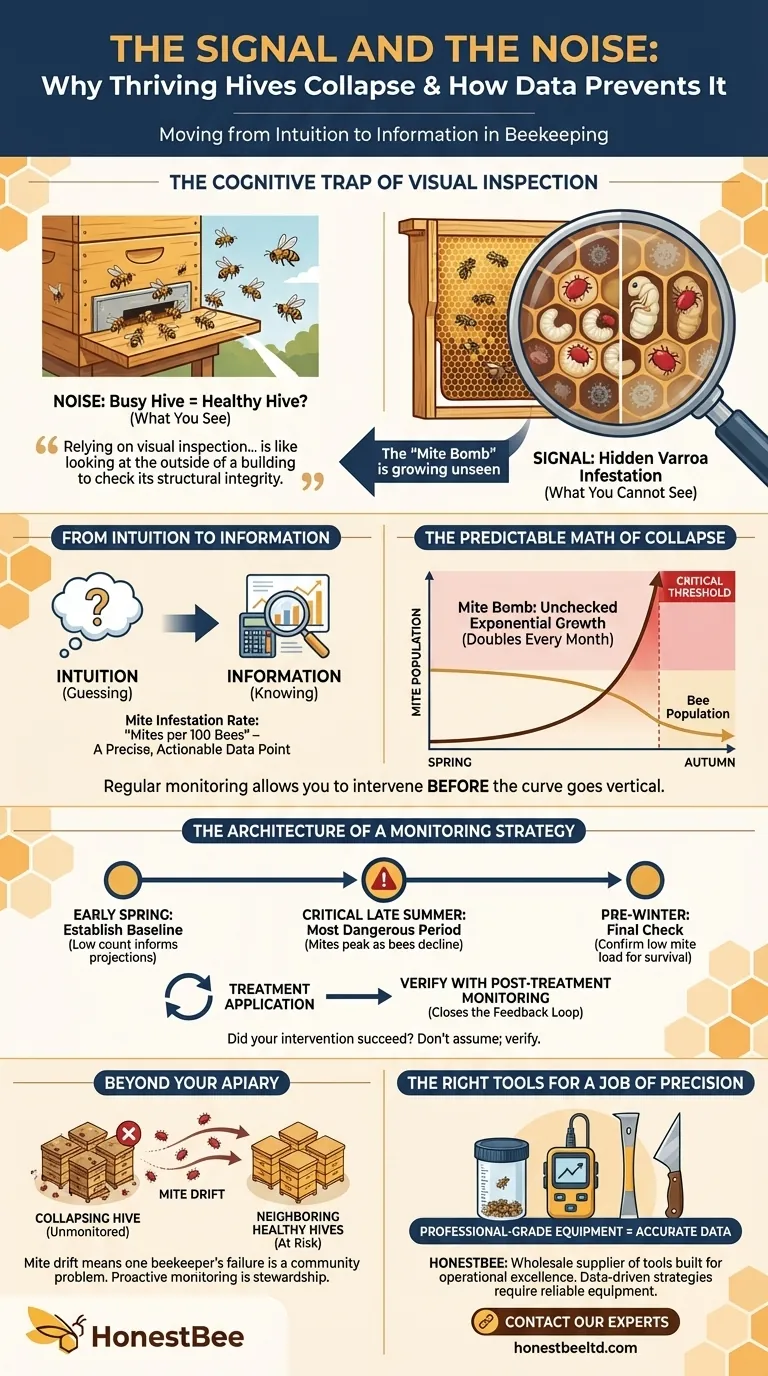
Relying on visual inspection to gauge Varroa levels is like looking at the outside of a building to check its structural integrity. The activity you see is noise; the underlying mite count is the signal.
From Intuition to Information
Effective beekeeping requires a shift in mindset: from relying on intuition to gathering hard data. The goal is to measure what matters, not just what is visible.
Finding the Signal: A Quantifiable Metric
Mite monitoring techniques, like an alcohol wash or a powdered sugar roll, provide a precise, actionable number: the mite infestation rate, often expressed as "mites per 100 bees."
This number isn't an estimate or a feeling. It is a data point. It allows you to move from guessing to knowing, enabling you to act based on established scientific thresholds for treatment. It’s the difference between being a passenger and a pilot.
The Predictable Math of Collapse
A "mite bomb"—the sudden, catastrophic collapse of a seemingly strong colony—is not a surprise attack. It is the predictable outcome of unchecked exponential growth.
Mite populations double roughly every month inside the brood. A small, harmless-seeming population in spring can become an overwhelming force by autumn. Regular monitoring allows you to see the growth curve and intervene before it goes vertical.
The Architecture of a Monitoring Strategy
Effective data collection isn’t random; it’s systematic. Your monitoring schedule should align with the colony’s natural rhythm and the mite’s life cycle.
A Cadence for Clarity
A robust monitoring plan acts as a series of crucial checkpoints for hive health:
- Early Spring: Establish a baseline. A low count is still valuable data, informing your projections for the season.
- Critical Late Summer: This is the most dangerous period. The bee population naturally declines while the mite population peaks. This check is non-negotiable for ensuring the health of the bees that will form the winter cluster.
- Pre-Winter: A final check after any fall treatments confirms the colony's mite load is low enough to survive the stress of winter.
Closing the Feedback Loop
Applying a treatment is only half the task. The most common mistake is assuming the treatment worked without verifying it.
Monitoring after a treatment closes the feedback loop. It answers the critical question: "Did my intervention succeed?" Without this step, you're operating on faith, not fact. This confirmation is the only way to know if your methods—and your investment—are effective.
Beyond Your Apiary: The System-Level Threat
A single, unmonitored apiary doesn't exist in a vacuum. As a heavily infested hive collapses, its mites seek new hosts, drifting to neighboring healthy colonies.
This phenomenon, known as "mite drift," means one beekeeper's failure to monitor can become a system-wide problem, devastating local bee populations. Proactive monitoring is therefore an act of personal responsibility and community stewardship.
The Right Tools for a Job of Precision
This commitment to a data-driven protocol is not just a philosophy; it is a physical practice. It requires tools that deliver consistent, trustworthy results. Using makeshift or low-quality equipment introduces variability—more noise when you desperately need a clear signal.
This is a principle understood by professionals. Commercial apiaries and beekeeping equipment distributors can't afford the cost of bad data. They rely on durable, precise, and reliable supplies to manage the health of hundreds or thousands of colonies.
As a wholesale-focused supplier, HONESTBEE provides the professional-grade beekeeping equipment designed for this level of operational excellence. Our tools are built to deliver the accurate data you need to protect your investment and ensure your colonies thrive.
To move from reacting to crises to proactively managing hive health, you need a strategy built on data and the right equipment to gather it. Contact Our Experts
Visual Guide
Related Products
- Varroa Easy Check Mite Tester Kit Counter Alcohol Wash Jar
- Langstroth Screen Bottom Board for Beekeeping Wholesale
- Compact Circular Bee Mite Treatment Dispenser
- Heavy Duty 12V Oxalic Acid Evaporator Vaporizer for Bee Varroa Mite Treatment Beekeeping Fumigator Atomizer
- Durable 12V Oxalic Acid Vaporizer for Varroa Mite Treatment Beehive Beekeeping Tool
Related Articles
- How Beekeepers Can Control Late-Summer Varroa Mites Without Compromising Honey Quality
- The Deceptive Calm: Why a Strong Summer Hive Masks a Looming Winter Collapse
- The Tyranny of Small Numbers: Mastering Varroa Mite Math Before It Masters Your Hives
- The Varroa Paradox: Why Strong Summer Beehives Collapse in Winter
- The Silent Collapse: Why Strong Beehives Die Over Winter






