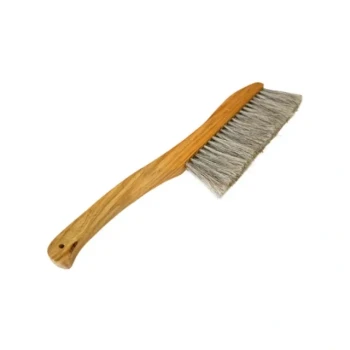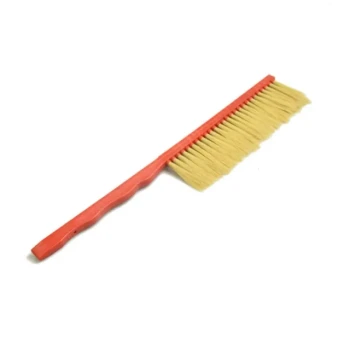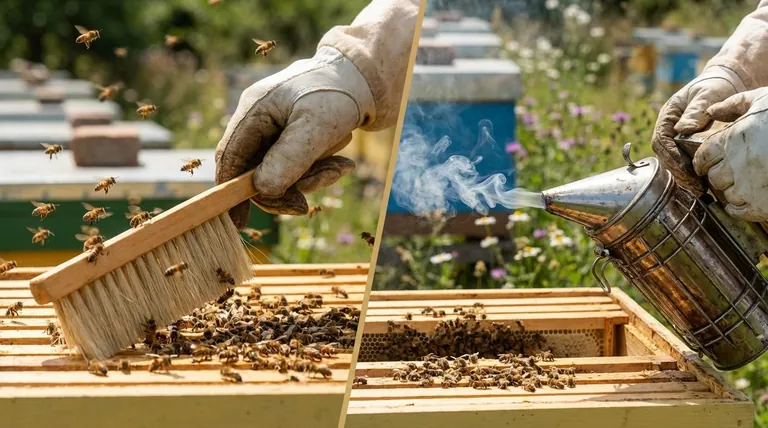
Does this scene sound familiar? A routine hive inspection, planned for a quick 15 minutes, suddenly spirals out of control. The colony’s calm hum escalates into an angry roar. Bees are boiling out of the hive, your team is getting stung, and a simple task has now become a high-stress, time-consuming battle. You retreat, wondering what went wrong. The answer might be the simple tool you reached for instead of your smoker: the bee brush.
The High Cost of a "Simple" Mistake
In commercial beekeeping, efficiency is everything. The temptation to grab a brush for a "quick" job—to clear a few bees off a frame or nudge them aside—is understandable. It feels faster than firing up a smoker. But this seemingly small shortcut often leads to significant operational problems.
This is a common struggle, rooted in a misunderstanding of the tool's purpose. Relying on a brush for anything other than its single, specific use (gently removing the last few bees from a honey frame away from the hive) creates a cascade of negative consequences:
- Lost Productivity: An agitated hive is an unworkable hive. A task that should take minutes now takes an hour, or has to be abandoned entirely, throwing off your entire day's schedule. Across dozens or hundreds of hives, this lost time translates directly into lost revenue.
- Increased Safety Risks: Angry bees sting. This creates a hazardous environment for your staff, increasing the risk of allergic reactions and lowering team morale. Confident, focused beekeepers are safe beekeepers; a crew on edge is not.
- Compromised Colony Health: A stressed colony is a less productive colony. The physical aggression of a brush can injure bees, damage brood, or even harm the queen. The constant stress also makes the hive more susceptible to disease and pests.
Many operations try to work around this by using other "gentle" alternatives like water mists, but they soon find these methods are inconsistent and unreliable. The core problem remains unsolved because it’s not about finding a different way to physically move bees.
The Root of the Problem: A Communication Breakdown
The reason a brush backfires so spectacularly isn't because the bees are having a "bad day." It's because you are accidentally triggering their emergency alarm system.
A World of Chemical Signals
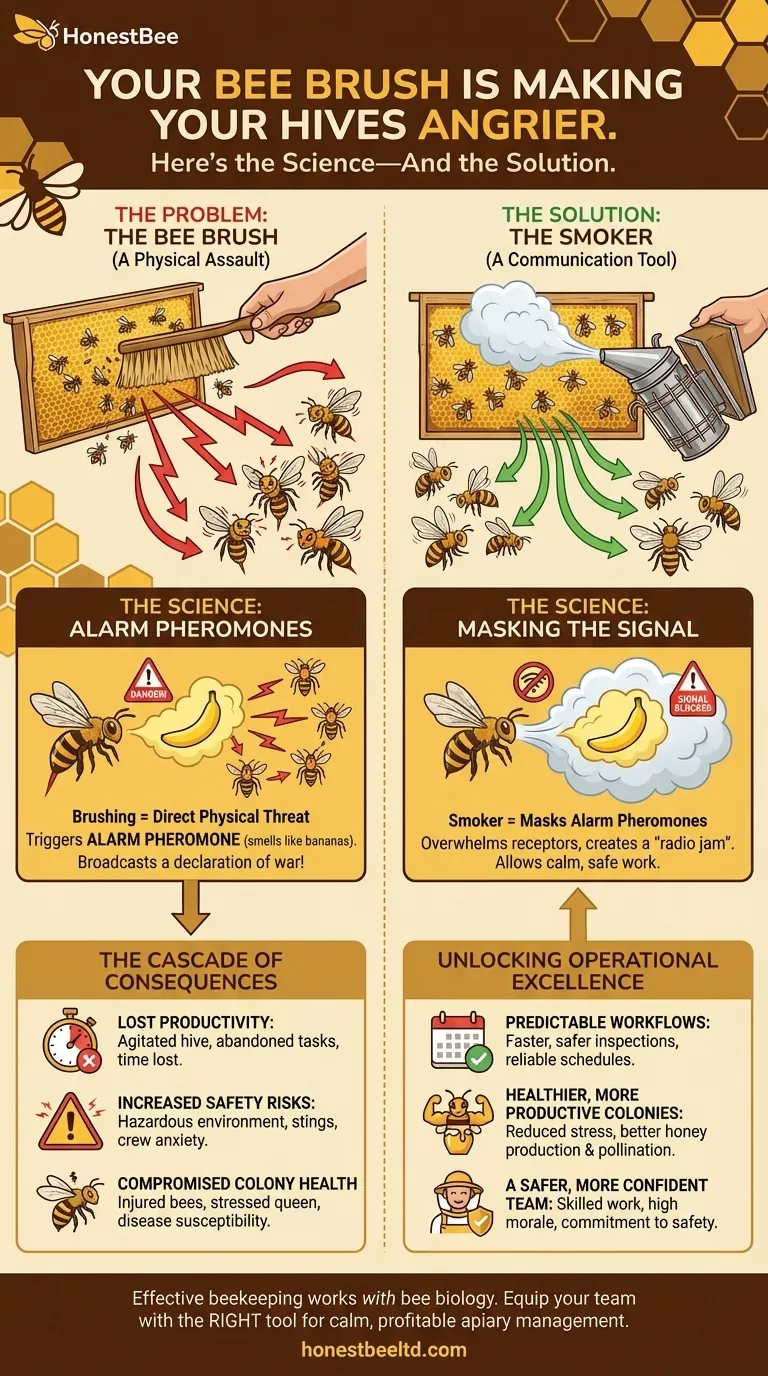
Honeybee colonies operate on a complex language of chemical signals called pheromones. One of the most critical is the alarm pheromone. When a bee feels threatened or is crushed, it releases this pheromone, which smells like bananas to us. To other bees, it is an unambiguous, high-alert signal that screams: “Danger! Attack the source!”
When you use a brush, you are performing a direct physical assault from the bees' perspective. Each bee you roughly push aside is a potential source of alarm pheromone. The signal spreads like wildfire, turning a few defensive bees into a full-blown, coordinated hive defense. You’re not just moving bees; you're broadcasting a declaration of war.
This is why brushes fail as a management tool. They create the very problem you are trying to prevent.
The Right Tool Is a Communication Tool
To manage a hive effectively, you don't need a tool that overpowers bees physically. You need a tool that interrupts their emergency communication channel.
This is the precise, biological function of a bee smoker.
Smoke doesn't "scare" the bees into submission. Its primary role is to mask the alarm pheromones. The thick, cool smoke overwhelms the bees' sensitive olfactory receptors, making it difficult for the alarm signal to be detected. It’s like creating a "radio jam" that prevents the panic signal from spreading. By disrupting their main channel for communicating danger, you allow the colony to remain calm, enabling you to perform your work safely and efficiently.
A high-quality, reliable smoker isn't just another piece of equipment; it is an essential communication device. It is designed from a deep understanding of bee biology to achieve a specific outcome: a calm, manageable colony. For a commercial apiary, where predictability and safety are paramount, the dependability of your smoker is non-negotiable. It must light easily, stay lit, and produce a steady stream of cool, white smoke every single time.
Beyond Problem-Solving: Unlocking Operational Excellence
When you stop fighting your bees and start working with their biology, everything changes. Consistently using the right tool for the job—a reliable smoker—moves your operation from a state of reactive crisis management to one of proactive control and efficiency.
With this fundamental principle in place, you unlock new possibilities:
- Predictable Workflows: Inspections become faster and safer. You can plan your daily and weekly schedules with confidence, knowing you won't be derailed by unexpectedly aggressive hives.
- Healthier, More Productive Colonies: Calm bees are happy bees. Reducing stress on your colonies directly contributes to their health, honey production, and pollination effectiveness.
- A Safer, More Confident Team: Equipping your staff with the best tools and practices demonstrates a commitment to their safety. They can work with skill and confidence, rather than anxiety.
Ultimately, effective beekeeping isn't about having a collection of tools; it's about deploying the right tool, based on a clear understanding of the challenge. Managing bee communication is the foundation of safe and profitable apiary management.
Your operation's success depends on the reliability and effectiveness of your core equipment. Don't let a simple misunderstanding about a brush and a smoker compromise your safety, productivity, and profitability. Let's discuss how equipping your teams with the right tools can solve not just your hive management issues, but your broader operational challenges. Contact Our Experts.
Visual Guide
Related Products
- Wooden Bee Brush with Triple Row Artificial Fiber for Beekeeping
- Classic Wooden Bee Brush with Double-Row Boar Bristles
- Double Row Artificial Fiber Bee Brush for Beekeeping
- Wooden Bee Brush with Double-Row Horsehair Bristles
- Premium Triple-Row Horsehair Bee Brush
Related Articles
- Your Bee Brush Is Slowing You Down. Here’s What Commercial Apiaries Use Instead.
- The Silent Profit Killer: Why a Simple Bee Brush Can Make or Break Your Harvest
- The Gentle Command: Why the Bee Brush is a Masterclass in Hive Psychology
- Gentleness Has a Price: The Engineering Trade-off in Bee Brushes
- A Beekeeper's Oath: The Biosecurity and Ethics Engineered into a Bee Brush