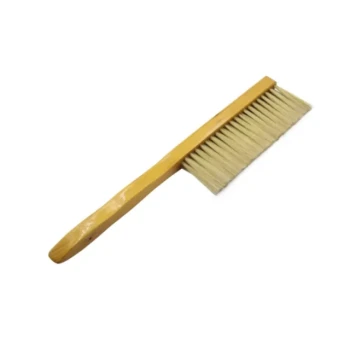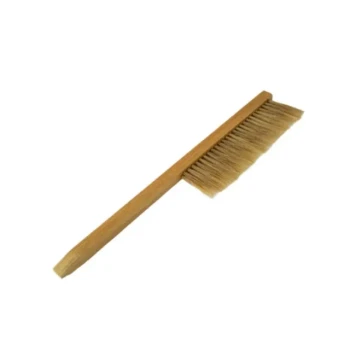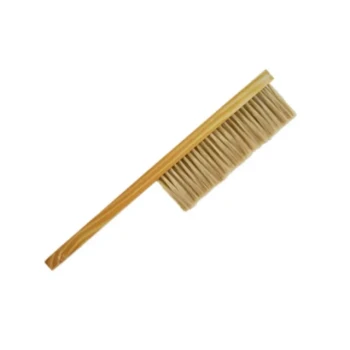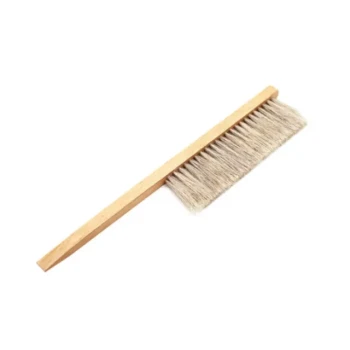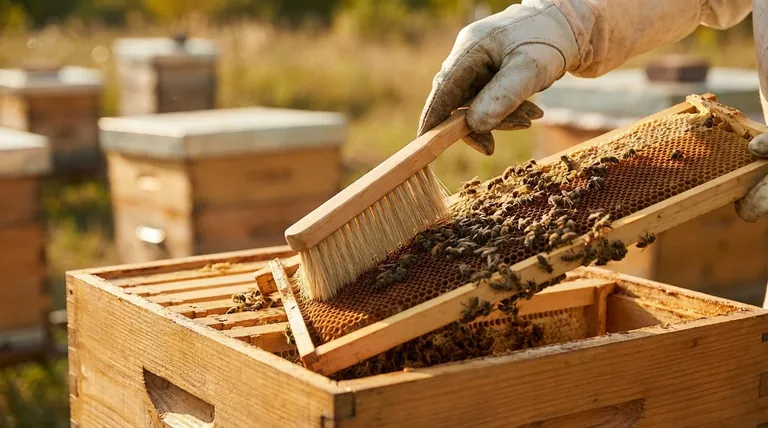
Beekeeping requires tools that prioritize both bee welfare and beekeeper efficiency. A well-designed bee brush—with soft bristles, ergonomic handles, and durable materials—ensures gentle bee removal during hive inspections while streamlining workflow. This article explores the science behind bee-safe tools, material trade-offs, and real-world performance in professional apiaries.
The Science of Bee-Safe Beekeeping Tools
Bee brushes aren’t just about moving bees—they’re about minimizing stress and injury to colonies during hive management. Research shows that improper tools can damage bee wings or legs, increasing mortality rates. Here’s how thoughtful design mitigates these risks.
Why Soft Bristles Matter for Bee Health
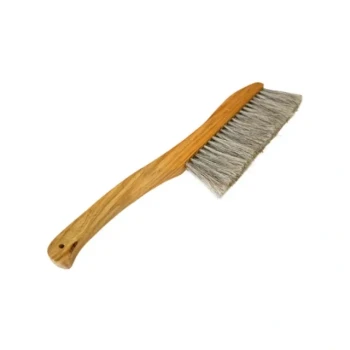
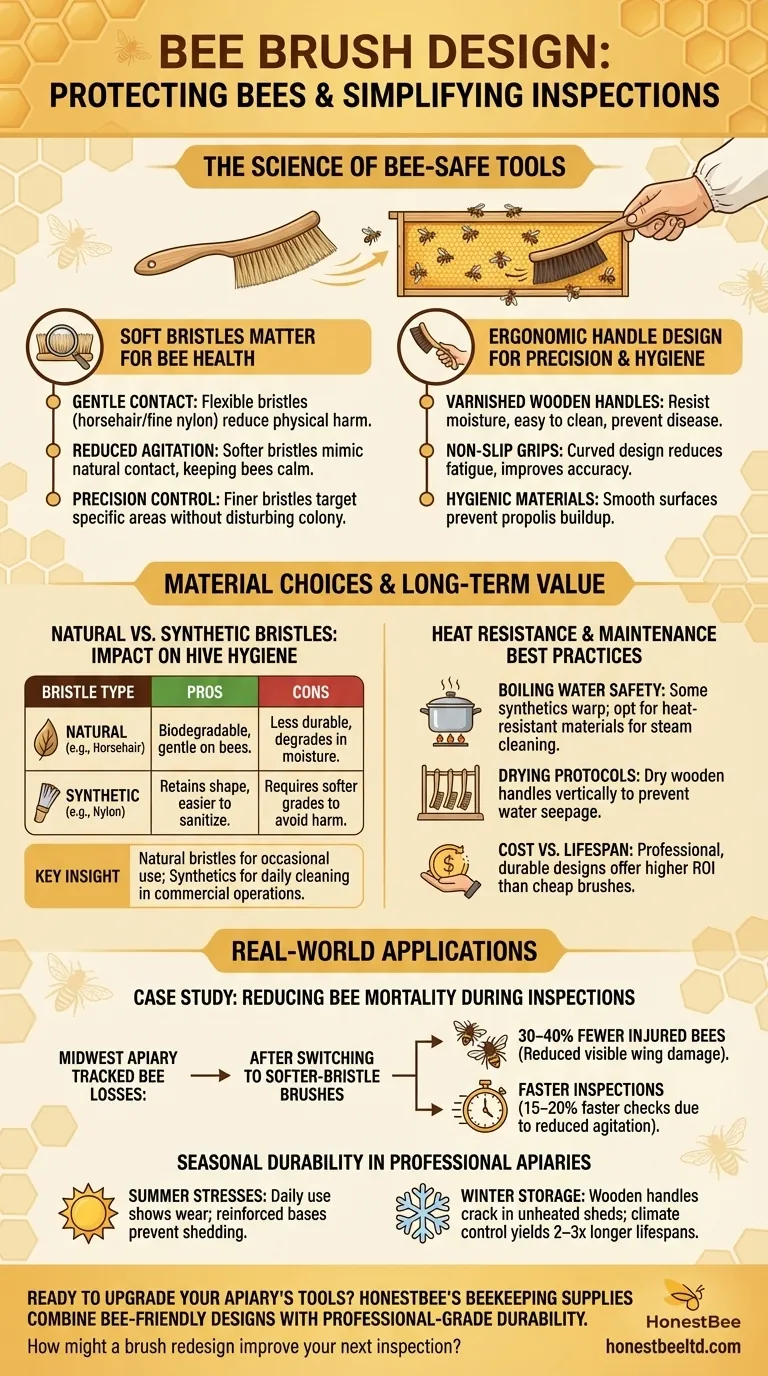
- Gentle Contact: Soft, flexible bristles (like horsehair or fine nylon) reduce physical harm when brushing bees off frames.
- Reduced Agitation: Stiff bristles can trigger defensive behavior, while softer ones mimic natural contact, keeping bees calmer.
- Precision Control: Finer bristles allow beekeepers to target specific areas (e.g., queen cells) without disturbing the entire frame.
Ergonomic Handle Design for Precision and Hygiene
- Varnished Wooden Handles: Ideal for humid environments, as they resist moisture absorption and are easy to clean—critical for preventing disease spread.
- Non-Slip Grips: Curved handles reduce hand fatigue during prolonged inspections, improving accuracy when working with delicate frames.
- Hygienic Materials: Smooth surfaces prevent propolis buildup, a common issue with textured handles that harbor bacteria.
Material Choices and Long-Term Value
Bee brushes face constant exposure to propolis, honey, and weather. Material selection impacts durability, hive hygiene, and cost-effectiveness over time.
Natural vs. Synthetic Bristles: Impact on Hive Hygiene
| Bristle Type | Pros | Cons |
|---|---|---|
| Natural (e.g., horsehair) | Biodegradable, gentle on bees | Less durable; degrades faster in moisture |
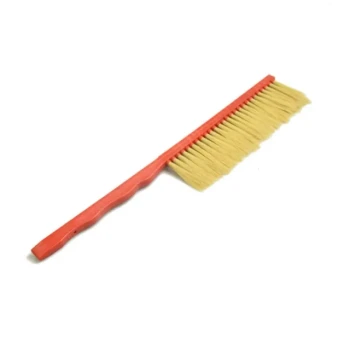
| Synthetic (e.g., nylon) | Retains shape, easier to sanitize | Requires softer grades to avoid bee harm |
Key Insight: Natural bristles suit occasional use, while synthetics better withstand daily cleaning in commercial operations.
Heat Resistance and Maintenance Best Practices
- Boiling Water Safety: Some synthetic bristles warp under high heat, limiting sterilization methods. Opt for heat-resistant materials if steam cleaning is routine.
- Drying Protocols: Wooden handles last longer when dried vertically to prevent water seepage into joints.
- Cost vs. Lifespan: Cheap brushes may save upfront but require frequent replacement. Professional apiaries report higher ROI from mid-priced, durable designs.
Real-World Applications
Case Study: Reducing Bee Mortality During Inspections
A Midwest apiary tracked bee losses before and after switching to softer-bristle brushes:
- 30–40% Fewer Injured Bees: Softer bristles reduced visible wing damage during frame transfers.
- Faster Inspections: Beekeepers completed hive checks 15–20% faster due to reduced bee agitation and smoother brushing motions.
Seasonal Durability in Professional Apiaries
- Summer Stresses: Brushes used daily in honey harvests show wear faster; reinforced bristle bases prevent shedding.
- Winter Storage: Wooden handles crack if stored in unheated sheds. Apiaries using climate-controlled storage saw 2–3x longer tool lifespans.
Ready to Upgrade Your Apiary’s Tools?
For commercial beekeepers and distributors, HONESTBEE’s beekeeping supplies combine bee-friendly designs with professional-grade durability. Explore brushes engineered to protect pollinators while simplifying high-volume hive management—because thriving bees mean thriving honey harvests.
How might a brush redesign improve your next inspection?
Visual Guide
Related Products
- Wooden Bee Brush with Triple Row Artificial Fiber for Beekeeping
- Classic Wooden Bee Brush with Double-Row Boar Bristles
- Double Row Artificial Fiber Bee Brush for Beekeeping
- Wooden Bee Brush with Double-Row Horsehair Bristles
- Premium Triple-Row Horsehair Bee Brush
Related Articles
- Your Bee Brush Is Slowing You Down. Here’s What Commercial Apiaries Use Instead.
- The Silent Profit Killer: Why a Simple Bee Brush Can Make or Break Your Harvest
- The Gentle Command: Why the Bee Brush is a Masterclass in Hive Psychology
- Gentleness Has a Price: The Engineering Trade-off in Bee Brushes
- A Beekeeper's Oath: The Biosecurity and Ethics Engineered into a Bee Brush