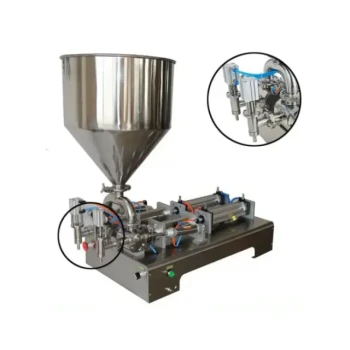
Reconfiguring a filling machine for honey requires synchronizing the machine's pressure and speed settings with the fluid's current temperature and moisture content. Specifically, when handling high-viscosity batches, you must lower the filling rate while simultaneously increasing output pressure to maintain flow without damaging the equipment.
Honey is a dynamic fluid where viscosity fluctuates significantly based on environmental conditions. Mastering your filling line requires treating nozzle size, pressure, and fill rate as dynamic variables rather than static settings.
Adapting to Viscosity Changes
The Impact of Temperature and Moisture
Honey is highly sensitive to its environment. It becomes more fluid at higher temperatures and significantly thicker at lower temperatures.
Additionally, the moisture content of the specific batch will alter its resistance. You must assess the state of the honey before touching any machine dials.
Adjusting for High Viscosity
When the honey is cold or naturally thick, the machine faces higher resistance.
To counter this, you must reduce the filling rate. Attempting to fill thick honey quickly often leads to inaccuracies and strain.
Balancing Output Pressure
Slower speeds alone are often insufficient for dense fluids.
You must generally increase the output pressure alongside the reduced speed. This ensures the honey is pushed through the system effectively despite its resistance to flow.
Optimizing Hardware Configuration
Selecting the Right Nozzle
The physical interface between the machine and the jar is critical.
You may need to modify the nozzle size based on the honey's thickness. A nozzle that is too narrow for the viscosity will create a bottleneck.
Preventing Back Pressure
Using the wrong nozzle size typically results in excessive back pressure.
This pressure builds up behind the nozzle, potentially damaging pump seals and leading to inconsistent fill volumes.
Controlling Turbulence
Improper settings do more than just slow down the line; they affect quality.
Misaligned pressure and nozzle size cause turbulence in the stream. This can introduce air bubbles into the honey or cause splashing, resulting in product waste.
Common Pitfalls to Avoid
Static Settings for Dynamic Products
A common mistake is calibrating the machine once and expecting consistent results across different batches.
Because viscosity changes with temperature, a setting that works in the morning may cause overflow or under-fill as the facility temperature changes throughout the day.
Sacrificing Quality for Speed
Pushing high-viscosity honey at high speeds without adjusting pressure will result in poor uniformity.
This often leads to messy fills and requires significant cleanup, ultimately slowing down production more than a reduced fill rate would have.
Making the Right Choice for Your Goal
To ensure uniform quality and quantity, apply the following adjustments based on your specific operational needs:
- If your primary focus is handling thick or cold honey: Lower the filling speed and increase output pressure to overcome fluid resistance.
- If your primary focus is preventing machine wear: Increase the nozzle size to reduce back pressure and strain on the system.
- If your primary focus is product presentation: Fine-tune the nozzle and pressure balance to eliminate turbulence and air bubbles.
Proper calibration is the difference between a clean, efficient production line and wasteful, inconsistent downtime.
Summary Table:
| Adjustment Factor | Low Viscosity (Thin/Warm) | High Viscosity (Thick/Cold) |
|---|---|---|
| Filling Speed | High / Faster | Low / Slower |
| Output Pressure | Standard / Low | Increased / High |
| Nozzle Size | Standard / Narrow | Large / Wide |
| Key Concern | Splashing / Overfilling | Back Pressure / Air Bubbles |
| Primary Goal | Maximize Speed | Protect Equipment & Accuracy |
Scale Your Honey Production with HONESTBEE
Maintaining precision in honey packaging requires more than just machine adjustments; it requires high-performance equipment designed for the unique demands of apiculture. At HONESTBEE, we specialize in supporting commercial apiaries and distributors with a comprehensive suite of wholesale solutions.
Whether you need advanced honey-filling machines capable of handling diverse viscosities, precision hive-making machinery, or high-quality beekeeping consumables, our portfolio is engineered to enhance your operational efficiency and product quality. From specialized hardware to honey-themed cultural merchandise, we provide the tools you need to grow your business.
Ready to optimize your production line? Contact our experts today to discover how HONESTBEE’s professional machinery and equipment can streamline your operations and maximize your yield.
Related Products
- Precision Durable Efficient HONESTBEE Rotary Honey Filling Machine
- Semi Automatic Small Honey Bottle Filling Machine Honey Filler
- Economy Small Honey Filling Machine Honey Bottle Filler Packaging Machine
- Commercial Rotary Honey Filling Machine for Production
- Fully Automatic Honey Filling Packaging Machine for Processing Line
People Also Ask
- How do high-precision honey filling machines ensure quality? Optimize Your Commercial Production with HONESTBEE
- What quality control role does professional honey filling equipment perform? Ensure Consistency and Product Stability
- What are the common types of bottling machines used for honey? Choosing the Right Solution for Your Apiary
- What is a key feature of the new generation of the honey filling machine? The Advanced Electronic Control Unit
- How do honey filling machines work? Achieve Precision & Speed for Your Apiary