To ensure straight comb construction, the most effective preventive measure is placing new empty top bars between two existing straight combs, which serve as architectural guides for the bees. If curved combs have already formed, they should be managed by relocating them to the rear of the hive for honey storage once any existing brood has hatched, keeping the vital brood nest restricted to straight combs only.
Core Takeaway The structural integrity of a top-bar hive relies on using existing straight combs to dictate the geometry of new construction. Management is not about forcing immediate correction, but rather phasing out irregularities by moving curved combs to the back of the hive for honey storage and preserving straight combs for the brood nest.
Prevention: The Guide Principle
Leveraging Guide Combs
The primary mechanism for preventing curved combs is the strategic placement of new bars. You should insert a new, empty top bar between two existing straight combs.
These existing combs act as rigid guides. The bees will naturally build the new comb parallel to the neighbors, forcing the new construction to be straight.
Early Intervention
During the early stages of comb building, the wax is pliable. If you detect the bees starting to build across bars or curving significantly, you can gently push the comb back into alignment along the center of the bar.
Correcting this immediately is essential. Failure to address cross-combing early results in bars that are fused together, making individual inspection impossible.
Managing Hive Volume
Use a follower board to restrict the colony's space to what they can currently manage. If the colony has only 1-2 empty bars left, adjust the board to add just two more.
Limiting excess space prevents the bees from building chaotic or unsupported comb structures in the void.
Managing Established Curved Combs
The Relocation Strategy
If a comb is already fully curved, do not attempt to force it straight, as it may break. Instead, the strategy is relocation. Move these curved combs toward the back of the hive.
By moving them to the rear, you remove them from the active management zone. This area is designated for honey storage rather than daily brood rearing.
Protecting the Brood Nest
The brood nest—the area where the queen lays eggs—requires frequent inspection. Therefore, you must reserve your straightest combs for this section.
If a curved comb currently contains brood, you must wait. Allow the brood to hatch completely before moving the comb to the back of the hive.
Phasing Out Irregularities
Over time, this rotation strategy naturally phases out curved combs. Once the curved combs in the back are filled with honey and harvested, they can be removed or melted down.
This leaves you with a rotation of straight combs that are easy to manipulate and inspect.
Common Pitfalls and Trade-offs
Wall Attachments
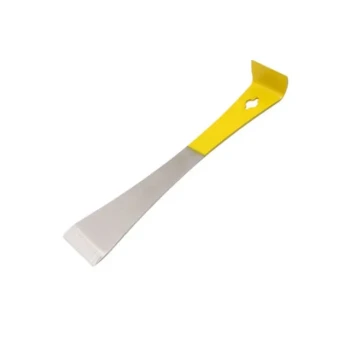
Bees in top-bar hives frequently attach comb to the inner walls of the cavity. Before attempting to move or inspect any comb—straight or curved—you must detach these connections using a hive tool.
Failure to sever these attachments before lifting will cause the comb to tear or collapse.
Handling Fragility
Top-bar combs are supported only from the top, making them significantly more fragile than framed combs. When inspecting or rearranging combs, you must keep the bars strictly vertical.
Tilting the bar to the side can cause the heavy wax to detach from the wood and fall, potentially killing bees or the queen.
Making the Right Choice for Your Hive
To maintain a manageable top-bar hive, prioritize your actions based on the current state of your comb:
- If your primary focus is prevention: Insert new empty bars strictly between two straight "guide" combs to force parallel construction.
- If your primary focus is correction: Wait for brood to hatch from curved combs, then permanently rotate them to the back of the hive for honey storage.
- If your primary focus is inspection: Always cut side wall attachments and keep bars vertical to prevent catastrophic comb failure during handling.
Consistency is key; by rotating curved combs out and guide combs in, you build a sustainable system of straight, manageable hardware.
Summary Table:
| Technique | Action Required | Purpose |
|---|---|---|
| Prevention | Place empty bars between two straight combs | Forces bees to build parallel, straight comb |
| Early Intervention | Gently push pliable wax into alignment | Corrects minor curves before they fuse bars |
| Relocation | Move curved combs to the rear of the hive | Dedicates straight combs for brood and curved for honey |
| Maintenance | Sever wall attachments with a hive tool | Prevents comb tearing or collapse during inspection |
| Space Control | Use follower boards to limit excess volume | Prevents chaotic and unsupported comb structures |
Optimize Your Apiary with HONESTBEE Professional Solutions
Maintaining straight combs is just the beginning of successful beekeeping. At HONESTBEE, we empower commercial apiaries and distributors with the high-performance tools needed to scale operations efficiently.
Our value to your business includes:
- Comprehensive Equipment: From hive-making machinery to honey-filling systems.
- Premium Consumables: A full spectrum of beekeeping tools and essential hardware.
- Wholesale Excellence: Competitive offerings tailored for bulk distributors and large-scale honey producers.
Ready to elevate your production and streamline your beekeeping workflow? Contact us today to explore our wholesale catalog and find out how our specialized machinery can transform your business!
Related Products
- Top Bar Beehive for Beekeeping Wholesales Kenya Top Bar Hive
- Long Langstroth Style Horizontal Top Bar Hive for Wholesale
- HONESTBEE Square Top Hive Bee Feeder Top Bee Feeder
- Professional Frame Comb Fork and Lifter for Efficient Handling
- HONESTBEE Classic Pry Bar Hive Tool with High Visibility Finish for Beekeeping
People Also Ask
- How is burr comb and propolis removed from a top bar hive? A Practical Guide for Hive Maintenance
- How does comb construction differ between a top bar hive and a Langstroth hive? Choose the Best Method for Your Apiary
- Why do top bar hives require beekeepers to detach comb? Master the Detach-then-Lift Technique for Comb Safety
- How does the design of a top bar hive minimize disturbance to the bees during inspection? Achieve a Calmer, More Natural Approach
- What are the main differences between a top bar hive and a Langstroth hive? A Guide to Choosing Your Hive