Automated honey production lines drive economic efficiency by seamlessly integrating extraction, filtration, and precision bottling into a singular, industrial-grade workflow. This consolidation significantly reduces reliance on manual labor while ensuring the sterile, high-speed processing necessary for large-scale commercial apiaries to compete in global markets.
The core economic advantage of automation lies in its dual impact: it lowers unit costs by accelerating production cycles and minimizing waste, while simultaneously unlocking higher revenue streams through export-grade hygiene and product consistency.
Maximizing Yield Through Hive Preservation
The Economics of Bee Energy
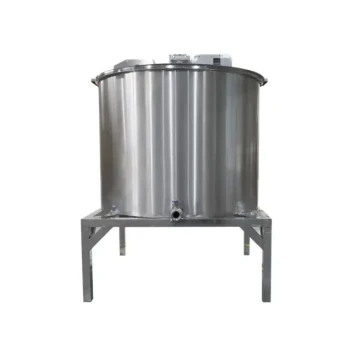
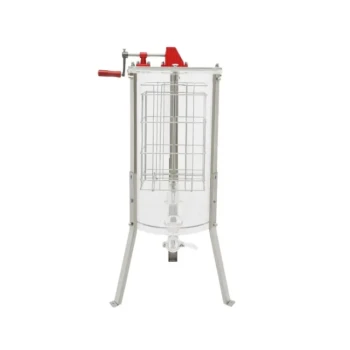
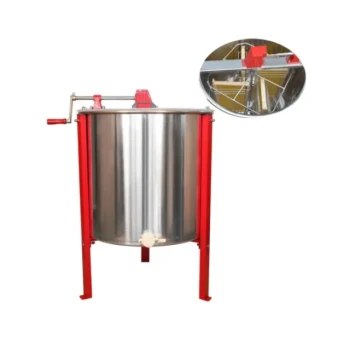
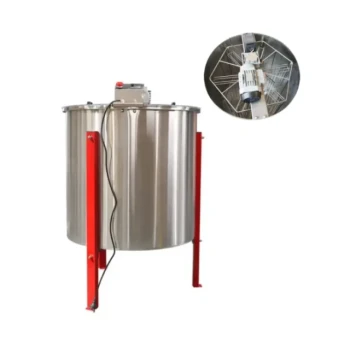
Traditional manual squeezing destroys honeycombs, forcing bees to rebuild them before they can store new honey. Centrifugal extraction technology separates honey while maintaining the structural integrity of the honeycomb.
Because the combs are preserved, they can be immediately reused by the colony. This significantly reduces the energy bees must expend on wax secretion and nest construction. Instead, that biological energy is redirected toward nectar gathering, directly increasing total honey output per season.
Accelerating the Production Cycle
Automated extraction lines are capable of processing large volumes of raw material in short timeframes. This speed is critical for high-production regions where harvest windows are limited.
By using specialized equipment, producers can complete harvests rapidly, often before seasonal colony migrations are required. This optimization of the production schedule shortens the overall operational cycle, allowing for faster turnover and increased annual yield.
Reducing Operational Overhead
Minimizing Labor Dependence
Industrial-grade systems replace labor-intensive manual squeezing and filling methods. By automating the extraction and filtration steps, facilities can process massive quantities of honey with a fraction of the workforce required for traditional methods.
This reduction in labor intensity is a primary driver for controlling the average cost of honey. Lower overhead allows producers to price their final products more competitively in the global market.
Precision Material Management
Automated filling production lines utilize advanced volume or weight control mechanisms. This ensures that every jar is filled to the exact specification, virtually eliminating the "overfill" waste common in manual packing.
Minimizing material loss at the bottling stage directly impacts the bottom line. When scaling to thousands of units, precise inventory control prevents the silent erosion of profit margins.
Elevating Product Value and Market Access
Ensuring Export-Grade Hygiene
Automated systems process honey in a sterile environment, mitigating the risk of secondary contamination caused by human contact. This adherence to hygiene ensures the product remains additive-free and pure.
Achieving these industrial hygiene standards is often a prerequisite for entering high-end commercial markets and meeting international export policies. Automation transforms raw resource collection into a traceable, compliant manufacturing process.
Preserving Bioactive Value
High-precision temperature control and fine filtration processes preserve the honey’s nutritional integrity. Key components such as enzymes, vitamins, and amino acids remain intact rather than being degraded by rough handling or overheating.
Preserving these bioactive components and specific flavor profiles allows producers to market their goods as premium or medical-grade products. This differentiation significantly increases the commercial value and economic return of the honey.
Understanding the Trade-offs
Capital Intensity vs. Scalability
While the economic efficiency of automation is clear for large operations, it requires a shift from traditional beekeeping to industrial manufacturing. The implementation of these systems involves significant upfront capital for "industrial-grade" machinery.
Maintenance and Standardization
Automated lines require consistent maintenance to ensure sterility and mechanical reliability. Furthermore, while automation guarantees consistency, it standardizes the product. Producers must balance this standardization with the need to maintain distinct flavor profiles inherent to specific floral sources.
Making the Right Choice for Your Goal
To determine if automated lines will improve your specific economic outlook, consider your current operational bottlenecks.
- If your primary focus is Volume and Cost Reduction: Prioritize centrifugal extraction systems to maximize reuse of honeycombs and minimize the biological energy cost to your hives.
- If your primary focus is Market Expansion: Invest in automated filling and filtration lines to ensure the traceability and sterility required for high-end export and medical-grade markets.
Automation is not merely a labor-saving convenience; it is a strategic asset that converts a raw agricultural commodity into a consistent, high-value commercial brand.
Summary Table:
| Economic Driver | Manual Method | Automated System | Financial Impact |
|---|---|---|---|
| Comb Management | Destructive squeezing | Centrifugal preservation | Reusable combs increase annual honey yield |
| Labor Input | High manual dependency | Minimal technical oversight | Significantly lower operational overhead |
| Filling Accuracy | High risk of overfill waste | Precision weight/volume control | Eliminates product loss at the bottling stage |
| Hygiene & Value | Variable purity levels | Sterile, closed-loop processing | Access to premium export & medical markets |
| Turnover Rate | Slow, seasonal bottleneck | High-speed industrial workflow | Faster production cycles and market entry |
Maximize Your Apiary’s Profitability with HONESTBEE
Transitioning from traditional beekeeping to a high-yield industrial operation requires the right technology. HONESTBEE specializes in empowering commercial apiaries and distributors with professional-grade automated solutions.
From high-speed centrifugal extraction systems that preserve your valuable honeycombs to precision honey-filling and labeling machines that guarantee export-grade consistency, we provide the full spectrum of beekeeping tools and industrial machinery. Our comprehensive wholesale offering also includes specialized hive-making equipment and honey-themed cultural merchandise to help you diversify your brand.
Ready to lower your unit costs and access global markets?
Contact our experts today to build your custom production line
References
- Inna Moskaliuk, K. O. Khamid. Analysis of the state of beekeeping industry in Ukraine, features of the organization of labor protection and improvement of safety rules with bees. DOI: 10.15587/2313-8416.2018.129317
This article is also based on technical information from HonestBee Knowledge Base .
Related Products
- Fully Automatic Honey Filling Packaging Machine for Processing Line
- Automatic Honey Filling and Filtering Machine for Beekeeping Bottle Filling
- Manual Honey Filling Machine Bottling Machine for Honey
- 32 Frame Commercial Electric Honey Extractor for Beekeeping and Honey Production
- Semi Automatic Small Honey Bottle Filling Machine Honey Filler
People Also Ask
- Why are fully automatic honey filling and packaging lines essential? Boost Your Honey's Market Value and Quality
- What is a fully-automatic honey filler? Streamline Your Production with High-Precision Automation
- How do automated honey filling and packaging machines affect profitability? Boost Margins with HONESTBEE Technology
- How do automated honey filling and packaging machines contribute to the market value of honey products? Maximize Your ROI
- How do industrial-grade automated honey filling and packaging machines mitigate the risk of physical contamination?