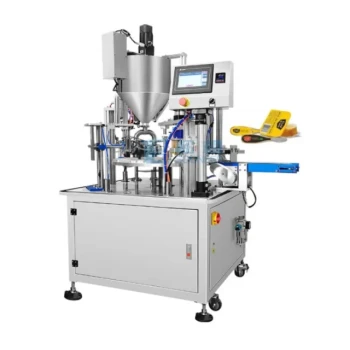
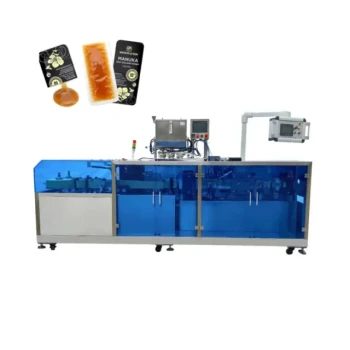
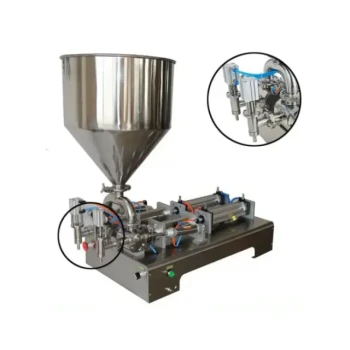
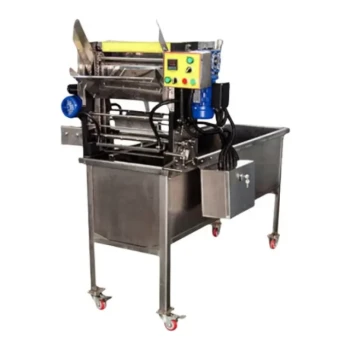
Automated honey filling and processing machines mitigate Nosema transmission by utilizing closed-loop systems that eliminate the risks inherent in manual handling. These industrial-grade units act as a sanitary firewall, preventing the cross-contamination of Nosema spores across product batches, containers, and recycled consumables.
By standardizing hygiene protocols and removing direct human contact, automated processing transforms the bottling stage from a potential contagion vector into a controlled biosecurity checkpoint.
The Mechanics of Pathogen Containment
Eliminating the Human Variable
Manual bottling involves frequent contact between operators, tools, and the product. This creates multiple vectors for transferring microscopic Nosema spores.
Automated machines utilize closed-loop processes to isolate the honey or feed. By sealing the product path from extraction to filling, the system physically blocks the introduction or transfer of external pathogens.
Preventing Cross-Batch Contamination
In a manual setup, a single contaminated batch can leave residues on filling equipment that infect subsequent batches.
Industrial machines mitigate this through precise control over hygiene standards. They are designed for rigorous cleaning cycles that ensure production lines remain sterile between runs, effectively halting the spread of spores through the production chain.
Temperature and Environmental Control
Nosema spores are resilient, but their viability can be managed through specific environmental conditions.
Automated systems maintain precise temperature controls during processing. This consistency ensures that the honey or feed is handled under conditions that discourage pathogen survival or proliferation, a level of control that is difficult to achieve with manual methods.
Strategic Resource Reallocation
Liberating Primary Productivity
Biosecurity is not just about equipment; it is about attention. Manual processing consumes vast amounts of labor.
By implementing high-speed automation, commercial apiaries significantly reduce the labor hours required for bottling and packaging. This is a critical operational shift, not just a convenience.
Focusing on Biological Management
The time saved by automation allows beekeepers to redirect their focus upstream.
Instead of managing bottling lines, staff can concentrate on core biological management tasks, such as monitoring colony health and selective breeding for disease resistance. This proactive fieldwork is the first line of defense against Nosema, and automation provides the bandwidth to execute it effectively.
Operational Considerations and Trade-offs
The Risk of Systemic Contamination
While automation reduces random manual error, it introduces a different risk: systemic amplification. If the automated system itself is not properly sanitized according to protocol, it can rapidly contaminate a large volume of product with great efficiency. Rigorous maintenance schedules are non-negotiable.
Capital Investment vs. Health Returns
These machines represent a significant financial overhead compared to manual labor. The return on investment must be calculated not just in units produced per hour, but in the economic resilience gained by preventing disease outbreaks that could devastate the apiary's stock.
Making the Right Choice for Your Operation
To leverage automation effectively for biosecurity, align your equipment choice with your specific management goals.
- If your primary focus is Infection Control: Prioritize machines with advanced "Clean-in-Place" (CIP) capabilities and closed-loop designs to physically isolate spores from the final product.
- If your primary focus is Colony Resilience: Use the labor savings from high-speed automation to increase the frequency of field inspections and resistance monitoring programs.
Ultimately, automation allows you to secure the product downstream so you can better protect the bees upstream.
Summary Table:
| Feature | Manual Processing Impact | Automated Machine Benefit | Biosecurity Impact |
|---|---|---|---|
| Containment | Open-air, high human contact | Closed-loop, sealed systems | Eliminates external spore introduction |
| Cross-Contamination | High risk between batches | Precise cleaning cycles (CIP) | Prevents pathogen spread across product lines |
| Labor Focus | High focus on bottling tasks | Minimal focus on bottling | Allows redirecting staff to colony health monitoring |
| Process Stability | Inconsistent environmental control | Precise temperature & flow control | Maintains conditions that discourage pathogen survival |
Secure Your Apiary’s Future with HONESTBEE Automation
At HONESTBEE, we understand that biosecurity is the backbone of a profitable commercial apiary. Our industrial-grade honey filling machines and processing equipment are designed to act as a sanitary firewall, protecting your product and your bees from pathogens like Nosema.
Whether you are a large-scale commercial apiary or a global distributor, our comprehensive wholesale offering provides everything from specialized hive-making and honey-filling machinery to essential beekeeping consumables and honey-themed merchandise. By automating your downstream production, you liberate your team to focus on upstream colony resilience and biological management.
Ready to upgrade your biosecurity and operational efficiency? Contact us today to discuss your customized equipment solutions!
References
- O. P. Lytvynenko, G. B. Aliekseieva. Nosematosis in beekeeping in Ukraine (2022–2024): the only pollinator health problem in the focus of research. DOI: 10.31073/onehealthjournal2025-iv-06
This article is also based on technical information from HonestBee Knowledge Base .
Related Products
- Fully Automatic Honey Filling Packaging Machine for Processing Line
- Automatic Honey Filling and Filtering Machine for Beekeeping Bottle Filling
- Precision Durable Efficient HONESTBEE Rotary Honey Filling Machine
- Precision Automated Packaging Turntable Honey Spoon Filling Sealing Packing Machine
- Semi Automatic Small Honey Bottle Filling Machine Honey Filler
People Also Ask
- Why are fully automatic honey filling and packaging lines essential? Boost Your Honey's Market Value and Quality
- What is a fully-automatic honey filler? Streamline Your Production with High-Precision Automation
- How do automated honey filling and packaging machines affect profitability? Boost Margins with HONESTBEE Technology
- How do automated honey filling and packaging machines contribute to the market value of honey products? Maximize Your ROI
- How do industrial-grade automated honey filling and packaging machines mitigate the risk of physical contamination?