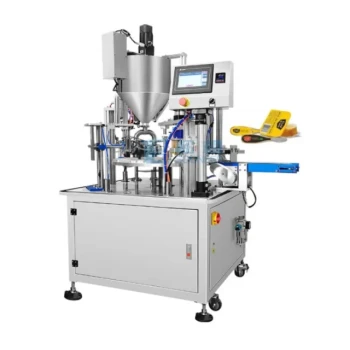
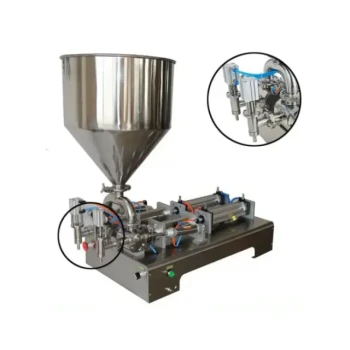
Automated honey-filling machines act as the critical bridge between bulk honey processing and the retail marketplace. These systems transform raw apiary output into shelf-ready inventory by executing high-precision volumetric filling within a strictly controlled hygienic environment. By automating this final stage, producers ensure compliance with weight regulations and eliminate the bottlenecks associated with manual packaging, effectively unlocking the capacity for large-scale commercial distribution.
The Core Value: Automation in this sector is not just about speed; it is about standardization. By removing human variance, these machines guarantee that every unit meets strict food safety protocols and labeling laws, which is the baseline requirement for entering global supply chains.
Precision and Regulatory Compliance
Accurate Volumetric Control
The primary function of these machines is to manage the volume and flow rate of honey with exactitude. Unlike manual methods, which often result in inconsistencies, automated metering pumps deliver a precise amount of product into every container.
Minimizing Product Loss
Precision filling directly impacts the bottom line by eliminating "giveaway"—the accidental overfilling of jars common in manual operations. By strictly adhering to the target weight, producers maximize the yield from every batch of bulk honey.
Meeting Legal Weight Requirements
Commercial distribution requires strict adherence to packaging weight regulations. Automated systems ensure that the net weight stated on the label matches the actual product content, protecting the brand from legal liabilities and consumer complaints.
Hygiene and Product Integrity
The Closed-Loop Environment
Honey is susceptible to environmental contaminants. Automated fillers operate as closed systems, which significantly minimizes the risk of secondary contamination during the transfer from tank to bottle.
Prevention of Spoilage
Sanitary packaging technology does more than just fill a jar; it effectively blocks external moisture and pollutants. This is critical for preventing fermentation or spoilage, ensuring the product remains stable during storage and long-distance transportation.
Standardizing Food Safety
By removing manual contact from the filling process, these machines ensure the final product meets international food safety standards. This consistent hygiene level is often a prerequisite for obtaining certifications required by major retailers.
Operational Efficiency and Scalability
Handling Viscosity Variations
Honey consistency varies wildly based on floral source and temperature (e.g., acacia vs. multi-flower honey). Advanced filling machines are capable of processing these varying viscosities without sacrificing speed or accuracy, maintaining consistent output regardless of the honey type.
Increasing Throughput
Manual bottling is a significant bottleneck that limits total production capacity. Automation dramatically increases packaging speed, allowing apiaries to transition from small-batch production to a large-scale commercial supply model.
Enhancing Brand Competitiveness
Retailers demand uniformity in product appearance. Automated machines provide professional, consistent packaging levels across thousands of units, which enhances the product's visual appeal and competitiveness on the shelf.
Understanding the Trade-offs
Maintenance and Calibration
To maintain the high precision promised by these machines, rigorous maintenance schedules are required. The metering pumps and sensors must be calibrated regularly to prevent "drift" in filling weights, which would negate the benefits of automation.
Complexity of Viscosity Management
While capable of handling different honeys, switching between extreme viscosities may require adjustments to the metering settings. Operators must understand how to fine-tune the flow rates to prevent cavitation or slow-downs during the filling of thicker varieties.
Making the Right Choice for Your Operation
For producers looking to integrate automated filling into their supply chain, the focus should depend on your specific bottleneck:
- If your primary focus is Regulatory Compliance: Prioritize machines with advanced metering systems that guarantee strict adherence to weight labeling laws to avoid legal penalties.
- If your primary focus is Market Expansion: Select equipment featuring fully enclosed hygienic designs to ensure the shelf-life stability required for long-distance shipping and global export.
- If your primary focus is Profit Margins: Look for systems that emphasize waste reduction and precise flow control to eliminate product giveaway and maximize yield per batch.
Automated filling technology effectively standardizes a variable natural resource, converting raw honey into a reliable commercial commodity ready for the global market.
Summary Table:
| Key Contribution | Primary Benefit | Operational Impact |
|---|---|---|
| Precision Metering | Eliminates "giveaway" and overfilling | Maximizes yield and profit margins |
| Regulatory Compliance | Guarantees accurate net weight | Protects against legal liability |
| Closed-Loop System | Minimizes secondary contamination | Ensures international food safety standards |
| Viscosity Management | Handles various honey types (Acacia/Multi-flower) | Maintains consistent output speed |
| Increased Throughput | Removes manual bottling bottlenecks | Enables large-scale retail distribution |
Elevate Your Honey Production with HONESTBEE
Transitioning from manual bottling to automated efficiency is the key to unlocking global markets. HONESTBEE specializes in empowering commercial apiaries and distributors with high-precision honey-filling machines, hive-making equipment, and a full spectrum of beekeeping tools.
Our comprehensive wholesale offerings are designed to reduce waste, ensure regulatory compliance, and enhance your brand's shelf-competitiveness. Whether you need specialized machinery or essential industry consumables, we provide the hardware and expertise to scale your operation.
Ready to transform your apiary into a commercial powerhouse?
Contact HONESTBEE today for a tailored equipment consultation!
References
- Matt Benge, Amy T. Vu. Challenges and barriers to conducting commercial beekeeping education programs in Florida. DOI: 10.37433/aad.v4i4.379
This article is also based on technical information from HonestBee Knowledge Base .
Related Products
- Fully Automatic Honey Filling Packaging Machine for Processing Line
- Automatic Honey Filling and Filtering Machine for Beekeeping Bottle Filling
- Precision Durable Efficient HONESTBEE Rotary Honey Filling Machine
- Semi Automatic Small Honey Bottle Filling Machine Honey Filler
- Precision Automated Packaging Turntable Honey Spoon Filling Sealing Packing Machine
People Also Ask
- Why are fully automatic honey filling and packaging lines essential? Boost Your Honey's Market Value and Quality
- What is a fully-automatic honey filler? Streamline Your Production with High-Precision Automation
- How do automated honey filling and packaging machines affect profitability? Boost Margins with HONESTBEE Technology
- How do automated honey filling and packaging machines contribute to the market value of honey products? Maximize Your ROI
- How do industrial-grade automated honey filling and packaging machines mitigate the risk of physical contamination?