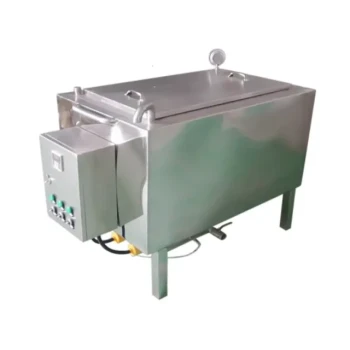
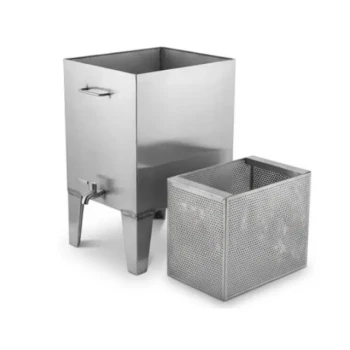
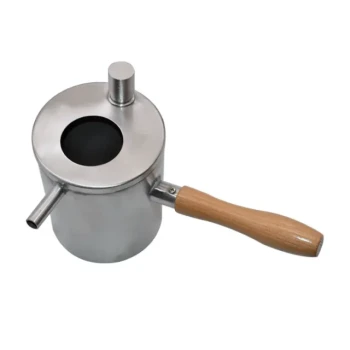
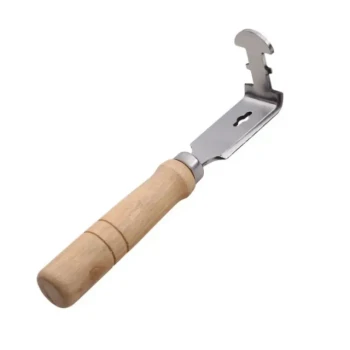
Beeswax purification processes and refining equipment function as the critical technological bridge that transforms raw, impure apiary residues into high-value industrial commodities. Through the application of controlled heating, filtration, and sedimentation, these systems separate debris and impurities from raw wax, upgrading it from a low-value byproduct into high-purity, industrial, or food-grade yellow beeswax.
Refining technology shifts beekeeping from a single-product model to a diversified industrial operation. By recovering and purifying wax that is often discarded as waste, apiaries can access lucrative markets in cosmetics, pharmaceuticals, and precision engineering while simultaneously lowering internal operational costs.
The Mechanics of Value Creation
Precision Extraction and Purification
Raw beeswax, particularly from old combs or cappings, is naturally laden with impurities. Refining equipment utilizes precise temperature-controlled melting to liquefy the wax without degrading its chemical structure. Once melted, multi-stage filtration and sedimentation processes mechanically remove physical debris, pigments, and colony residues, yielding a clean, standardized product.
Transforming Waste into Resources
In many traditional settings, old combs are discarded due to the difficulty of manual extraction. specialized processing machinery allows beekeepers to recover pure beeswax from these "waste" materials. This maximizes the economic utilization of all hive resources, turning a disposal problem into a saleable asset.
Expanding Market Reach and Revenue
Accessing High-Tier Industries
Unrefined wax has limited commercial value. However, high-purity refined wax meets the strict standards required by the cosmetics, pharmaceutical, and precision engineering industries. By producing medical-grade or industrial-grade wax, beekeepers can sell into supply chains that offer significantly higher margins than the traditional candle or craft markets.
The Cycle of Internal Efficiency
Refined wax is the primary material for manufacturing high-quality foundation sheets. When beekeepers recycle their wax to create these sheets, they provide colonies with a head start. This reduces the biological energy bees must spend on secreting new wax, allowing them to redirect that energy toward increasing overall honey production.
Understanding the Operational Trade-offs
Capital Investment vs. Volume
Refining equipment represents an upfront capital cost. For small-scale operations, the volume of raw wax produced may not immediately justify the expense of industrial-grade rendering machines. Operators must assess if their byproduct volume is sufficient to generate a return on investment through external sales or internal cost savings.
Technical Precision Requirements
Beeswax is sensitive to heat; overheating can darken the wax and damage its chemical properties. Effective purification requires equipment with exact temperature regulation. Operators must be skilled in managing these parameters, as poorly refined wax loses its value to high-end industrial buyers.
Making the Right Choice for Your Goal
To maximize the value of your beekeeping by-products, align your processing strategy with your business objectives:
- If your primary focus is Revenue Diversification: Invest in filtration systems capable of achieving pharmaceutical or cosmetic-grade purity, as these markets offer the highest price per pound.
- If your primary focus is Hive Productivity: Prioritize equipment that allows you to cycle wax into foundation sheets, reducing bee workload and boosting honey yields.
- If your primary focus is Waste Management: Utilize efficient rendering equipment to extract wax from old combs and cappings, ensuring zero resource waste within the operation.
The integration of proper purification technology converts beeswax from a secondary leftover into a primary financial pillar of the modern apiary.
Summary Table:
| Process/Feature | Function in Value Creation | Industrial Benefit |
|---|---|---|
| Temperature Control | Prevents chemical degradation during melting | Maintains premium wax color & properties |
| Multi-stage Filtration | Removes debris, pigments, and residues | Produces medical & cosmetic grade wax |
| Waste Recovery | Extracts wax from old combs and cappings | Converts disposal costs into revenue |
| Foundation Recycling | Creates sheets for hive reuse | Redirects bee energy to honey production |
Maximize Your Apiary’s Revenue with HONESTBEE
Don't let valuable by-products go to waste. HONESTBEE empowers commercial apiaries and distributors with professional-grade beeswax refining machinery and comprehensive beekeeping tools. From high-precision honey-filling machines to specialized wax purification systems, we provide the technology you need to access high-margin cosmetic and pharmaceutical markets.
Ready to upgrade your processing efficiency? Contact us today to discover how our wholesale equipment solutions can transform your secondary hive materials into a primary financial pillar.
References
- Dinku Negash. Demonstration and participatory evaluation of apiculture technologies in Sidama National Regional state, Ethiopia. DOI: 10.33545/26180723.2022.v5.i2a.139
This article is also based on technical information from HonestBee Knowledge Base .
Related Products
- Beeswax Machine Press Embosser Wax Foundation Mold Printer Bee Hive Equipment Making Sheet
- Electric Flatting and Embossing Machine with Tray for Beekeeping
- Manual Beeswax Flat Sheet Machine for Beeswax Processing
- Fully Automatic Beeswax Embossing Machine Foundation Mill
- Electric Beeswax Flat Sheet Machine with Operating Tray for Wax Processing
People Also Ask
- What equipment is needed to make beeswax foundation? A Guide to DIY Wax Sheet Production
- What miscellaneous equipment is needed for making foundation? A Guide to the Essential Tools
- What miscellaneous equipment is useful when making beeswax foundation? Essential Support Tools for Beekeepers
- What specific equipment is required for making beeswax foundation? Essential Tools for High-Quality Production
- What is the recommended temperature for melting beeswax to make foundation sheets? Master the 70°C-80°C Ideal Range