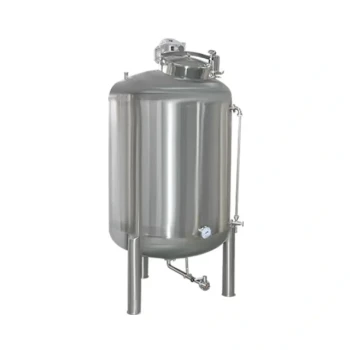
Precision thermal control is the mechanism that allows this balance. Constant temperature water bath devices achieve disease prevention by maintaining honey at exact pathogen-inactivation thresholds (such as 65°C) while simultaneously utilizing indirect, uniform heat distribution to ensure the temperature never spikes above critical limits (90°C) where product degradation occurs.
Core Takeaway Honey processing requires a delicate trade-off between biological safety and chemical stability. Constant temperature water baths solve this by creating a stable thermal environment: they deliver sustained heat sufficient to destroy fungal spores without creating the localized "hot spots" that permanently damage honey’s flavor, color, and nutritional value.
The Mechanics of Disease Prevention
Targeting Fungal Spores
To prevent the spread of diseases, specifically the transmission of Ascosphaera apis (Chalkbrood), honey must undergo thermal treatment.
The primary reference indicates that these fungal spores are effectively inactivated by maintaining the honey at 65°C for 8 hours or 70°C for 2 hours.
Ensuring Regional Safety
This sterilization process is not merely for shelf stability; it is a bio-security measure.
Properly sterilized honey prevents the regional spread of pathogens that can occur when untreated honey products are distributed to new areas.
Protecting Commercial Value and Quality
Preventing Caramelization
The margin for error in honey heating is slim. If honey is exposed to temperatures exceeding 90°C, it undergoes caramelization.
Water bath devices prevent this by capping the maximum temperature exposure, ensuring the honey never reaches the point where sugars break down and commercial value is lost.
Indirect Heating for Uniformity
Direct heating methods (like electric coils or open flame) often create localized hot spots where honey burns or darkens.
Water bath systems provide indirect heating. By surrounding the honey vessel with heated water, the system ensures every milliliter of honey receives the same thermal energy, preventing the darkening of color associated with uneven heating.
Preserving Nutritional Integrity
Beyond preventing burning, precise temperature control helps retain heat-sensitive components.
By avoiding rapid temperature spikes, the equipment maximizes the retention of biological activities and nutritional components that define high-quality honey.
Understanding the Trade-offs
Sterilization vs. Enzyme Activity
While water baths are precise, the temperatures required for sterilization (65°C–70°C) are significantly higher than those used for simple dehydration (often around 45°C).
Operators must acknowledge that while this equipment prevents destruction of the product, the heat required to kill spores is intense. The goal is to apply the minimum effective heat dose to ensure safety without "over-cooking" the enzymes.
Time vs. Temperature
There is an inverse relationship between heat intensity and duration.
Lower temperatures (65°C) require longer exposure (8 hours), while higher temperatures (70°C) reduce time (2 hours). The water bath allows operators to choose the protocol that best fits their workflow while staying within safe quality limits.
Making the Right Choice for Your Goal
To maximize the utility of constant temperature water bath devices, align your settings with your specific processing objective:
- If your primary focus is Disease Prevention: Adhere strictly to the 65°C for 8 hours or 70°C for 2 hours protocol to guarantee the inactivation of Ascosphaera apis.
- If your primary focus is Product Clarity and Viscosity: Use the device to lower viscosity gently (indirect heating) to facilitate filtration and packaging without triggering chemical changes.
- If your primary focus is Market Value: Ensure the system is calibrated to never exceed 90°C to completely eliminate the risk of caramelization and flavor degradation.
By decoupling the heat source from the product through a water medium, you ensure safety without sacrificing the sensory qualities that consumers demand.
Summary Table:
| Parameter | Objective | Recommended Setting | Outcome |
|---|---|---|---|
| Sterilization (Option A) | Inactivate Fungal Spores | 65°C for 8 Hours | Prevents Chalkbrood & regional pathogen spread |
| Sterilization (Option B) | High-Efficiency Safety | 70°C for 2 Hours | Rapid bio-security without local hot spots |
| Quality Threshold | Prevent Caramelization | < 90°C | Protects color, flavor, and market value |
| Heating Method | Uniform Heat Transfer | Indirect Water Bath | Prevents localized burning and enzyme destruction |
Elevate Your Honey Processing with HONESTBEE Professional Equipment
Are you a commercial apiary or distributor looking to scale your operations without compromising on product integrity? At HONESTBEE, we specialize in providing the high-precision tools necessary for premium honey production.
From constant temperature water bath sterilization devices to advanced honey-filling and hive-making machinery, our comprehensive wholesale catalog is designed to meet the rigorous demands of the modern beekeeping industry. We don't just supply equipment; we provide the thermal precision your honey deserves to retain its nutritional value and market appeal.
Partner with HONESTBEE for:
- Industrial-grade beekeeping tools and machinery.
- Essential consumables for large-scale apiaries.
- Specialized hardware and honey-themed cultural merchandise.
Ready to optimize your production line? Contact us today for a custom quote and expert consultation!
References
- Yasuko Hanafusa, Sota Kobayashi. Chalkbrood : the Mycosis in Honeybees and its Control Measures. DOI: 10.2743/jve.24.101
This article is also based on technical information from HonestBee Knowledge Base .
Related Products
- Professional Stainless Steel Honey Filtering Machine with Water Bath Heating for Beekeeping
- Electric Double Wall Honey Filtering Machine Purifier Equipment for Honey Processing Plant
- Professional Thermostatic Conical Honey Melter
- Professional Honey Filter with Tripod Support Stand
- Heavy Duty Stainless Steel Honey Processing Machine Decrystallizing Tank
People Also Ask
- Is it necessary to filter honey after extraction? A Guide to Straining vs. Raw Honey
- Why is filtering honey an important step in honey processing? Ensure Purity, Clarity & Marketability
- Why do people filter honey? For Clarity, Stability, and Consumer Appeal
- What is the best way to filter honey? A Guide to Quality, Clarity, and Raw Preservation
- What are the benefits of using honey filters? Achieve Purity, Efficiency, and Market Appeal