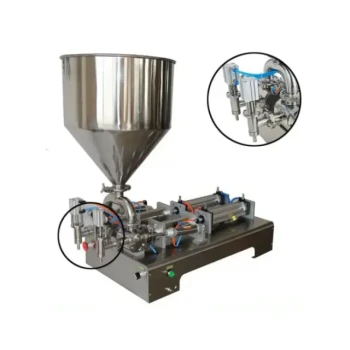
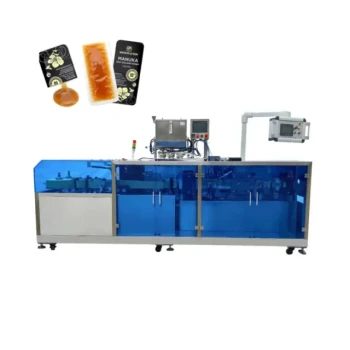
High-precision honey filling machines ensure product quality stability primarily by combining accurate dosage control with rapid, airtight sealing technology. This dual mechanism drastically minimizes air mixing and environmental exposure during the bottling process, effectively preserving critical physicochemical indicators such as acidity and sucrose content. By preventing fluctuations in chemical composition and physical stratification, these machines ensure the honey remains stable throughout its shelf life.
Stability in retail honey is not merely about consistent volume; it is about protecting the chemical integrity of the product. By eliminating air gaps and sealing instantly, high-precision machinery prevents the degradation that naturally occurs when honey interacts with the environment.
Mechanisms of Chemical and Physical Preservation
Controlling Physicochemical Indicators
The primary threat to bottled honey is the alteration of its internal chemistry. High-precision machines are engineered to protect specific physicochemical indicators, such as the acidity index and sucrose content.
By strictly controlling the filling environment and dosage, the machinery prevents the chemical fluctuations that lead to spoilage or flavor degradation. This ensures the product maintains its nutritional profile from the factory to the consumer's table.
Preventing Stratification
Honey is a complex fluid that can suffer from physical stratification, where components separate over time. Precision sealing technology locks the product in a stable state immediately after filling.
This rapid containment prevents the movement and separation of particles, ensuring the texture and consistency remain uniform throughout the bottle's shelf life.
Minimizing Air and Moisture Contact
Honey is hygroscopic, meaning it naturally absorbs moisture from the air, which can lead to fermentation and spoilage. Industrial-grade filling processes are designed to minimize the contact time between the honey and the surrounding atmosphere.
By reducing exposure and utilizing vacuum anti-drip technology, these machines prevent the absorption of environmental moisture. This technical approach is essential for extending the product's viable shelf life.
Hygiene and Consistency Standards
Eliminating Secondary Contamination
Manual bottling introduces significant risks of microbial contamination. Automated machines often employ non-contact filling technology and sterile operating conditions to mitigate this.
This design creates a barrier between the operator and the product, satisfying strict retail food safety standards. It ensures that environmental contaminants cannot enter the final package.
Managing Viscosity and Weight
Honey viscosity varies significantly depending on type and temperature. Automated flow control systems adapt to these variations to guarantee a consistent net weight for every unit, such as a standard 600ml bottle.
This consistency is vital for regulatory compliance and brand reputation. It ensures that no bottle is under-filled, enhancing the economic sustainability of large-scale production.
Understanding the Trade-offs
Calibration vs. Versatility
While high-precision machines offer superior stability, they require rigorous setup. Achieving exact dosage across honey types with different viscosities demands precise calibration of flow control systems.
Operators must be skilled in adjusting filling molds and settings when switching between product lines. Failure to calibrate correctly can negate the benefits of precision, leading to inconsistency.
Maintenance of Sterile Components
To maintain the "sterile conditions" mentioned in industry standards, the equipment requires disciplined cleaning protocols. The anti-drip and filtration systems that protect quality are complex and must be maintained to prevent them from becoming sources of contamination themselves.
Making the Right Choice for Your Goal
Selecting the right filling technology depends on which aspect of stability is most critical to your market strategy.
- If your primary focus is Shelf Life Extension: Prioritize machines with rapid airtight sealing and vacuum technology to minimize moisture absorption and fermentation risks.
- If your primary focus is Brand Consistency: Focus on equipment with advanced automated flow controls that guarantee uniform net weight and prevent physical stratification.
- If your primary focus is Purity and Hygiene: Select machines featuring non-contact filling and sterile processing capabilities to eliminate microbial risks.
Investing in high-precision filling is the definitive step toward transforming a raw agricultural product into a standardized, shelf-stable retail commodity.
Summary Table:
| Feature | Quality Benefit | Mechanism |
|---|---|---|
| Precise Dosage Control | Prevents chemical fluctuations | Maintains consistent physicochemical indicators like sucrose content. |
| Airtight Sealing | Extends shelf life | Minimizes air/moisture exposure to prevent fermentation and spoilage. |
| Vacuum Anti-Drip | Prevents contamination | Uses non-contact technology to maintain sterile conditions during filling. |
| Flow Control Systems | Uniform consistency | Adapts to honey viscosity to prevent stratification and ensure weight accuracy. |
Scale Your Honey Production with HONESTBEE
Are you ready to elevate your honey brand with industry-leading consistency and shelf stability? HONESTBEE specializes in empowering commercial apiaries and distributors with premium wholesale solutions. We provide a full spectrum of beekeeping tools and advanced machinery—from high-precision honey-filling and hive-making machines to essential consumables and honey-themed cultural merchandise.
Why partner with HONESTBEE?
- Comprehensive Equipment: Everything from field tools to factory-grade machinery.
- Quality Stability: Technology designed to protect your honey's nutritional profile.
- Expert Support: Solutions tailored to the needs of large-scale distributors.
Contact us today to optimize your honey processing line!
References
- Tatiana Mardari. QUALITY PARAMETERS OF BEE HONEY PRODUCED IN THE REPUBLIC OF MOLDOVA AND THE EUROPEAN UNION. DOI: 10.55505/sa.2023.2.15
This article is also based on technical information from HonestBee Knowledge Base .
Related Products
- Precision Durable Efficient HONESTBEE Rotary Honey Filling Machine
- Commercial Rotary Honey Filling Machine for Production
- Precision Automated Packaging Turntable Honey Spoon Filling Sealing Packing Machine
- Fully Automatic Honey Filling Packaging Machine for Processing Line
- Automatic Honey Filling and Filtering Machine for Beekeeping Bottle Filling
People Also Ask
- How do honey filling machines work? Achieve Precision & Speed for Your Apiary
- What quality control role does professional honey filling equipment perform? Ensure Consistency and Product Stability
- What is a key feature of the new generation of the honey filling machine? The Advanced Electronic Control Unit
- How do high-precision honey filling machines ensure quality? Optimize Your Commercial Production with HONESTBEE
- How do honey filling and processing machines aid native bee product conservation? Boost Value with HONESTBEE Technology