Hive-entrance pollen traps act as precise biological sampling devices that physically intercept foraging bees to collect data on landscape resources. By dislodging granular pollen pellets from returning workers, these traps provide representative nutritional samples that reveal exactly which plant species the colony is utilizing in real-time.
Core Insight: The primary contribution of pollen traps to conservation is enabling DNA metabarcoding. This analysis transforms raw pollen samples into hard data, validating the effectiveness of specific seed mixes and guiding decisions to optimize forage supply in agricultural landscapes.
The Mechanism of Data Collection
Physical Interception
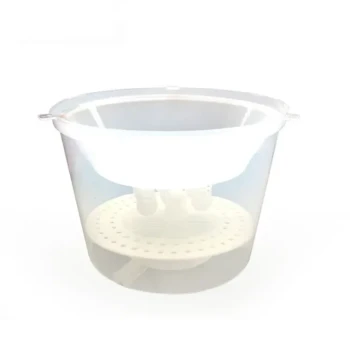
Pollen traps function by partially restricting the hive entrance with a specific wire mesh grid or series of small holes.
These apertures are sized precisely to allow the bee’s body to pass while stripping the pollen pellets attached to their hind legs.
The dislodged pollen falls into a protected collection tray, allowing researchers to harvest samples without significantly hindering the colony's movement.
Ensuring Sample Purity
Unlike "bee bread" stored inside the hive, samples collected by entrance traps represent immediate environmental conditions.
Because the pollen is intercepted before entering the hive, it is less influenced by internal microbial metabolism or colony contamination.
This purity makes entrance-trap pollen the ideal medium for evaluating direct field exposure pathways.
Validating Conservation Efficacy
DNA Metabarcoding Analysis
The physical sample is only the starting point; the critical step is DNA metabarcoding.
This advanced analysis identifies the specific plant species present in the intercepted pollen loads.
It provides definitive proof of which plants the bees are actually visiting, rather than simply assuming they are visiting the plants available nearby.
Optimizing Seed Mixes
Conservation programs often rely on specific seed mixes to restore habitats.
Pollen trap data allows program managers to evaluate if these specific mixes are providing the intended nutritional support.
By analyzing the intake, researchers can determine if the bees are utilizing the conservation forage or bypassing it for other sources.
Understanding the Trade-offs
Colony Disturbance
While effective for sampling, these traps rely on mechanical obstruction at the hive entrance.
Forcing bees to crawl through small apertures alters their normal entry behavior and physically removes a portion of their food source.
Snapshot Limitations
The data collected represents a specific timeframe dependent on when the trap is active.
While excellent for spotting immediate landscape contamination or flowering events, it may not reflect the colony's long-term nutritional status without continuous monitoring.
Making the Right Choice for Your Goal
To effectively evaluate your land conservation program, consider the following applications:
- If your primary focus is validating investment: Use pollen traps combined with DNA metabarcoding to confirm that bees are actually foraging on the expensive seed mixes you planted.
- If your primary focus is habitat safety: Analyze the intercepted pollen for neonicotinoid concentrations to map chemical exposure levels within the conserved landscape.
Pollen traps bridge the gap between planting habitat and verifying its biological value.
Summary Table:
| Feature | Contribution to Conservation Evaluation |
|---|---|
| Mechanism | Physical interception of pollen pellets at the hive entrance |
| Data Accuracy | Provides immediate, uncontaminated samples of current floral resources |
| Primary Analysis | DNA metabarcoding identifies specific plant species visited |
| Application | Validates seed mix effectiveness and maps chemical exposure |
| Key Benefit | Bridges the gap between habitat planting and verified biological value |
Maximize Your Apiary's Potential with HONESTBEE
At HONESTBEE, we understand that data-driven beekeeping is the future of sustainable honey production. As a premier partner for commercial apiaries and distributors, we provide more than just equipment—we provide the tools for success. From high-precision hive-entrance pollen traps to advanced honey-filling machines and specialized hive-making hardware, our comprehensive wholesale catalog is designed to scale your operations.
Whether you are managing massive landscapes or supplying the industry's essential consumables, HONESTBEE delivers the expertise and machinery you need to thrive. Ready to optimize your yield and evaluate your conservation impact?
Contact Us Today to Explore Wholesale Solutions
References
- Bradley N. Metz, Michael Simone-Finstrom. Proceedings of the 2020 American Bee Research Conference. DOI: 10.3390/insects11060362
This article is also based on technical information from HonestBee Knowledge Base .
Related Products
- 30 cm Plastic Entrance Hole Bee Pollen Trap and Collector
- Multi-Functional Sliding Hive Entrance for Beekeeping
- Professional Reversible Beehive Hive Entrance
- Beehive Entrance Discs Plastic Bee Entrance Disc for Bee Hives
- Removable Plastic Pollen Trap With Ventilated Tray for Bees Pollen Collector
People Also Ask
- What are the design principles and advantages of pollen traps in the collection of bee pollen? Boost Your Apiary Yield
- Why is frequent harvesting of bee pollen from traps necessary for quality control? Ensure Freshness and Prevent Mold.
- How often should bee pollen be harvested from a trap and why? Master Freshness and Prevent Spoilage
- What function do pollen traps serve in quantitative collection? Boost Your Apiary's Data & Production Efficiency
- What is the primary function of bee pollen traps? Optimize Your Pollen Harvest with Advanced Extraction Efficiency