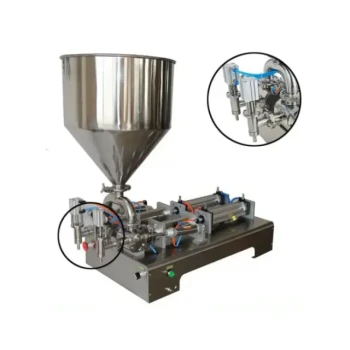
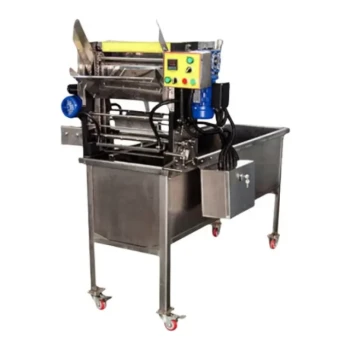
Honey filling and packaging machines serve as the fundamental technological bridge that transforms raw, bulk apiculture yields into high-value, retail-ready commodities. By automating precise filling and sealing processes, this equipment enables producers to move beyond selling raw materials and instead produce standardized goods that comply with strict hygiene and trademark regulations.
Core Insight: The transition from beekeeper to commercial brand requires more than just production volume; it demands product consistency. Automated packaging machinery provides the necessary standardization and regulatory compliance to bypass bulk commodity markets, allowing organizations to retain higher margins through independent branding.
Transforming Commodities into Professional Brands
Establishing Market Autonomy
The primary value of these machines lies in their ability to grant beekeeping organizations market autonomy.
Instead of selling bulk honey at low commodity prices to intermediaries, producers can control the final product.
This shift allows for the creation of professional brands that capture the full retail value of the harvest.
Ensuring Regulatory Compliance
Commercial success depends on meeting rigorous industry standards.
Filling machines ensure products comply with hygiene and trademark regulations, which is a prerequisite for entering major retail chains.
Without this compliance, honey remains a raw agricultural product rather than a tradeable consumer good.
Enhancing Market Recognition
Brand loyalty is built on the consumer's ability to recognize and trust a product.
Standardized packaging allows for consistent labeling and branding, making the product instantly recognizable on the shelf.
This visual consistency is the first step in establishing a lasting reputation in the marketplace.
The Role of Precision and Standardization
Exact Volume Control
High-precision filling technology utilizes quantitative filling to ensure weight consistency across every unit.
This precision is critical for maintaining consumer trust and adhering to legal net-weight requirements.
It also significantly reduces raw material loss, preventing the "overfilling" that often occurs with manual processing.
Improving Production Efficiency
Automated machinery acts as the critical link between production and the marketplace by streamlining final processing stages.
These systems drastically reduce labor costs and increase throughput compared to manual methods.
This efficiency provides the core momentum needed to meet growing domestic and international demand.
Hygiene, Safety, and Shelf Life
Preventing Secondary Contamination
Industrial-grade machines utilize closed filling processes that isolate the honey from external impurities.
This automation prevents human contact and environmental exposure, significantly lowering the risk of secondary contamination.
Such hygiene standards are essential for producing high-quality goods for the food, pharmaceutical, and cosmetic industries.
Extending Product Longevity
Proper sealing technologies prevent fermentation and degradation during storage and transport.
By creating a reliable barrier against air and moisture, these machines extend the product shelf life.
This durability is vital for reaching international export markets where transit times are longer.
Enabling Traceability
Modern consumer markets demand transparency regarding product origin and safety.
Automated systems facilitate the tracking of batches, ensuring full traceability from the hive to the consumer.
This capability is a key differentiator for premium brands marketing high-quality, natural products.
Understanding the Trade-offs
Capital Investment vs. Volume
While these machines unlock high-value markets, they represent a significant capital expenditure.
Investing in industrial-grade automation is most effective for large-scale supply chains or cooperatives that have the volume to justify the cost.
Small-scale producers must weigh the cost of equipment against their actual production capacity to ensure a return on investment.
Maintenance and Technical Requirements
Transitioning to automated packaging introduces a layer of technical complexity.
Operators must be trained to manage precise weighing systems and maintain hygienic sealing components.
Reliability depends on regular maintenance; neglecting this can lead to downtime that negates the efficiency gains.
Making the Right Choice for Your Goal
To maximize the added value of your honey products, align your equipment choice with your strategic business objectives.
- If your primary focus is Brand Independence: Prioritize machines that offer versatile packaging options to differentiate your product on retail shelves.
- If your primary focus is Exporting: Focus on equipment with superior sealing and hygiene ratings to ensure shelf-life stability and international regulatory compliance.
- If your primary focus is Profit Margin: Look for high-precision quantitative filling features to eliminate raw material overfill and reduce waste.
Ultimately, the right packaging machinery does not just package your honey; it packages your reputation, securing your position in the premium market.
Summary Table:
| Key Feature | Benefit for Commercial Brands | Strategic Impact |
|---|---|---|
| Quantitative Filling | Ensures weight consistency and reduces product waste | Maintains consumer trust and profit margins |
| Automated Sealing | Prevents contamination and extends shelf life | Enables international export and retail compliance |
| Standardized Branding | Creates professional, recognizable retail packaging | Shifts from bulk commodity to high-value brand |
| Hygienic Isolation | Meets strict food and pharmaceutical safety standards | Minimizes risk and secures market entry |
| Traceability Systems | Facilitates batch tracking from hive to consumer | Enhances transparency for premium positioning |
Elevate Your Honey Brand with HONESTBEE Professional Solutions
Transform your raw honey into a premium retail-ready product. At HONESTBEE, we specialize in empowering commercial apiaries and distributors with high-performance honey-filling machines, advanced packaging equipment, and specialized hive-making machinery.
Our comprehensive wholesale offering provides everything from essential consumables to industrial-grade hardware, ensuring you achieve the precision, hygiene, and brand consistency needed to dominate the global market.
Ready to maximize your production value?
Contact HONESTBEE Today to discover how our tailored equipment solutions can streamline your supply chain and grow your brand.
References
- L. F. Wolff, João Carlos Costa Gomes. Beekeeping and Agroecological Systems for Endogenous Sustainable Development. DOI: 10.1080/21683565.2014.991056
This article is also based on technical information from HonestBee Knowledge Base .
Related Products
- Fully Automatic Honey Filling Packaging Machine for Processing Line
- Precision Automated Packaging Turntable Honey Spoon Filling Sealing Packing Machine
- Economy Small Honey Filling Machine Honey Bottle Filler Packaging Machine
- Automatic Single-Dose Snap & Squeeze Honey Sachets Packing Machine
- Double Nozzle Small Honey Filling Machine Honey Sachet Packing Packaging Equipment
People Also Ask
- Why are fully automatic honey filling and packaging lines essential? Boost Your Honey's Market Value and Quality
- What is a fully-automatic honey filler? Streamline Your Production with High-Precision Automation
- How do automated honey filling and packaging machines affect profitability? Boost Margins with HONESTBEE Technology
- How do automated honey filling and packaging machines contribute to the market value of honey products? Maximize Your ROI
- How do industrial-grade automated honey filling and packaging machines mitigate the risk of physical contamination?