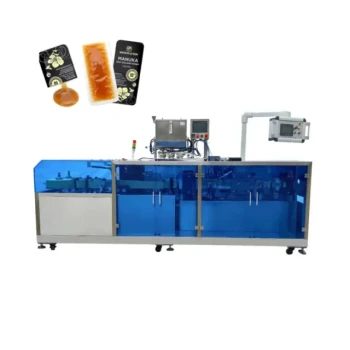
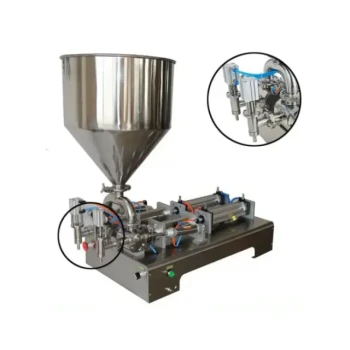
Honey-filling machines act as the critical technological bridge between raw apiary collection and mass retail distribution. They optimize the value chain by replacing inconsistent manual bottling with high-speed, quantitative automation that ensures every unit meets the rigorous hygiene and weight standards required by international logistics and supermarkets.
The Bottom Line While manual bottling suffices for local sales, large-scale distribution requires honey to be treated as a standardized industrial commodity. Automated filling machines provide the necessary precision, speed, and sterility to transform a variable agricultural product into a retail-ready unit that complies with global export and food safety regulations.
Transforming Production into Commerce
Achieving Industrial Throughput
To transition from small-scale beekeeping to commercial distribution, producers must move beyond the limitations of manual labor. High-speed, quantitative bottling allows facilities to process bulk raw materials into consumer-ready units at a pace that matches large-scale demand. This automation is a fundamental requirement for fulfilling the high-volume orders typical of major retail chains.
Ensuring Precise Quantitative Filling
Manual filling often results in inconsistent volumes, leading to product giveaway (overfilling) or regulatory fines (underfilling). Automated machines utilize accurate metering systems to control flow rates and dosage down to the gram. This precision ensures compliance with strict packaging weight regulations and labeling requirements, minimizing product loss and maximizing revenue per batch.
Optimizing Logistics and Inventory
Standardization for Efficient Transport
Large-scale logistics rely on uniformity to maximize space utilization in trucks and warehouses. Standardized filling equipment creates uniform product units that are easy to stack, palletize, and inventory. This consistency streamlines the supply chain, allowing for more efficient distribution to mobile markets and high-frequency retail centers.
Reducing Contamination Risks
In a long value chain, product longevity and safety are paramount. Automated machines feature fully enclosed hygienic designs that eliminate the need for human contact during the bottling process. By removing manual handling, producers significantly reduce the risk of contamination, extending shelf life and ensuring the product survives the journey through complex distribution networks.
Unlocking High-Volume Markets
Meeting Retail Shelf Standards
Supermarkets and international exporters demand aesthetic and physical consistency across thousands of units. Automated filling ensures consistent fill lines and visual appeal, which are critical for consumer confidence on the shelf. This "commercial presentation" is often the gatekeeper for entering wholesale markets and working with major distributors.
Adapting to Market Variety
Modern distribution often requires serving different market segments simultaneously, from small sample jars to bulk family sizes. Advanced filling machines facilitate rapid switching between bottle sizes, allowing producers to fulfill diverse orders without significant downtime. This flexibility enables operations to manage multiple honey varieties and satisfy immediate supply requirements efficiently.
Understanding the Trade-offs
The Complexity of Flexibility
While modern machines allow for switching between bottle sizes, this often introduces operational complexity. Changeovers require downtime for cleaning and recalibrating the metering systems, which can impact overall throughput if not managed correctly. Producers must balance the desire for diverse packaging with the need for continuous, high-speed operation.
Maintenance of Precision Components
To maintain the high precision required for regulatory compliance, these machines demand rigorous maintenance. The accurate metering systems and seals that prevent leaks and ensure hygiene are sensitive to wear and honey crystallization. Without a dedicated maintenance schedule, the efficiency gains of automation can be lost to mechanical drift or breakdown.
Making the Right Choice for Your Goal
To maximize the value of a honey-filling machine, align the equipment capabilities with your specific distribution targets.
- If your primary focus is International Export: Prioritize machines with fully enclosed hygienic designs and verified metering accuracy to ensure compliance with strict cross-border food safety and weight regulations.
- If your primary focus is Local Retail Variety: Prioritize machines with rapid changeover capabilities that allow you to switch between different jar sizes and honey types to serve diverse customer bases efficiently.
Automation is not just about moving faster; it is about establishing the consistency and safety protocols that turn a local harvest into a global commodity.
Summary Table:
| Optimization Pillar | Key Benefit | Impact on Value Chain |
|---|---|---|
| Production Speed | High-speed quantitative bottling | Enables fulfillment of high-volume retail orders |
| Measurement | Accurate metering systems | Prevents product giveaway and ensures regulatory compliance |
| Safety & Hygiene | Fully enclosed design | Extends shelf life and reduces contamination risks |
| Logistics | Uniform product units | Streamlines palletizing, warehousing, and transport |
| Flexibility | Rapid size changeovers | Allows producers to serve multiple market segments simultaneously |
Scale Your Honey Production with HONESTBEE
Transitioning from local apiaries to global distribution requires industrial-grade reliability. HONESTBEE specializes in empowering commercial apiaries and distributors with the robust machinery needed to dominate the market.
Our comprehensive wholesale portfolio includes:
- Advanced Honey-Filling Machines: Engineered for precision, hygiene, and rapid changeovers.
- Industrial Hardware: Everything from hive-making to honey-processing equipment.
- Specialized Consumables: A full spectrum of essential beekeeping tools and industry supplies.
Whether you are scaling your own production or supplying the industry, our expertise ensures your honey meets international retail and safety standards. Partner with HONESTBEE today to optimize your operation!
References
- Yogi Sirjana, Bharti Bibas. PRODUCTION AND MARKETING ECONOMICS OF HONEY FROM APIS CERANA IN DANG DISTRICT OF NEPAL. DOI: 10.26480/rfna.01.2020.22.26
This article is also based on technical information from HonestBee Knowledge Base .
Related Products
- Precision Durable Efficient HONESTBEE Rotary Honey Filling Machine
- Economy Small Honey Filling Machine Honey Bottle Filler Packaging Machine
- Fully Automatic Honey Filling Packaging Machine for Processing Line
- Commercial Rotary Honey Filling Machine for Production
- Automatic Honey Filling and Filtering Machine for Beekeeping Bottle Filling
People Also Ask
- What is a key feature of the new generation of the honey filling machine? The Advanced Electronic Control Unit
- How do honey filling machines work? Achieve Precision & Speed for Your Apiary
- How do honey filling and processing machines aid native bee product conservation? Boost Value with HONESTBEE Technology
- How do high-precision honey filling machines ensure quality? Optimize Your Commercial Production with HONESTBEE
- What are the common types of bottling machines used for honey? Choosing the Right Solution for Your Apiary