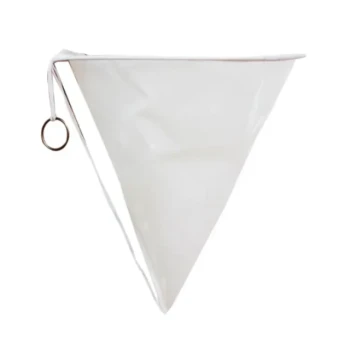
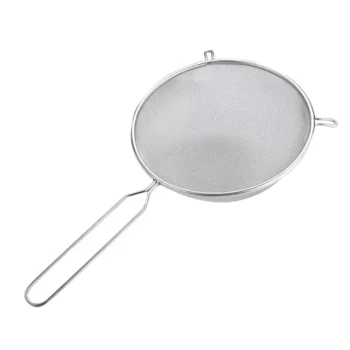
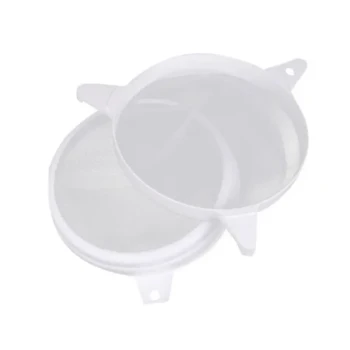
Honey filtering machines act as the critical refinement step between raw harvest and a market-ready product. They improve consistency and appearance primarily by mechanically removing larger particles—such as beeswax and bee fragments—and eliminating entrapped air bubbles. This process transforms a cloudy, uneven raw substance into the smooth, uniform liquid that consumers associate with high-quality honey.
The primary function of a honey filtering machine is to standardize the product's texture and clarity. By removing physical contaminants and aeration, these machines ensure the honey meets hygiene regulations and consumer aesthetic standards while preserving its natural integrity.
The Mechanics of Consistency
Eliminating Physical Impurities
Raw honey extracted directly from the comb inevitably contains debris. Filtering machines utilize mechanical systems to screen out beeswax residues, larvae fragments, and bee parts. Removing these solids is the first step toward creating a chemically and physically consistent liquid.
Smoothing the Texture
Beyond solid debris, the extraction process often traps air within the viscous liquid. Filtering machines remove these air bubbles, which can otherwise give the honey a cloudy or frothy appearance. The result is a smooth, homogenous texture that feels pleasant on the palate.
Extending Product Stability
Consistency is also about longevity. Contaminants such as wax or foreign organic matter can act as catalysts for spoilage or premature crystallization. By producing a purer fluid, filtration helps extend the shelf life of the honey, ensuring the consistency remains stable over time.
Visual Appeal and Market Value
enhancing Clarity for the Consumer
Visual appeal is a primary driver of purchasing decisions. Honey that is free from visible specks and cloudiness is perceived as pure and premium. The clarity achieved through filtration significantly improves marketability, allowing the product to command higher value in retail environments.
Meeting Hygiene and Safety Standards
Traditional manual squeezing methods often introduce hygiene risks and quality degradation. Industrial filtration ensures the final product meets international food safety standards. This level of standardized purity is often a prerequisite for export markets and large-scale commercial distribution.
Understanding the Trade-offs
Balancing Purity with Character
While clarity is desirable, it is important to understand that filtration is not a "one size fits all" process. Beekeepers must choose the appropriate mesh size for their specific goals.
The Risk of Over-Filtration
Using an excessively fine filter may remove beneficial trace elements alongside the impurities. The goal is to remove contaminants without stripping the honey of the distinct characteristics that define its local flavor profile. Customizing the filtration level allows producers to retain the honey's identity while still ensuring it is clean and safe.
Making the Right Choice for Your Goal
To maximize the value of your honey, align your filtration strategy with your target market.
- If your primary focus is Mass Market Retail: Prioritize finer filtration to achieve maximum clarity and shelf stability, as visual purity drives these consumer choices.
- If your primary focus is Artisanal or "Raw" Sales: Utilize a coarser mesh to remove visible debris while retaining pollen and natural texture, appealing to customers seeking a less processed product.
Ultimately, a filtering machine is not just about cleaning honey; it is a tool for defining the final character and commercial viability of your harvest.
Summary Table:
| Feature | Impact on Honey Quality | Benefit for Producers |
|---|---|---|
| Debris Removal | Eliminates wax, larvae, and bee fragments | Ensures compliance with hygiene standards |
| Aeration Control | Removes trapped air bubbles/froth | Enhances visual clarity and liquid smoothness |
| Purity Refinement | Stabilizes texture and reduces spoilage risks | Extends shelf life and product stability |
| Custom Filtration | Balances clarity with natural pollen content | Allows for both mass-market and artisanal branding |
Elevate Your Honey Production with HONESTBEE
At HONESTBEE, we understand that premium honey requires professional-grade refinement. We provide commercial apiaries and distributors with a comprehensive range of beekeeping tools, from advanced honey-filling machines to specialized filtering and processing hardware.
Whether you are aiming for crystal-clear retail honey or artisanal raw varieties, our wholesale equipment is designed to enhance your efficiency and product appeal.
Ready to scale your apiary operations? Contact us today to explore our full spectrum of beekeeping machinery and industry consumables tailored to your business needs.
Related Products
- Professional Stainless Steel Honey Filtering Machine with Water Bath Heating for Beekeeping
- Electric Double Wall Honey Filtering Machine Purifier Equipment for Honey Processing Plant
- Honey Concentrating and Filtering Dehumidifier Machine 2T Capacity for Honey
- Automatic Honey Filling and Filtering Machine for Beekeeping Bottle Filling
- 0.5T Capacity Honey Dehumidifier Dryer with Vacuum Heating and Thickening Filtering Machine
People Also Ask
- What is the best way to filter honey? A Guide to Quality, Clarity, and Raw Preservation
- Is it necessary to filter honey after extraction? A Guide to Straining vs. Raw Honey
- Why do people filter honey? For Clarity, Stability, and Consumer Appeal
- Why is filtering honey an important step in honey processing? Ensure Purity, Clarity & Marketability
- What are the benefits of using honey filters? Achieve Purity, Efficiency, and Market Appeal