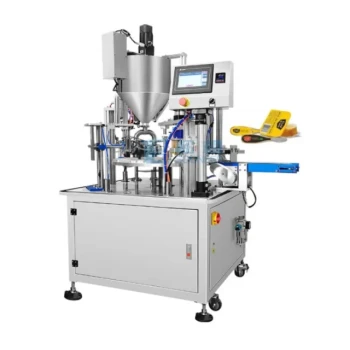
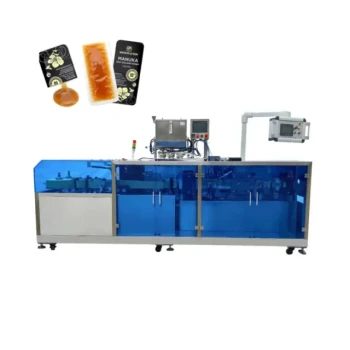
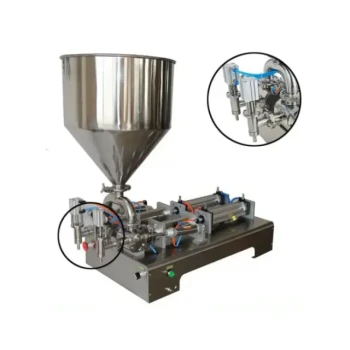
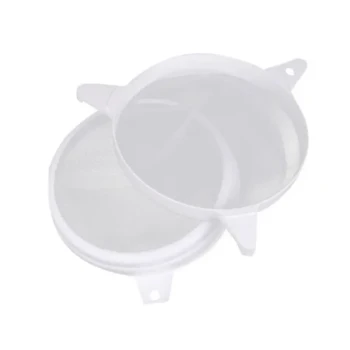
Honey filtration and automated filling equipment contribute to commercial value by fundamentally transforming raw honey into a standardized, compliant consumer product. This machinery enhances physical purity and sensory quality while enabling the consistent packaging necessary for distribution in formal retail channels and international markets.
By replacing manual handling with automated precision, producers elevate honey from a variable agricultural ingredient to a professional brand, ensuring the hygiene, stability, and traceability required to command premium prices.
Elevating Sensory Quality and Purity
Refining Physical Appearance
Raw honey often contains beeswax particles, debris, or other physical impurities that can detract from shelf appeal. Filtration equipment efficiently removes these elements, resulting in a product with superior transparency and fluidity. This is not merely an aesthetic improvement; data suggests that approximately 62.3% of consumers prefer the appearance and texture of processed honey over its raw counterpart.
Preserving Flavor Profiles
High-quality filtration and filling systems are designed to operate within a controlled environment. Unlike aggressive processing methods that might degrade the product, modern equipment preserves the unique flavor and aroma of the honey. This ensures that the final bottled product retains the sensory characteristics that distinguish high-value varietals.
Ensuring Nutritional Integrity
Advanced processing equipment is engineered to balance clarification with retention. It eliminates unwanted physical impurities while preserving essential nutritional components. This balance is critical for maintaining the product's status as a healthy, natural sweetener in the eyes of the consumer.
Operational Efficiency and Scalability
Precision and Waste Reduction
Automated filling lines utilize high-precision quantitative pumps. This technology ensures exact measurement accuracy, significantly reducing product waste that occurs with manual pouring. For beekeeping enterprises, this precision directly translates to improved yield per batch.
Reducing Labor Costs
Automation shifts the cost structure of honey production. By minimizing the need for manual labor in the filling and sealing process, businesses can significantly reduce operational costs. This efficiency helps producers maintain price competitiveness, particularly when exporting to international markets.
Enabling Large-Scale Distribution
Retail chains and supermarkets require products to have uniform weight, volume, and sealing. Automated machinery provides the standardized packaging required to enter these formal retail channels. Without this consistency, honey producers are often limited to direct-to-consumer sales or local farmers' markets.
Risk Mitigation and Compliance
Guaranteeing Hygiene and Safety
Manual handling introduces a high risk of secondary contamination. Automated filling machines create a sterile filling environment, drastically reducing bacterial risks. This adherence to strict hygiene standards is a prerequisite for food safety certification and consumer trust.
Preventing Spoilage
Properly sealed and processed honey has a much longer shelf life. Automated sealing systems ensure airtight closures that prevent moisture ingress and oxidation. This protection prevents spoilage during storage, protecting the brand's inventory value and reputation.
Securing Traceability
Modern industrial equipment enables a closed-loop production cycle. This system ensures that the honey's pollen fingerprint—the key to verifying its origin—remains consistent from the apiary to the bottle. This hardware foundation minimizes the risk of adulteration (such as the unauthorized addition of syrups) and supports robust traceability systems.
Understanding the Trade-offs
The Balance of Filtration
While consumers prefer clear honey, there is a technical pitfall in over-processing. The goal is to remove debris without stripping the pollen entirely, as the pollen provides the "fingerprint" for traceability. Beekeepers must ensure their equipment is calibrated to clarify without sterilizing the honey of its botanical identity.
Capital Investment vs. Market Access
Implementing this level of automation requires significant upfront capital. For small producers, this creates a barrier to entry. However, relying on manual processes creates a "glass ceiling" where the product cannot legally or logistically enter high-end supermarkets or export chains due to a lack of standardization and safety certifications.
Making the Right Choice for Your Goal
To maximize the commercial return on your honey products, align your equipment strategy with your market target:
- If your primary focus is Mass Market Retail: Prioritize high-speed automated filling lines that guarantee volume consistency and strict hygiene compliance to meet supermarket entry requirements.
- If your primary focus is Premium Varietal Export: Invest in precision filtration systems that maximize clarity while rigorously preserving the unique aroma and pollen fingerprint for traceability.
Investing in the right processing infrastructure is not just an operational upgrade; it is the bridge between selling a raw ingredient and managing a valuable consumer brand.
Summary Table:
| Benefit Category | Impact on Commercial Value | Key Technical Advantage |
|---|---|---|
| Product Quality | Enhances clarity, texture, and sensory appeal | Multi-stage filtration removes debris while preserving flavor |
| Market Access | Enables entry into supermarkets and export chains | Standardized packaging (weight/volume) and airtight sealing |
| Cost Efficiency | Reduces labor costs and product giveaway | High-precision quantitative pumps minimize filling waste |
| Risk Management | Ensures food safety and product traceability | Sterile filling environment prevents secondary contamination |
| Shelf Stability | Extends shelf life and protects brand reputation | Airtight closures prevent oxidation and moisture ingress |
Elevate Your Apiary to Professional Excellence with HONESTBEE
Don't let manual processes limit your growth. HONESTBEE empowers commercial apiaries and honey distributors with the industrial-grade tools needed to dominate the market. From high-precision honey-filling machines to advanced filtration hardware and complete hive-making machinery, we provide the end-to-end solutions required for large-scale success.
Partnering with HONESTBEE gives you:
- Superior Efficiency: Reduce labor costs and waste with our automated filling lines.
- Premium Quality: Ensure your honey meets international food safety and aesthetic standards.
- Wholesale Support: Access a full spectrum of beekeeping consumables and equipment designed for professional scale.
Ready to transform your honey into a high-value consumer brand? Contact our expert team today to discuss your customized equipment solution!
References
- Rafael Landaverde, Jean A. Parrella. Honey Production and Climate Change: Beekeepers’ Perceptions, Farm Adaptation Strategies, and Information Needs. DOI: 10.3390/insects14060493
This article is also based on technical information from HonestBee Knowledge Base .
Related Products
- Automatic Honey Filling and Filtering Machine for Beekeeping Bottle Filling
- Fully Automatic Honey Filling Packaging Machine for Processing Line
- Precision Durable Efficient HONESTBEE Rotary Honey Filling Machine
- Semi Automatic Small Honey Bottle Filling Machine Honey Filler
- Precision Automated Packaging Turntable Honey Spoon Filling Sealing Packing Machine
People Also Ask
- What process advantages do professional honey filtering and filling machines provide? Optimize Your Organic Honey Output
- How do honey filling and filtering machines increase product value? Turn Raw Honey into Premium Export-Grade Goods
- How do honey filtration and filling machinery contribute to industrialization? Scale Your Commercial Honey Production
- What specific issues do industrial filtration and automated filling machinery address? Ensure Honey Quality & Compliance
- How does the use of professional honey filtration and filling machinery facilitate international honey exports?