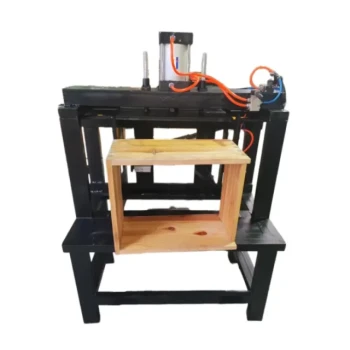
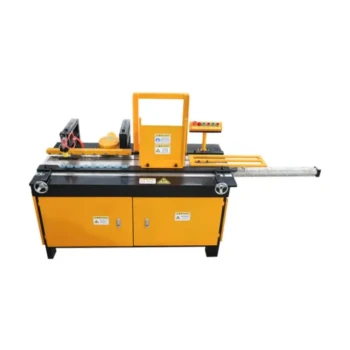
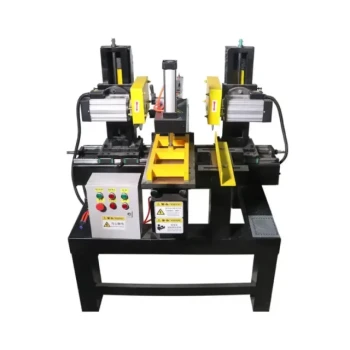
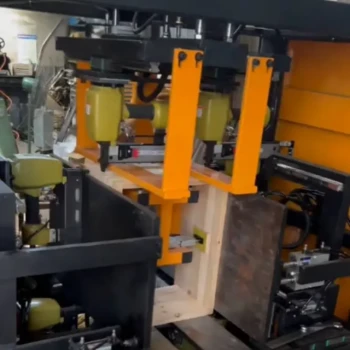
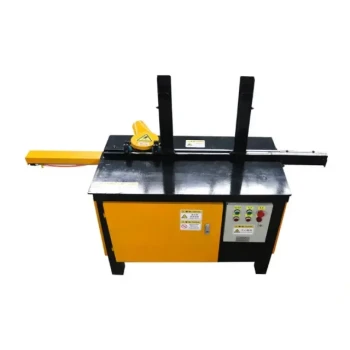
Industrial-grade hive-making machines act as the technological backbone for modern, scalable apiaries. By automating the precision cutting and assembly of hive components, these systems replace artisanal variability with strict structural uniformity. This shift is the fundamental requirement for transitioning from small-scale beekeeping to efficient, industrial-grade operations.
The Core Insight While manual construction introduces inevitable variations, industrial machines enforce rigorous standardization necessary for large-scale logistics. This precision not only facilitates the seamless interchangeability of parts but also enables critical customization to match the specific biological habits of different bee species, directly optimizing colony management.
The Pillars of Structural Standardization
Enabling Component Interchangeability
The primary contribution of these machines is the creation of perfectly uniform components. Whether producing hive frames, bottom boards, or supers, the machinery ensures every piece is dimensionally identical.
This allows beekeepers to swap tools and parts between different hives without friction. It eliminates the time-consuming process of fitting or modifying equipment in the field, which is vital for large-scale maintenance.
Preserving "Bee Space" and Biology
Standardization is not just a logistical convenience; it is a biological necessity. High-precision cutting ensures internal dimensions respect "bee space"—the precise gap bees need to move freely without building excess comb or propolis.
Maintaining this gap enhances colony health by improving overwintering conditions. It also bolsters disease resistance by ensuring the hive environment functions exactly as bee biology dictates.
Facilitating Mechanization and Automation
Industrial machines provide the physical foundation required for automated farming. Because the hives are produced with exact specifications, they are compatible with automated honey harvesting systems and mechanized maintenance lines.
Robotic handlers and processing lines require predictable inputs. Machine-made hives offer the consistent geometry needed to reduce manual labor and increase operational efficiency.
Optimization Through Strategic Customization
Tailoring to Bee Species
A distinct advantage of industrial hive-making machinery is the ability to program specific structural parameters. This allows for customization based on the unique habits of the target bee species.
For example, the housing requirements for the Italian bee differ from those of the Oriental honey bee. Machines can be adjusted to manufacture physical structures that optimize the management process for these specific colonies, rather than forcing all species into a generic architecture.
Supporting Economic Scalability
By facilitating mass production, these machines significantly reduce the manufacturing cost per unit. This cost efficiency serves as critical hardware support for apiaries expanding from hobbyist levels to professional industries.
Furthermore, standardized hives generally offer longer service lives. This durability reduces the frequency and cost of equipment replacement over time.
Understanding the Operational Trade-offs
While the benefits of industrial standardization are clear, there are specific considerations to keep in mind regarding implementation.
The Rigidity of Standardization
Once a standard is adopted via industrial machinery, changing it becomes a significant logistical hurdle. If an operation decides to switch bee species or management styles later, the existing inventory of highly specific, standardized equipment may become obsolete.
Precision Dependencies
The effectiveness of the hive is entirely dependent on the calibration of the machine. Minor errors in the machine's settings can result in thousands of defective units that violate critical bee space, potentially harming colony productivity before the error is caught.
Making the Right Choice for Your Goal
To leverage industrial hive manufacturing effectively, align the machine's capabilities with your operational focus:
- If your primary focus is large-scale efficiency: Prioritize machines that guarantee high-precision interoperability to facilitate automated honey harvesting and rapid component swapping.
- If your primary focus is colony health and productivity: Utilize the machine's customization features to tailor hive dimensions specifically to the biological habits of the bee species (e.g., Italian vs. Oriental) you intend to raise.
Ultimately, industrial hive-making machines transform the hive from a simple shelter into a precision-engineered tool that dictates the efficiency and scalability of the entire operation.
Summary Table:
| Key Feature | Benefit for Beekeepers | Impact on Industry |
|---|---|---|
| Dimensional Precision | Ensures perfect "Bee Space" | Enhanced colony health & disease resistance |
| Component Uniformity | Total part interchangeability | Faster maintenance & reduced downtime |
| Automated Production | Lower cost per unit | Economic scalability for large apiaries |
| Species Customization | Tailored hive geometry | Optimized management for Italian/Oriental bees |
| Mechanized Compatibility | Integration with robotic harvesters | Transition to fully automated honey farming |
Scaling Your Beekeeping Business with Precision Engineering
Transitioning to industrial-grade operations requires hardware that delivers consistency and durability. HONESTBEE specializes in empowering commercial apiaries and distributors with the high-performance tools needed to dominate the market.
Our comprehensive wholesale portfolio includes:
- Advanced Machinery: High-precision hive-making and honey-filling machines.
- Quality Equipment: A full spectrum of beekeeping tools and hardware.
- Industry Consumables: Essential supplies for daily management.
- Cultural Merchandise: Unique honey-themed products to diversify your brand.
Whether you are looking to optimize hive production for specific bee species or seeking a reliable wholesale partner for machinery, we provide the technical edge you need to grow.
Ready to elevate your operational efficiency? Contact HONESTBEE Today
References
- O. Drebot, M. Vysochanska. Features of the development of the beekeeping industry in the context of global experience. DOI: 10.33730/2310-4678.3.2023.287821
This article is also based on technical information from HonestBee Knowledge Base .
Related Products
- High-Efficiency Pneumatic Bee Hive Making Machine for Rapid Box Assembly
- Mini Desktop Bee Hive Frame Forming Making Machine
- Beehive Handle and Frame Rest Cutting Machine: Your Specialized Hive Machine
- Beehive Machine Double End Saw for Precision Hive Component Manufacturing
- Automatic High-Speed Bee Hive Box Stapling Machine
People Also Ask
- How does the introduction of professional beehive-making machinery benefit sustainable beekeeping? Scale Your Apiary
- Why is specialized beehive-making machinery critical for low-defense breeding? Enhance Selection with Precision Tools
- How does the introduction of specialized beehive making machinery contribute to increasing the scale of regional beekeeping industries?
- What is the importance of specialized beehive making machinery in a circular bio-economy? Build Local Sustainability
- Why is specialized beehive-making machinery essential? Scale Your Apiary with Precision Industrial Standards