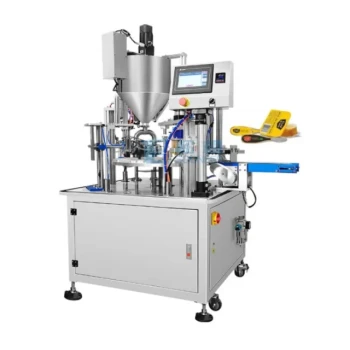
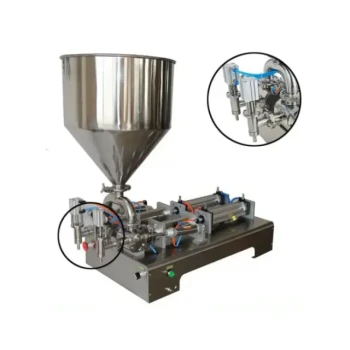
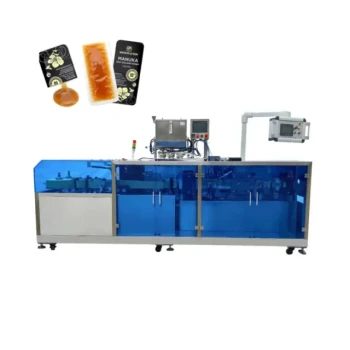
Industrial honey-filling machines fundamentally resolve production bottlenecks by replacing the variability of manual labor with automated precision and environmental control. These systems utilize advanced metering control systems and sterile packaging technologies to eliminate volume inaccuracies and hygiene risks that typically slow down processing.
Core Takeaway By operating in a fully enclosed environment, these machines do not just speed up production; they ensure strict adherence to net weight regulations and significantly extend product shelf life. This automation transforms the packaging phase from a frequent choke point into a streamlined process capable of supporting international trade standards.
Solving the Precision Bottleneck
Automated Metering vs. Manual Estimation
Manual filling often results in inconsistent volumes, leading to either product give-away (financial loss) or underfilling (regulatory violation). Industrial machines employ precision metering control systems to dispense exact quantities every time.
Guaranteeing Regulatory Compliance
For international trade and retail distribution, meeting strict net weight regulations is non-negotiable. Automated fillers ensure that every unit produced falls within legal tolerances, removing the need for time-consuming manual weight checks.
Minimizing Material Loss
Inaccurate filling results in spillage and waste of raw materials. High-precision automation reduces this material loss, ensuring that bulk honey is converted into finished product with maximum efficiency.
Addressing Hygiene and Preservation Challenges
The Enclosed Sterile Environment
Honey is susceptible to contamination during the transition from bulk storage to retail jars. Industrial machines operate within a fully enclosed, sterile environment, effectively isolating the product from external impurities and airborne contaminants.
Eliminating Secondary Contamination
Manual operations introduce a high risk of microbial contamination through human contact. Automated systems remove the human element from the filling zone, significantly reducing the risk of secondary microbial issues.
Extending Shelf Life
By preventing contamination and ensuring a hygienic seal, these machines extend the product shelf life. This longevity is critical for logistics, allowing producers to ship to distant markets without spoilage concerns.
Optimizing Quality and Throughput
Preserving Natural Enzymes
Exposure to air can degrade honey's natural quality. The closed filling process minimizes air contact, preserving vital enzyme activities (such as amylase) and preventing the loss of delicate aromatic compounds.
Handling Varying Viscosities
Honey consistency changes with temperature and type. Advanced machines are engineered to handle these varying viscosities, ensuring rapid packaging without the flow interruptions that plague manual setups.
Ensuring Aesthetic Consistency
Retail markets demand a professional shelf appearance. Automated machines provide consistent fill levels and clean sealing, which enhances brand credibility and supports entry into premium market channels.
Understanding the Trade-offs
Operational Complexity
While automation solves physical bottlenecks, it introduces technical complexity. These high-precision systems require regular calibration and skilled maintenance to ensure the metering remains accurate over time.
Rigorous Cleaning Protocols
The enclosed systems that protect the honey must be meticulously cleaned to prevent cross-contamination between batches. This requires strict adherence to Cleaning-in-Place (CIP) protocols, which can be time-consuming if not managed correctly.
Making the Right Choice for Your Goal
To maximize the value of an industrial honey-filling machine, align the technology with your specific production objectives:
- If your primary focus is Regulatory Compliance: Prioritize machines with certified precision metering systems to guarantee strict adherence to international net weight laws.
- If your primary focus is Product Quality: Select equipment featuring fully enclosed, sterile environments to protect natural enzymes and aromatic compounds from oxidation.
- If your primary focus is Efficiency: Look for systems designed to handle varying viscosities to maintain high throughput regardless of honey type or temperature changes.
Automation is not just about speed; it is the strategic lever that ensures your product is safe, compliant, and ready for the global market.
Summary Table:
| Bottleneck Factor | Manual Filling Impact | Automated Machine Solution | Key Benefit |
|---|---|---|---|
| Volume Accuracy | Inconsistent levels; product waste | Precision metering control systems | Regulatory compliance & cost savings |
| Hygiene & Safety | Risk of human contamination | Fully enclosed sterile environment | Extended shelf life & food safety |
| Processing Speed | Slow, labor-intensive cycles | Continuous high-speed throughput | Increased production capacity |
| Product Quality | Air exposure/enzyme degradation | Minimal air contact processing | Preservation of natural enzymes/aroma |
| Material Waste | Frequent spillage and overfilling | High-precision dispensing | Maximum raw material utilization |
Scale Your Honey Production with HONESTBEE
Are production bottlenecks limiting your apiary's growth? HONESTBEE provides commercial apiaries and distributors with the high-performance machinery needed to dominate the global market. From precision honey-filling machines and automated hive-making equipment to essential beekeeping consumables, our solutions ensure your operations are efficient, compliant, and profitable.
Our value to you:
- Maximize ROI: Reduce material loss with industry-leading metering precision.
- Global Standards: Ensure your product meets international hygiene and weight regulations.
- End-to-End Support: Access a full spectrum of tools, from heavy machinery to honey-themed cultural merchandise.
Ready to transform your packaging phase into a competitive advantage? Contact HONESTBEE today for a custom wholesale consultation!
References
- Anca Aurora Popovici, Mărioara Ilea. Influencing Factors of the Export of Romanian Bee Products. DOI: 10.15835/buasvmcn-asb:10342
This article is also based on technical information from HonestBee Knowledge Base .
Related Products
- Commercial Rotary Honey Filling Machine for Production
- Precision Durable Efficient HONESTBEE Rotary Honey Filling Machine
- Fully Automatic Honey Filling Packaging Machine for Processing Line
- Economy Small Honey Filling Machine Honey Bottle Filler Packaging Machine
- Precision Automated Packaging Turntable Honey Spoon Filling Sealing Packing Machine
People Also Ask
- What role do commercial honey filling machines play in honey distribution? Scaling Efficiency and Quality Control
- What technical support do commercial-grade filling machines provide? Convert Honey NTFPs into Marketable Commodities
- What is the significance of specialized honey filling equipment? Scaling from Beekeeping to Commercial Success
- Why is professional honey filling machinery critical for honey production? Scale Your Apiary's Profit & Efficiency
- Why is high-capacity honey filling machinery necessary for Giant Honey Bees? Solve the Apis dorsata Volume Crisis