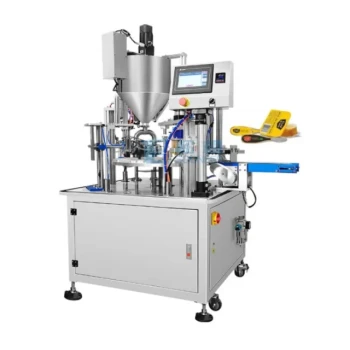
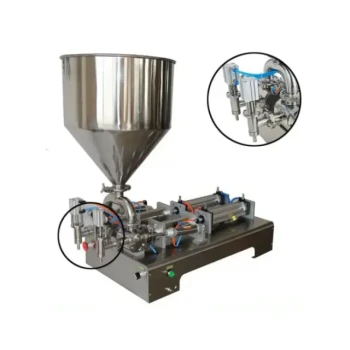
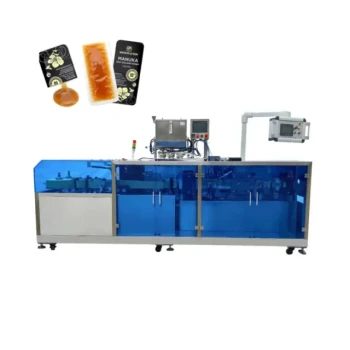
Industrial honey-filling machines safeguard product quality through precise volumetric control and automated environmental regulation. By stabilizing temperature and pressure during the filling cycle, these systems prevent air entrapment and thermal degradation. This process ensures that the distinct aromatic profiles and nutritional value of honey from various plant sources remain intact from the vat to the jar.
The core function of these machines extends beyond packaging; they act as a preservation system. By maintaining a closed, controlled environment, industrial fillers prevent the elevation of Hydroxymethylfurfural (HMF) and protect the delicate biological structure of the honey.
Protecting Biological Integrity and Enzymes
Honey is a living product containing sensitive enzymes and volatile compounds. Industrial machines use specific engineering strategies to preserve these elements.
Precision Temperature Control
Excessive heat destroys honey's nutritional value. Industrial machines utilize precision temperature control systems to maintain the product at the optimal flow viscosity without overheating.
This regulation is critical for preventing the elevation of Hydroxymethylfurfural (HMF), a chemical indicator of heat damage. By keeping temperatures stable, the machine preserves the honey’s natural quality.
Minimizing Shear Stress
High-speed pumping can physically damage honey structure. Advanced fillers employ anti-shear internal components designed to move the viscous liquid gently.
This protection preserves sensitive enzymes such as invertase, diastase, and glucose oxidase. Retaining these enzymes is essential for maintaining the honey's health-promoting properties and classification as a raw or high-quality product.
Closed-System Aromatic Preservation
Honey derived from specific botanical sources relies on volatile aromatic compounds for its distinct flavor.
Fully enclosed filling systems prevent these volatile compounds from evaporating. This ensures the complex flavor profile of the specific floral source reaches the consumer unaltered.
Managing Viscosity and Hygiene
Honey's physical properties—specifically its high viscosity and hygroscopic nature (ability to absorb water)—present unique packaging challenges.
Adapting to Viscosity
To handle the stringy, thick nature of honey, machines utilize piston or rotor pump systems.
These components provide high-precision quantitative filling regardless of the honey's thickness. They ensure consistent flow without requiring excessive pressure that could introduce air bubbles.
Preventing Moisture Absorption
Honey naturally pulls moisture from the air, which can lead to fermentation.
By utilizing a closed-system design, industrial fillers significantly reduce the time the product is exposed to the atmosphere. This prevents moisture absorption and microbial contamination, thereby extending shelf life.
Sanitary Anti-Drip Technology
Secondary contamination often occurs at the sealing point.
Machines are equipped with drip-proof devices and specialized valves that ensure a clean cut-off after filling. This prevents residue on the bottle mouth, which is a primary vector for bacterial intrusion and mold growth.
Ensuring Botanical Consistency
For producers handling honey from diverse sources, consistency within the batch is as important as the filling speed.
Uniform Pollen Distribution
The botanical identity of honey is physically represented by its pollen content.
Advanced filling mechanisms ensure that pollen grains remain uniformly distributed throughout the filling run. This guarantees that the first bottle and the last bottle of a batch contain the same botanical characteristics.
Standardized Volumetric Control
High-precision metering controls ensure that every unit meets strict weight and volume standards.
This standardization is vital for commercial distribution channels, ensuring that the consumer receives a product that is consistent in both quantity and density.
Understanding the Trade-offs
While industrial automation improves consistency, operators must be aware of potential downsides associated with mechanical processing.
Thermal Inertia Risks
While temperature controls are precise, system stoppages can pose a risk. If honey remains stationary in a heated filler head during a line pause, local overheating can occur, potentially degrading a small portion of the batch.
Mechanical Shear Limitations
Despite anti-shear designs, pump speed must be carefully calibrated. Pushing a rotor pump beyond its optimal speed to increase output can introduce mechanical friction, which may degrade the honey's crystal structure or enzyme activity despite the machine's safety features.
Making the Right Choice for Your Production
Selecting the correct filling technology depends on balancing production volume with the specific biological requirements of your honey varietals.
- If your primary focus is Enzyme Preservation: Prioritize machines with anti-shear rotor pumps and low-temperature flow thresholds to protect diastase and invertase levels.
- If your primary focus is Production Efficiency: Look for multi-head piston fillers with high-speed cut-off valves that maximize throughput while maintaining sanitary standards.
- If your primary focus is Botanical Certification: Ensure the system features agitation support in the hopper to keep pollen grains in suspension for consistent botanical analysis results.
The most effective filling process is one that treats honey not as a simple liquid, but as a complex biological matrix requiring gentle, stable handling.
Summary Table:
| Preservation Factor | Technology Used | Impact on Honey Quality |
|---|---|---|
| Biological Integrity | Precision Temperature Control | Prevents HMF elevation and protects heat-sensitive enzymes. |
| Physical Structure | Anti-Shear Internal Components | Minimizes mechanical stress to preserve diastase and invertase. |
| Flavor & Aroma | Fully Enclosed Systems | Prevents evaporation of volatile compounds from botanical sources. |
| Shelf Life | Closed-System Design | Reduces moisture absorption and prevents fermentation/contamination. |
| Botanical Identity | Agitation & Metering Controls | Ensures uniform pollen distribution and consistent volume per jar. |
Scale Your Honey Production with HONESTBEE Professional Equipment
Maintaining the delicate biological matrix of honey requires more than just a pump—it requires precision engineering designed for the unique needs of commercial apiaries and distributors. At HONESTBEE, we specialize in providing high-performance honey-filling machines, hive-making hardware, and essential industry consumables that protect your honey's nutritional value from vat to jar.
Whether you are looking to upgrade your filling line for better enzyme preservation or need a full spectrum of wholesale beekeeping tools and machinery, our team is ready to support your growth. Contact HONESTBEE today to discover how our professional solutions can enhance your production efficiency and product quality.
References
- Anatoly Vasilievich Gryazkin, Minh An Hoang. Dynamics of the species composition of honey plants on postagrogenic and forest lands. DOI: 10.28983/asj.y2022i8pp4-7
This article is also based on technical information from HonestBee Knowledge Base .
Related Products
- Commercial Rotary Honey Filling Machine for Production
- Precision Durable Efficient HONESTBEE Rotary Honey Filling Machine
- Fully Automatic Honey Filling Packaging Machine for Processing Line
- Economy Small Honey Filling Machine Honey Bottle Filler Packaging Machine
- Precision Automated Packaging Turntable Honey Spoon Filling Sealing Packing Machine
People Also Ask
- What role do commercial honey filling machines play in honey distribution? Scaling Efficiency and Quality Control
- What technical support do commercial-grade filling machines provide? Convert Honey NTFPs into Marketable Commodities
- What is the significance of specialized honey filling equipment? Scaling from Beekeeping to Commercial Success
- Why is professional honey filling machinery critical for honey production? Scale Your Apiary's Profit & Efficiency
- Why is high-capacity honey filling machinery necessary for Giant Honey Bees? Solve the Apis dorsata Volume Crisis