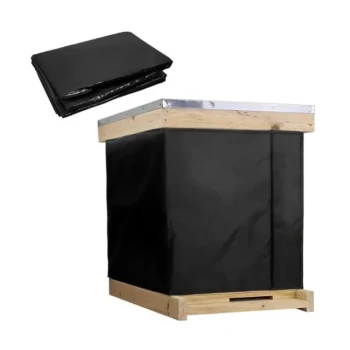
Industrial plastic covers function as critical thermal insulators placed directly over the brood frames within the hive. Their primary role is to physically block air convection, preventing warm air generated by the bees from escaping upward and dissipating away from the cluster.
By sealing the brood area against convective heat loss, these covers significantly reduce the energy the colony must expend to stay warm. This conservation of energy is a deciding factor in improving winter survival rates, particularly in arid and temperate climates where temperature fluctuations can be severe.
Optimizing Thermal Regulation
Blocking Convection Currents
Heat naturally rises. Without a barrier, the warmth generated by the bee cluster ascends away from the brood frames, forcing the colony to work harder to replace it.
Industrial plastic covers interrupt this vertical airflow. By sitting directly atop the frames, they trap the rising warm air within the immediate vicinity of the cluster.
Maintaining Brood Stability
The central goal of winter management is maintaining a constant, viable temperature in the brood area.
These covers act as a localized lid for the colony's microclimate. This stabilization protects the cluster from the thermal volatility of the larger hive box or the external environment.
Energy Conservation and Survival
Reducing Metabolic Cost
Bees generate heat by consuming stored food and vibrating their flight muscles. This is an energy-intensive process.
When heat loss is minimized by plastic covers, the colony requires less fuel to maintain their target temperature. This directly translates to lower food consumption rates during the critical winter months.
Improving Survival Outcomes
The correlation between energy expenditure and survival is direct. A colony that is not thermally stressed is less likely to exhaust its resources before spring.
Using these covers has been shown to improve survival rates by mitigating the physical stress placed on the bees in low-temperature environments.
Understanding the Limitations and Context
Covers Cannot Replace Site Selection
While plastic covers manage the internal environment, they cannot protect against macro-environmental threats.
Scientific site selection remains the primary line of defense. Covers will not save a colony from losses caused by external disasters such as flooding, extreme snowfall, or storm damage.
The Requirement for Artificial Feed
Thermal efficiency reduces the rate at which food is consumed, but it does not eliminate the need for fuel.
During non-foraging periods, supplemental artificial feed is mandatory. Plastic covers assist in rationing this energy, but the beekeeper must still ensure the colony has sufficient caloric input to prevent starvation.
Making the Right Choice for Your Colony
To ensure your colonies are prepared for winter, consider your specific management focus:
- If your primary focus is Thermal Efficiency: Prioritize the installation of industrial plastic covers over brood frames to stop convection and reduce the colony's caloric burn rate.
- If your primary focus is Disaster Mitigation: Ensure your hives are situated in scientifically selected locations that shield the hardware from storms and flooding before optimizing internal components.
- If your primary focus is Spring Readiness: Combine thermal covers with a rigorous artificial feeding schedule to ensure the colony emerges with high energy levels for the peak season.
Effective winter management relies on the synergy between preserving heat through insulation and fueling that heat through adequate nutrition.
Summary Table:
| Feature | Function in Winter Management | Impact on Colony Health |
|---|---|---|
| Convection Barrier | Blocks rising warm air from escaping the brood area | Reduces metabolic energy expenditure |
| Thermal Stability | Maintains a constant microclimate around the cluster | Protects bees from external temperature volatility |
| Resource Conservation | Slows the consumption rate of honey or artificial feed | Prevents starvation during long winters |
| Localized Insulation | Acts as a lid directly over brood frames | Increases overall winter survival outcomes |
Maximize Your Colony Survival with HONESTBEE
At HONESTBEE, we understand the challenges commercial apiaries and distributors face during the winter months. As your comprehensive wholesale partner, we provide the full spectrum of beekeeping tools, from industrial-grade plastic covers and hive-making machinery to honey-filling systems and essential consumables.
Our hardware and specialized equipment are designed to optimize thermal regulation and operational efficiency, ensuring your colonies emerge strong for the spring season. Whether you are scaling a commercial operation or supplying the industry, our expertise and diverse portfolio of honey-themed merchandise and professional tools are at your service.
Ready to upgrade your apiary’s winter defense?
Contact Us Today to Explore Wholesale Solutions
References
- Ana Molineri, Marcelo Signorini. Environment and <i>Varroa destructor</i> management as determinant of colony losses in apiaries under temperate and subtropical climate. DOI: 10.1080/00218839.2018.1475697
This article is also based on technical information from HonestBee Knowledge Base .
Related Products
- Food Grade Plastic Honey Bucket Pail for Beekeeping
- Acrylic Lid Beekeeping Honey Extractor for Beekeepers
- Professional Insulated Plastic Bee Hives
- Food Grade Plastic bee Foundation for Bee Frames
- Professional Durable Two-Piece Plastic Bee Escape
People Also Ask
- What key operational precautions should be taken when using honey buckets and extractors fitted with bottom drain taps?
- What functions do food-grade honey buckets perform? Safeguard Your Harvest and Optimize Apiary Logistics
- Why are food-grade plastic buckets preferred for honey? Protect Quality with Modern Honey Collection Tools
- What is the significance of food-grade plastic honey collection buckets? Boost Quality in Forest Honey Logistics
- What is a honey pail? The Essential Container for Protecting Your Honey's Value