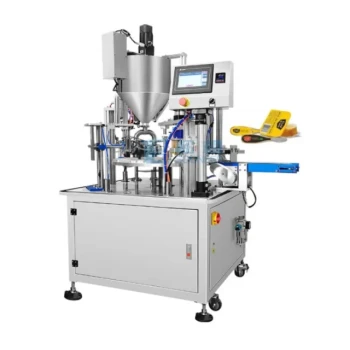
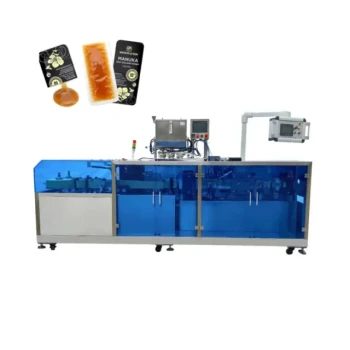
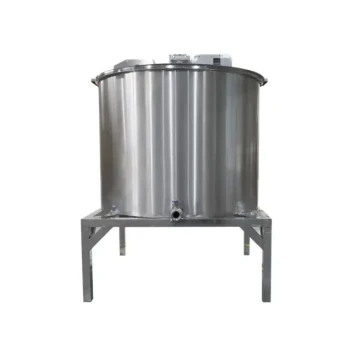
Large-scale industrial blending acts as a safety buffer against naturally occurring toxins. Specifically, industrial honey mixing and filling lines mitigate the risk of Grayanotoxin poisoning through the process of large-scale homogenization. By physically blending honey harvested from diverse regions and floral origins, these systems dilute high concentrations of toxins found in specific local batches to non-hazardous, trace levels.
Core Takeaway: Unlike small-scale operations that often bottle single-source harvests, industrial production relies on mass dilution. This mechanical blending neutralizes the acute toxicity risks associated with "mad honey" by dispersing isolated pockets of Grayanotoxin across a massive volume of safe product.
The Mechanics of Safety Through Scale
The Power of Homogenization
Industrial mixing lines do not simply package honey; they fundamentally alter its composition through bulk processing.
The primary mechanism at work here is physical blending.
By combining harvests from hundreds or thousands of different sources, the production line creates a uniform, homogenized product.
Diluting Regional Risks
Grayanotoxin is typically linked to specific regions and specific floral sources, such as Rhododendrons.
In a large-scale operation, honey from a high-risk region is mixed with vast quantities of honey from low-risk areas.
This reduces the concentration of the toxin from a potentially dangerous level to a safe, negligible background level.
The Single-Source Vulnerability
Small-scale apiaries often bottle honey from a single location or a limited number of hives.
If those specific bees foraged heavily on toxic blooms, the resulting harvest retains a high concentration of Grayanotoxin.
Without the capability to blend this harvest with tons of other honey, the small-scale producer risks bottling a potent, toxic product.
Operational Efficiency and Hygiene
Automated Processing Standards
Beyond dilution, industrial lines enforce strict food hygiene standards through automation.
As noted in production studies, automated machinery facilitates high-speed conversion from raw harvest to finished product with minimal human contact.
Consistency Over Character
The goal of industrial lines is consistency in both safety and flavor profile.
This focus allows operators to produce a standardized product that meets regulatory safety limits reliably.
Understanding the Trade-offs
While industrial blending effectively manages toxicity risks, it is important to understand the limitations of this approach.
Dilution is Not Removal
It is critical to note that homogenization dilutes the toxin; it does not chemically remove it.
The toxin remains present in the final product, but at concentrations so low that they pose no physiological threat to the consumer.
Loss of Unique Profiles
The same process that ensures safety also eliminates the unique characteristics of single-origin honey.
By blending everything together, the distinct flavor profiles and "terroir" of specific floral sources are often lost in favor of uniformity.
Making the Right Choice for Your Goal
Understanding the relationship between scale and safety helps in selecting the right production or sourcing strategy.
- If your primary focus is consumer safety and mass distribution: Rely on industrial blending lines to homogenize batches, ensuring that regional toxin spikes are diluted to compliant, non-hazardous levels.
- If your primary focus is preserving unique floral characteristics: Choose small-scale or single-source production, but be aware that this requires rigorous testing to ensure specific batches do not contain concentrated toxins.
Ultimately, industrial scale transforms honey from a variable agricultural harvest into a standardized, safety-controlled commodity.
Summary Table:
| Feature | Industrial Mixing Lines | Small-Scale Apiaries |
|---|---|---|
| Toxin Management | Mass dilution to non-hazardous levels | High risk of concentrated toxin pockets |
| Product Consistency | Uniform flavor, color, and safety profile | Variable flavor based on local floral source |
| Processing Method | Automated high-speed homogenization | Manual or small-batch bottling |
| Safety Standard | Standardized for mass-market compliance | Dependent on rigorous batch testing |
| Floral Profile | Blended/Neutralized terroir | Distinct, single-source characteristics |
Elevate Your Honey Production with HONESTBEE
At HONESTBEE, we empower commercial apiaries and distributors to achieve the highest standards of safety and efficiency. Our comprehensive range of beekeeping machinery, including advanced honey-filling machines and industrial mixing lines, is designed to help you master the homogenization process—diluting risks and ensuring a consistent, high-quality product for the global market.
Whether you are scaling up your processing capabilities or sourcing professional-grade beekeeping tools and industry consumables, we provide the technical expertise and hardware you need to succeed. From specialized hive-making equipment to honey-themed cultural merchandise, HONESTBEE is your partner in professional apiculture.
Ready to optimize your production line? Contact us today for a wholesale consultation
References
- Katarína Fatrcová-Šramková, Miroslava Kačániová. Selected toxicological aspects of honey. DOI: 10.36547/ae.2020.2.4.95-99
This article is also based on technical information from HonestBee Knowledge Base .
Related Products
- Fully Automatic Honey Filling Packaging Machine for Processing Line
- Commercial Rotary Honey Filling Machine for Production
- Automatic Honey Filling and Filtering Machine for Beekeeping Bottle Filling
- Precision Durable Efficient HONESTBEE Rotary Honey Filling Machine
- Economy Small Honey Filling Machine Honey Bottle Filler Packaging Machine
People Also Ask
- Why are fully automatic honey filling and packaging lines essential? Boost Your Honey's Market Value and Quality
- What is a fully-automatic honey filler? Streamline Your Production with High-Precision Automation
- How do automated honey filling and packaging machines affect profitability? Boost Margins with HONESTBEE Technology
- How do automated honey filling and packaging machines contribute to the market value of honey products? Maximize Your ROI
- How do industrial-grade automated honey filling and packaging machines mitigate the risk of physical contamination?