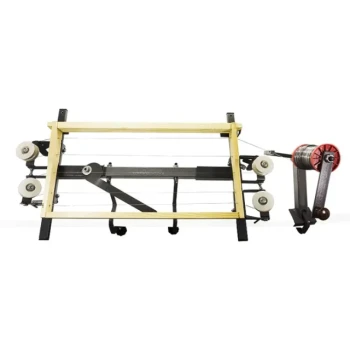
Modern mobile frame beehives represent a fundamental shift from passive observation to active management, resulting in drastically higher productivity and colony health. While unmanaged natural hives typically yield approximately 2.83 liters of honey, modern frame systems leverage detachable components and controlled environments to increase average production to 12 liters.
Core Insight: The disparity in performance is not just about size; it is about accessibility. Modern frames allow beekeepers to inspect colonies and intervene against pests without destroying the hive structure, transforming beekeeping from a primitive gathering activity into a standardized, intensive science.
The Mechanics of Increased Production
Preservation of Infrastructure
In natural or traditional hives, harvesting often requires destroying the honeycomb. Modern hives utilize removable frames, allowing you to extract honey while preserving the wax comb.
Because the bees do not need to waste energy and resources rebuilding the comb from scratch, they can immediately focus on storing new nectar. This structural preservation is a primary driver of the increased yield.
The Volume Differential
The difference in output is statistically significant. Primary data indicates that an unmanaged natural hive produces roughly 2.83 liters of honey.
In contrast, the optimized environment of a modern mobile frame hive boosts this average to 12 liters. By eliminating the setbacks caused by structural damage during harvest, the colony maintains a continuous production cycle.
Transforming Colony Management
Enabling Non-Destructive Inspection
The core innovation of the modern hive is its detachable and monitorable structure. You can open the hive to assess the queen's status or check brood patterns without disrupting the colony's essential operations.
This visibility allows for early detection of issues that would otherwise remain hidden in a fixed-comb natural hive until it was too late.
Proactive Pest Control
Natural hives leave colonies largely defenseless against infestations. The design of modern frames allows for the implementation of specific maintenance measures against common threats.
Beekeepers can actively intervene to control pests such as ants and moths. This "intensive management" approach ensures the colony's energy is spent on honey production rather than fighting for survival against invaders.
Standardization of Operations
Modern hives introduce the concept of standardized equipment. This facilitates easier scaling, as frames and components are interchangeable between hives.
This standardization supports the transition from extensive, primitive management to precise, commercial-grade operations where variables can be controlled and optimized.
Understanding the Trade-offs
Active Management Requirement
While modern hives offer higher yields, they require a higher level of intervention and knowledge. The system is designed for "intensive" management, meaning the beekeeper must actively monitor and maintain the hardware to see results.
Complexity vs. Simplicity
Natural hives are simpler but limit your control. Modern hives introduce more components—frames, supers, and separate chambers—which introduce complexity in cleaning, storage, and assembly.
Making the Right Choice for Your Goal
To determine the best approach for your apiary, consider your primary objective:
- If your primary focus is maximum yield and commercial viability: Adopt modern mobile frame hives to leverage the 12-liter average production and standardized equipment.
- If your primary focus is colony health and longevity: Use modern frames to utilize their monitorable structure for proactive pest control and disease management.
- If your primary focus is low-intervention observation: Understand that while natural hives require less daily management, you sacrifice significant honey yield and the ability to assist the bees during crises.
Ultimately, the modern frame hive is the essential tool for converting the biological potential of a honey bee colony into reliable, scalable production.
Summary Table:
| Feature | Natural/Traditional Hives | Modern Mobile Frame Hives |
|---|---|---|
| Average Honey Yield | ~2.83 Liters | ~12 Liters |
| Harvest Method | Destructive (comb must be replaced) | Non-destructive (comb preservation) |
| Inspection | Limited/Passive observation | Active/Non-destructive monitoring |
| Pest Management | Reactive/Defenseless | Proactive/Intensive intervention |
| Scalability | Low (non-standardized) | High (standardized components) |
| Complexity | Simple, low intervention | Higher, requires skilled management |
Elevate Your Apiary Operations with HONESTBEE
Transitioning from traditional methods to high-yield commercial beekeeping requires the right infrastructure. HONESTBEE specializes in supporting commercial apiaries and distributors with a comprehensive range of professional-grade equipment.
Whether you need specialized hive-making and honey-filling machinery to scale production or a steady supply of interchangeable frames and essential industry consumables, we provide the tools to transform your biological potential into reliable profit. From hardware to honey-themed cultural merchandise, we are your all-in-one wholesale partner.
Ready to optimize your honey production and colony health? Contact us today to discuss your wholesale needs!
References
- Chimène KAUDJHIS ASSI, SAVADOGO NGUESSAN Koffi. Traditional and modern beekeeping practices in the center of Côte dIvoire: the case of the western part of Yamoussoukro. DOI: 10.29322/ijsrp.10.11.2020.p10743
This article is also based on technical information from HonestBee Knowledge Base .
Related Products
- Assembled Wooden Bee Frames with Plastic Foundation for Durability and Convenience by HONESTBEE
- Wooden Bee Hive Frames for Beekeeping and Wholesale
- Plastic Bee Frame Beekeeping Hive Frames for Wholesale
- HONESTBEE Wired and Assembled Wooden Bee Frames Foundation for a Thriving Hive
- Heavy-Duty Stainless Steel Clip-On Frame Perch
People Also Ask
- When should frames with new foundation be given to colonies? Master Timing for a Thriving Hive
- What are bee frames and how are they sized? A Professional Guide to Standardization & Material Choice
- Do you have to wire bee frames? Essential Guide to Frame Strength & Honey Harvesting
- Can beekeepers switch between wooden and plastic frames? Optimize Your Hive's Performance
- How do you re-wax bee frames? A Simple Guide to Faster Comb Building