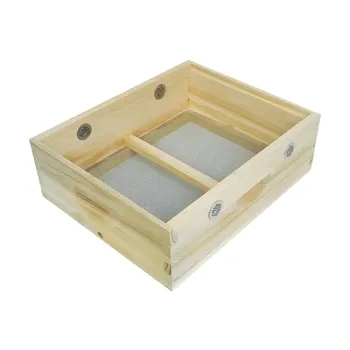
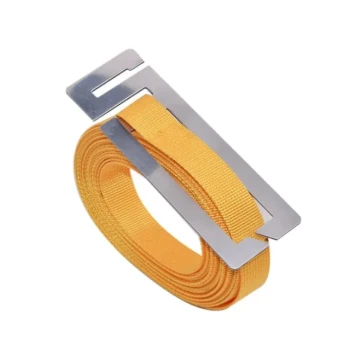
Natural nesting behavior provides the biological blueprint for commercial beehive design. Wild honeybees typically choose sheltered cavities averaging about 40 liters, with observed preferences ranging from roughly 20 to 100 liters. Commercial hives translate these preferences into standardized, modular boxes with controlled volume, protected entrances, suitable insulation, and precise internal spacing.
The best commercial hive is not simply the largest available box. It should provide a cavity volume and internal layout suited to the target bee race, while preserving protection, expandability, correct bee space, and efficient access for inspection and honey extraction.
How Natural Nesting Preferences Shape Hive Volume
The 40-Liter Natural Benchmark
Research on wild colonies indicates an average selected cavity capacity of approximately 40 liters. This gives hive designers a practical reference point for developing artificial nest cavities.
Natural variation is significant, however. Colonies may occupy cavities from about 20 to 100 liters, depending on colony strength, local climate, available nesting sites, and bee genetics.
Volume Must Match the Bee Race
Different honeybee races do not necessarily prefer the same cavity size. Italian bees are associated with smaller cavities of approximately 30 liters, while central European German bees may favor cavities closer to 60 liters.
This variation matters for manufacturers, distributors, and beekeepers. A single hive volume may not provide equally suitable colony conditions across all genetic lines or production environments.
Commercial Hives Use Modular Expansion
Standardized hives address this challenge by dividing usable space into boxes, chambers, frames, and honey supers. Beekeepers can begin with a controlled brood-nest volume and add storage space as the colony expands.
This modular approach is more commercially useful than manufacturing one very large cavity. It supports colony management, seasonal adjustment, transport, inspection, and honey harvesting.
How Natural Cavities Influence Hive Construction
Shelter Is as Important as Internal Volume
Wild colonies generally select cavities with a protected entrance and limited exposure to direct sun, wind, and rain. Commercial hives therefore need more than the correct internal capacity.
Hive bodies, covers, roofs, and entrances should work together to protect the colony from weather while allowing the beekeeper to manage ventilation and access.
Insulation Helps Stabilize the Colony Environment
Natural cavities buffer temperature changes. This is one reason wood remains a widely used hive material: it provides structural strength and a degree of thermal insulation while remaining practical to manufacture and repair.
In colder conditions, thicker walls or additional insulation can improve winter thermal performance. In hot climates, the design must also limit overheating and manage solar exposure.
Entrance Design Supports Defense and Climate Control
A single, controllable entrance reflects the sheltered access points commonly found in natural cavities. Entrance dimensions and placement influence colony defense, ventilation, pest management, and the bees’ ability to regulate internal conditions.
For commercial products, adjustable entrances can provide greater flexibility across seasons, bee populations, and operating regions.
Why Internal Precision Determines Usability
Bee Space Is a Critical Design Standard
Honeybees naturally maintain a gap of approximately 3/8 inch, or 9.5 mm, between combs and surrounding hive structures. This clearance is known as bee space.
Commercial frames, boxes, supers, and covers must preserve this spacing through accurate dimensions and consistent manufacturing tolerances.
Incorrect Gaps Create Management Problems
If a gap is narrower than bee space, bees tend to fill it with propolis. This can glue frames and boxes together, making inspections slow and potentially damaging equipment.
If the gap is too wide, bees may construct burr comb. This unwanted comb obstructs frame removal, complicates inspections, and reduces the efficiency of honey extraction.
Precision Supports High-Volume Operations
For commercial apiaries, dimensional accuracy is not a minor convenience. It directly affects labor time, equipment longevity, frame interchangeability, and the speed of inspection and harvesting.
Manufacturers supplying distributors and professional beekeepers should therefore treat bee-space consistency as a core quality requirement, not merely a specification detail.
Natural Nesting Also Determines Equipment Compatibility
Cavity-Nesting Bees Suit Standard Frame Hives
European honeybees, Apis mellifera, and Asian honeybees, Apis cerana, typically build multiple parallel combs inside dark cavities. This nesting pattern is compatible with movable frames, standard hive boxes, honey supers, and centrifugal extraction systems.
Their biology supports the commercial hive model because the comb can be organized, removed, inspected, and returned without destroying the colony’s entire nest.
Exposed-Comb Species Require Different Systems
Species such as Apis dorsata and Apis florea build a single exposed comb on branches, rocks, or other open structures. They are not naturally suited to standard enclosed frame hives.
This distinction is commercially important. A standard box hive should be marketed for compatible cavity-nesting species rather than presented as a universal solution for all bees.
How Propolis Affects Commercial Hive Design
Propolis Is Part of Natural Hive Maintenance
Bees use propolis to seal cracks, smooth cavity surfaces, reinforce comb attachments, coat brood areas, and isolate unwanted intruders. It also provides natural antibacterial and antifungal benefits within the colony.
The same behavior creates operational challenges in artificial hives. Propolis can bind frames, boxes, covers, and frame rests together.
Components Must Permit Practical Separation
Commercial hive parts should be dimensionally accurate and mechanically robust enough to withstand regular propolization. Frame rests and contact surfaces must allow the beekeeper to separate components using normal hive tools without excessive damage.
High-quality hive tools, scrapers, and durable hardware are therefore part of the broader equipment solution, particularly for high-volume inspections and extraction workflows.
Understanding the Trade-offs
Larger Cavities Provide More Expansion Room
A larger cavity can accommodate stronger colonies and greater potential storage capacity. It may also reduce the need for immediate expansion in some operating conditions.
However, excessive volume can make temperature regulation more difficult for a smaller colony. It can also increase equipment weight, material use, shipping cost, and handling demands.
Smaller Cavities Improve Initial Manageability
A smaller cavity may be easier for a developing colony to occupy and regulate. It can also reduce the initial equipment requirement for new or weaker colonies.
The limitation is reduced expansion capacity. If the colony outgrows the available space, the beekeeper must add boxes or manage congestion to avoid restricting colony development.
Standardization Improves Supply Efficiency
Uniform hive dimensions simplify manufacturing, inventory planning, spare-part sourcing, palletization, and fulfillment. They also allow frames, supers, covers, and accessories to remain compatible across a product range.
Standardization should not eliminate biological fit. The best product portfolios combine common external standards with volume options, insulation choices, entrance configurations, and accessories suited to different bee races and climates.
More Insulation Is Not Automatically Better
Increasing wall thickness can improve thermal resistance, particularly in cold environments. But insulation must be balanced with ventilation, moisture control, weight, cost, and regional operating conditions.
A hive optimized for winter performance may not be ideal for hot climates or migratory beekeeping. Product selection should reflect the customer’s climate and management system rather than rely on a single universal specification.
What This Means for Commercial Hive Sourcing
Match Products to the Target Bee Population
Distributors and resellers should identify whether their customers primarily manage Italian, central European, Africanized, or other compatible honeybee populations. The expected colony size and preferred cavity volume should guide the product range.
Offering multiple hive-body capacities or modular expansion options is generally more practical than carrying only one fixed-volume design.
Evaluate More Than the Box Dimensions
A professional specification review should include:
- Internal cavity volume and expansion capacity
- Frame dimensions and interchangeability
- Bee-space accuracy of approximately 9.5 mm
- Wall thickness and insulation characteristics
- Entrance design and adjustability
- Cover and roof protection from rain and solar exposure
- Component durability under repeated propolization
- Compatibility with supers, extractors, and hive tools
- Packaging, delivery speed, and replacement-part availability
Build a Full-System Product Portfolio
Commercial customers often need complete operating systems rather than isolated hive boxes. A reliable supply program may include hive bodies, frames, foundation, supers, covers, stands, entrances, tools, and extraction-related equipment.
For wholesalers and B2B resellers, dependable inventory, rapid response, technical guidance, and efficient order fulfillment can be as important as the initial hive specification.
How to Apply This to Your Project
The following recommendations connect natural nesting behavior with practical purchasing and product decisions:
- If your primary focus is biological suitability: Select a hive volume and configuration that reflect the target bee race, using the approximate 30-liter Italian preference and 60-liter central European German preference as useful reference points rather than rigid rules.
- If your primary focus is commercial scalability: Prioritize modular hive bodies and supers that allow the colony’s usable volume to expand in controlled stages.
- If your primary focus is climate performance: Compare wall thickness, insulation, roof protection, entrance control, and ventilation for the specific operating environment.
- If your primary focus is labor efficiency: Specify precise bee-space tolerances, interchangeable frames, durable components, and equipment designed to manage propolis.
- If your primary focus is wholesale or distribution value: Build a complete, compatible product portfolio supported by reliable availability, fast fulfillment, and responsive technical service.
Natural nesting preferences give commercial hive designers the right starting point; standardized, precise, and adaptable equipment turns that biological insight into dependable beekeeping performance.
Summary Table:
| Aspect | Natural Preference | Commercial Implication |
|---|---|---|
| Cavity Volume | 20–100 L, avg ~40 L | Modular boxes, target race-specific volumes (e.g., Italian ~30 L, German ~60 L) |
| Bee Space | ~9.5 mm (3/8 inch) | Precise frame/box tolerances to prevent propolis buildup or burr comb |
| Entrances | Small, sheltered | Adjustable entrances for defense and climate control |
| Insulation | Buffered temperature | Wood or insulated walls; balance with ventilation and climate |
| Equipment Compatibility | Parallel combs in cavities | Standard frames/supers for Apis mellifera; not suitable for exposed-comb species |
| Propolis Management | Sealing cracks, strengthening | Durable, separable components; quality hive tools for maintenance |
Ready to build or upgrade your commercial beehive line? HONESTBEE offers a complete range of hive bodies, frames, supers, and extraction equipment tailored to your target bee race and climate. Our wholesale solutions are trusted by distributors and beekeepers for rapid response, premium quality, and efficient fulfillment. With HONESTBEE, you benefit from one-stop sourcing, expert technical advice, and custom OEM/ODM support—all backed by certifications and a supply chain designed for your profitability. Contact us today at our contact form to request a quote, discuss your volume needs, or get free guidance on hive specifications. Your bees deserve the best—let’s build it together!
Related Products
- High-Performance Langstroth Bee Hives for Global Professional Beekeeping
- Wholesales Dadant Size Wooden Bee Hives for Beekeeping
- Australian Langstroth Beehive Boxes for Beekeeping Wholesales
- Professional Grade Foldable Beehive Handles
- Wooden Bee Hive Frames for Beekeeping and Wholesale
People Also Ask
- What structural differences should commercial apiary operators consider when selecting between Langstroth hives and Top Bar hives for standardized honey production? Langstroth for standardized honey production
- 8-Frame vs 10-Frame Langstroth Hives: Which Is Right for Your Beekeeping?
- What are the structural and yield differences between traditional primitive beehives and modern standard wooden hives (such as Langstroth hives) for commercial honey producers? Discover why modern hives boost yield and efficiency.
- Why is the adoption of modern movable-frame hives, such as Langstroth hives, advantageous over traditional hive equipment for commercial apiaries? Key Benefits for Scalable Beekeeping
- How does transitioning to modern hives boost honey yield? Increase production and product quality for your commercial apiary