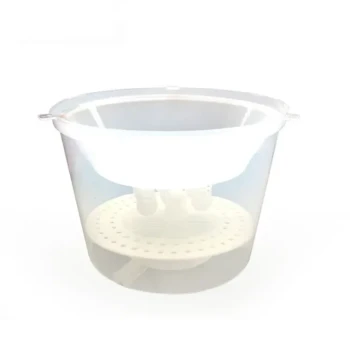
Physical traps and soil irrigation treatments differ fundamentally by targeting opposite stages of the Small Hive Beetle life cycle in distinct locations. Physical traps are installed inside the hive to capture adult beetles seeking refuge from honeybees, while soil irrigation is applied to the ground outside to eliminate the pest during its critical pupation stage.
Effective Small Hive Beetle control requires understanding that physical traps manage the current active adult population within the colony, whereas soil treatments prevent future generations by breaking the reproductive cycle underground.
Managing the Adult Population Inside the Hive
Exploiting Defensive Behavior
In-hive physical traps rely on the natural instincts of the Small Hive Beetle. Adult beetles instinctively seek refuge in dark, protected crevices to escape harassment and attacks from worker bees.
The Mechanism of Capture
These traps provide specific physical cavities or zones that mimic safe harbor for the beetles. Once the beetles enter these devices to flee the bees, they are restricted by physical mechanisms or drowned in a capture medium.
Dual Utility: Control and Monitoring
Beyond simple removal, these traps serve a vital diagnostic function. They act as real-time monitoring tools, allowing you to count captured beetles to accurately assess the severity of the infestation inside the box.
Breaking the Cycle Outside the Hive
Targeting the Pupation Stage
Soil irrigation treatments ignore the adult beetles entirely to focus on the next generation. This method targets the beetle larvae after they exit the hive and burrow into the ground to pupate.
Creating a Chemical Barrier
By utilizing insecticides or beneficial nematodes, soil treatments create a lethal barrier in the earth surrounding the hive. This effectively breaks the reproductive chain by ensuring that pupating larvae do not survive to emerge as new adults.
Preserving Hive Purity
A major advantage of soil irrigation is the separation of chemical agents from the colony. Because the treatment is applied externally to the ground, it facilitates pest control without exposing the honey, comb, or bees to potential chemical contaminants.
Understanding the Strategic Trade-offs
Immediate vs. Delayed Impact
Physical traps offer immediate gratification by removing the adults currently damaging the hive, but they do not stop the reproduction cycle happening outside. Conversely, soil treatments do not kill the adults currently inside the hive but are essential for preventing a population explosion weeks later.
Scope of Protection
Traps are unit-specific; they only protect the individual hive in which they are installed. Soil treatments modify the environment, potentially offering a broader zone of protection around the apiary, but they require careful application to ensure the barrier is continuous.
Integrating Methods for Total Control
To establish a robust defense, you should view these methods as complementary rather than mutually exclusive.
- If your primary focus is immediate relief: Prioritize in-hive physical traps to rapidly reduce the density of adult beetles and monitor the infestation level.
- If your primary focus is long-term prevention: Implement soil irrigation treatments to break the reproductive lifecycle and prevent re-infestation from the ground up.
By combining internal trapping with external soil barriers, you create a comprehensive control network that protects the honeycomb and colony from every angle.
Summary Table:
| Feature | Physical In-Hive Traps | Soil Irrigation Treatments |
|---|---|---|
| Target Stage | Adult Beetles | Larvae / Pupae |
| Location | Inside the hive (frames/floor) | External ground surrounding hive |
| Primary Goal | Immediate population reduction & monitoring | Breaking the reproductive cycle |
| Mechanism | Mechanical capture/drowning in oil | Chemical barrier or biological agents |
| Bee Safety | High (mechanical separation) | High (applied away from honeycomb) |
| Best Use Case | Real-time infestation management | Long-term prevention of new hatches |
Secure Your Apiary’s Success with HONESTBEE
Managing Small Hive Beetle infestations is critical for the health of your colony and the profitability of your honey production. At HONESTBEE, we specialize in supporting commercial apiaries and distributors with high-quality, professional-grade solutions.
Whether you need precision honey-filling machines, durable hive-making equipment, or a bulk supply of essential beekeeping tools and consumables, we provide the hardware and cultural merchandise necessary to scale your operations. Our expert-sourced portfolio ensures your business remains efficient, productive, and protected.
Ready to upgrade your wholesale beekeeping supply? Contact our experts today to discover how HONESTBEE can streamline your production and enhance your apiary's performance.
References
- Robyn M. Underwood, Margarita M. López‐Uribe. Beekeeping Management Practices Are Associated with Operation Size and Beekeepers’ Philosophy towards in-Hive Chemicals. DOI: 10.3390/insects10010010
This article is also based on technical information from HonestBee Knowledge Base .
Related Products
- Reusable Aluminium Beetle Trap for Small Hive Beetles Silver Bullet
- Reusable Clear Small Hive Beetle Traps for Beehives Beetle Trapping Tools
- Removable Washable Hive Beetle Trap Attractants for Small Hive Beetles
- Black Plastic Beetle Barn Hive Beetle Trap for Beehives
- Plastic Beetle Blaster Trap Beekeeping Tools and Supplies
People Also Ask
- How should powdered substances be used in beetle traps for hive beetle control? Expert Guide for Maximum Colony Protection
- Why are beetle traps less effective during winter? Seasonal Shifts in Pest Control Explained
- When is the best time to use small hive beetle traps in cold climates? Protect Your Honeybee Winter Stores Now
- When and how should disposable traps for small hive beetles be removed? Master Hive Hygiene and Efficiency
- How do small hive beetle traps contribute to colony management? Enhance Diagnostic Accuracy and Protect Hive Health