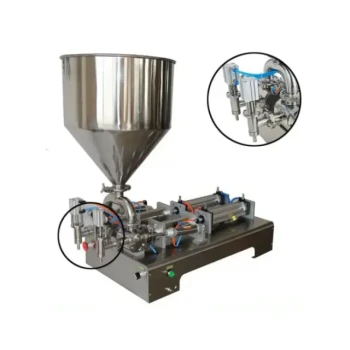
Professional honey-filling machines are the critical infrastructure enabling the transition from artisanal beekeeping to industrial apitherapy. These systems utilize automation technology to achieve precise quantitative packaging, effectively eliminating the variability and cross-contamination risks associated with manual handling. This mechanical efficiency is the defining factor in producing standardized medical-grade supplies that maintain consistent volume and quality across every batch.
Core Takeaway While the biological value of honey is created in the hive, its commercial value as a therapeutic product is secured by the filling machine. These systems bridge the gap between raw agriculture and pharmaceutical standards by enforcing rigorous hygiene, precise dosing, and bioactive preservation.
Achieving Medical-Grade Standardization
To market honey as an apitherapy product or dietary supplement, producers must guarantee consistency that nature does not provide.
High-Precision Metering
Industrial-grade machines employ high-precision metering systems to control fill volumes. This technology ensures that the net content of every unit meets strict specifications.
This consistency is non-negotiable for products seeking certifications such as Protected Designation of Origin (PDO) or Protected Geographical Indication (PGI). It allows producers to move from approximate measurements to the exact dosing required for medical applications.
Regulatory Compliance
Manual filling is often insufficient for meeting international export standards. Automated systems provide the traceability and uniformity required by health regulators.
By standardizing the output, these machines allow producers to scale operations without sacrificing the specific volume metrics required for pharmaceutical packaging.
Preserving Bioactivity and Potency
The primary challenge in apitherapy is maintaining the honey's "living" properties—its enzymes and antioxidants—during processing.
Minimizing Oxidation
Exposure to air is the enemy of therapeutic honey. Advanced machines utilize vacuum filling and sealing processes to drastically reduce oxygen contact.
This prevention of oxidation is critical for maintaining the stability of active ingredients. It protects the unique antimicrobial activities found in high-value varietals like Manuka honey.
Protecting Heat-Sensitive Enzymes
Therapeutic efficacy relies on components like catalase and phenolic antioxidants. These are heat-sensitive and easily degraded by improper handling.
Precise encapsulation technology extends the shelf life of these functional properties. This ensures the product retains its ability to inhibit tumor cell growth or promote wound healing by the time it reaches the end user.
Hygiene and Safety at Scale
As production scales up, the risk of contamination increases linearly if manual processes are used.
Eliminating Cross-Contamination
The primary reference highlights that automation significantly reduces the risk of cross-contamination. By removing human contact from the filling process, the introduction of pathogens is minimized.
This mechanical barrier is essential for producing "sterile" or medical-grade honey intended for wound care or immune support.
Preventing Secondary Contamination
Automated sealing functions occur immediately after filling. This minimizes the window of time the product is exposed to the manufacturing environment.
Rapid, automated sealing preserves the natural aroma and texture of the honey while preventing secondary contamination from airborne particles or moisture.
Understanding the Trade-offs
While filling machines are essential for standardization, they introduce specific operational constraints that must be managed.
Dependency on Input Quality
A filling machine preserves quality; it cannot create it. While standardized beehives are necessary to control floral sources and pollen purity, the filling machine can only process what is harvested. If the raw material lacks high phenolic content due to poor forage management, the most precise machine cannot correct this biological deficit.
Viscosity and Maintenance
High-precision metering systems are sensitive to changes in viscosity. Honey consistency changes with temperature. Operators must carefully balance temperature controls to facilitate flow without overheating the honey, which would destroy the very enzymes the machine is meant to protect.
Making the Right Choice for Your Goal
Selecting the right equipment depends on the specific therapeutic claims of your product.
- If your primary focus is Regulatory Certification (PDO/PGI): Prioritize machines with high-precision quantitative metering to ensure every unit meets the exact net content required for strict compliance.
- If your primary focus is Bioactivity (Manuka/Enzymes): Prioritize machines with vacuum filling and advanced sealing technologies to minimize oxidation and preserve heat-sensitive antioxidants.
- If your primary focus is Volume and Safety: Prioritize fully automated lines with enclosed hygiene barriers to maximize throughput while eliminating the risk of human-borne cross-contamination.
True scalability in apitherapy is not just about producing more; it is about replicating nature's complexity with pharmaceutical precision.
Summary Table:
| Feature | Benefit for Apitherapy | Key Technology |
|---|---|---|
| High-Precision Metering | Ensures consistent dosing & regulatory compliance (PDO/PGI) | Volumetric/Piston Filling |
| Vacuum Sealing | Minimizes oxidation to preserve enzymes & antioxidants | Vacuum-assisted Filling |
| Automated Hygiene | Eliminates cross-contamination & human contact risks | Enclosed Sterile Barriers |
| Temperature Control | Protects heat-sensitive bioactive compounds like Manuka | Intelligent Thermal Regulation |
Elevate Your Honey Production to Pharmaceutical Standards with HONESTBEE
Transitioning from artisanal beekeeping to industrial-scale apitherapy requires equipment that guarantees precision and purity. HONESTBEE specializes in supporting commercial apiaries and distributors with high-performance honey-filling machines designed to preserve the vital bioactivity of your product.
Our comprehensive wholesale range includes:
- Advanced Machinery: Precise honey-filling, capping, and hive-making machines.
- Professional Tools: A full spectrum of durable beekeeping equipment and hardware.
- Industrial Consumables: Essential supplies for large-scale operations and cultural merchandise.
Whether you are scaling production for medical-grade supplies or expanding a distribution network, our expertise ensures your honey meets the highest global standards.
Ready to scale your operation?
Contact HONESTBEE Today to discover our custom wholesale solutions.
References
- Meseret Gemeda, Demto Teferi. An assessment of indigenous knowledge of apitherapy in the Oromia region, Ethiopia. DOI: 10.17352/ojbs.000029
This article is also based on technical information from HonestBee Knowledge Base .
Related Products
- Precision Durable Efficient HONESTBEE Rotary Honey Filling Machine
- Economy Small Honey Filling Machine Honey Bottle Filler Packaging Machine
- Fully Automatic Honey Filling Packaging Machine for Processing Line
- Commercial Rotary Honey Filling Machine for Production
- Semi Automatic Small Honey Bottle Filling Machine Honey Filler
People Also Ask
- How do high-precision honey filling machines ensure quality? Optimize Your Commercial Production with HONESTBEE
- How do honey filling and processing machines aid native bee product conservation? Boost Value with HONESTBEE Technology
- What quality control role does professional honey filling equipment perform? Ensure Consistency and Product Stability
- What is a key feature of the new generation of the honey filling machine? The Advanced Electronic Control Unit
- What are the common types of bottling machines used for honey? Choosing the Right Solution for Your Apiary