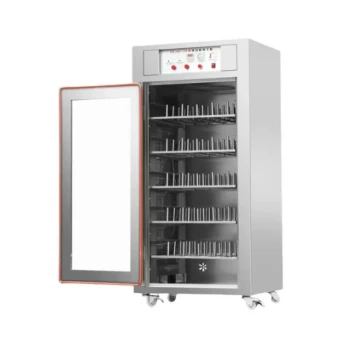
Professional pollen dryers utilize precise temperature and airflow control to rapidly reduce moisture in harvested pollen without degrading its nutritional value. This specialized process stabilizes the raw material, preventing mold and spoilage while ensuring the final product retains the bioactive properties required for the high-end health and wellness market.
By converting highly perishable raw pollen into a shelf-stable commodity, professional dryers serve as the critical bridge between simple harvesting and entering the high-value supplement market.
The Science of Pollen Preservation
Controlling Moisture and Spoilage
Fresh pollen contains significant moisture, making it highly susceptible to rapid fermentation and mold growth.
Professional dryers mitigate this risk by maintaining a consistent, controlled environment that extracts moisture efficiently. This immediate stabilization is essential for meeting food safety standards and ensuring the product is fit for human consumption.
Protecting Bioactive Integrity
The value of bee pollen lies in its enzymes, vitamins, and proteins, all of which are sensitive to high heat.
Unlike standard dehydrators, professional pollen dryers use low-temperature airflow to preserve these bioactive components. This allows beekeepers to market their product as "raw" or nutrient-dense, commanding a higher price point than heat-damaged alternatives.
From Raw Material to Marketable Product
Extending Shelf Life for Logistics
Raw pollen spoils quickly, limiting distribution to local areas or requiring expensive cold-chain logistics.
Properly dried pollen has a significantly extended shelf life, allowing for long-term storage and easier transport. This stability enables beekeepers to manage inventory more effectively and sell products year-round, rather than just during the harvest season.
Unlocking New Revenue Streams
Just as beeswax processing equipment turns waste combs into valuable candles, pollen dryers unlock a secondary tier of income.
By producing high-quality dried pollen, beekeepers can diversify beyond bulk honey sales. This reduces economic reliance on a single product and buffers the business against fluctuations in honey market prices.
Understanding the Operational Trade-offs
Equipment Cost vs. Production Volume
Professional drying equipment represents a capital investment that requires sufficient harvest volume to justify.
For smaller operations, the cost of high-grade dryers may outweigh the returns from pollen sales. It is critical to calculate the break-even point based on your apiary’s specific pollen yield before investing.
The Risk of Improper Drying
While professional tools offer precision, operator error remains a factor.
Over-drying can render pollen crumbly and dusty, making it difficult to package and unappealing to consumers. Conversely, under-drying leaves residual moisture pockets that can lead to spoilage after packaging, potentially damaging the brand's reputation.
Making the Right Choice for Your Goal
To successfully integrate pollen drying into your operation, consider your specific business objectives:
- If your primary focus is the high-end health market: Prioritize dryers with ultra-precise low-temperature settings to maximize the retention of enzymes and nutrients.
- If your primary focus is bulk wholesale: Focus on dryers with larger capacity and higher airflow efficiency to maximize throughput and ensure shelf stability for shipping.
investing in the right drying technology is the definitive step toward transforming a fragile harvest into a durable, professional revenue pillar.
Summary Table:
| Feature | Benefit for Bee Products | Business Impact |
|---|---|---|
| Precise Temp Control | Preserves enzymes, vitamins, and proteins | High-end market pricing (Raw/Nutrient-dense) |
| Moisture Reduction | Prevents mold and fermentation | Meets food safety standards and reduces waste |
| Shelf-Life Extension | Enables long-term storage and easier transport | Facilitates year-round sales and global logistics |
| Diversification | Transitions beyond bulk honey sales | Increased economic resilience and income streams |
Elevate Your Bee Product Portfolio with HONESTBEE
Transform your harvest from a perishable commodity into a high-value, shelf-stable revenue stream. At HONESTBEE, we specialize in empowering commercial apiaries and distributors with the professional tools needed to scale.
Our comprehensive wholesale offering includes everything from high-precision pollen dryers and honey-filling machines to advanced hive-making equipment and essential industry consumables. Whether you are looking to enter the health supplement market or streamline your bulk production, we provide the specialized hardware and cultural merchandise to differentiate your brand.
Ready to diversify your production? Contact HONESTBEE today to discover how our professional beekeeping equipment can maximize your apiary's profitability.
References
- Vedat Ceyhan, Hatice Türkten. ECONOMIC STRUCTURE AND SERVICES EFFICIENCY OF TURKISH BEEKEEPERS’ ASSOCIATION. DOI: 10.14207/ejsd.2017.v6n4p53
This article is also based on technical information from HonestBee Knowledge Base .
Related Products
- HONESTBEE Professional Cabinet Bottle Dryer
- Heavy-Duty Ergonomic Stainless Steel Pollen Shovel
- Heavy-Duty Ergonomic Grip Galvanized Pollen Shovel
- Stainless Steel Pollen Shovel with Wooden Handle
- High Quality Honey Dehumidifier Dryer Thickening Machine for Beekeeping
People Also Ask
- Why use a Cabinet Drier for pollen at 38–41°С? Protect Sample Integrity and Heavy Metal Data Accuracy
- What is the role of an industrial forced-air drying oven in bee bread fermentation? Optimize Moisture and Nutrients
- What is the primary purpose of a constant temperature drying oven in bee bread production? Achieve Perfect Fermentation
- How do forced circulation drying ovens sterilize beekeeping tools? Efficient Oxidation for Metal Equipment Safety
- What are the technical requirements for using a constant temperature drying oven for raw propolis? Expert Guide