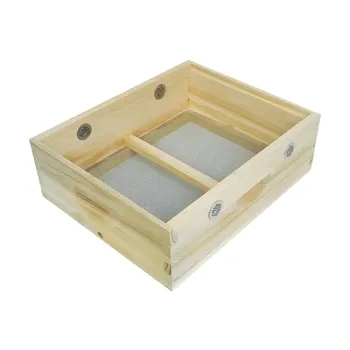
Severe heat and strong swarming behavior require a more flexible hive system and a stronger queen-management program. High-temperature-adapted colonies may reduce brood rearing to conserve resources while still showing a strong tendency to swarm or rear replacement virgin queens. For commercial operations, this increases the value of queen excluders, swarm traps, modular hive components, queen-rearing tools, isolation cages, and climate-protection equipment.
The central procurement priority is control and continuity: select hive hardware that supports rapid inspections, colony splitting, and swarm capture, then pair it with queen supplies that maintain replacement capacity during heat stress and queen loss.
Why Heat-Adapted, Swarm-Prone Bees Need Different Equipment
Heat changes colony priorities
In severe heat, some honey bee subspecies conserve colony resources by suppressing brood rearing. This can reduce the immediate demand for brood-chamber space, but it does not eliminate the need to manage queen condition, colony population, ventilation, and seasonal expansion.
Hive hardware should therefore support adjustable colony volume and efficient access, rather than forcing every colony into the same configuration throughout the season.
Swarming creates an operational control problem
Strong swarming tendencies can divide a colony before the beekeeper has planned for it. The result may be lost production, escaped queens, reduced workforce, and additional labor to recover or rebuild colonies.
The appropriate equipment strategy is not simply to add more boxes. It is to create a system that supports early detection, controlled splitting, queen isolation, and swarm recovery.
Queen loss can become more consequential
Heat stress, swarming, and colony disruption can increase the importance of maintaining a reliable queen replacement pipeline. Some high-temperature-adapted colonies may rear multiple virgin queens, which can help mitigate queen loss but also creates a need for deliberate queen handling.
Commercial operations benefit from having queen-rearing and queen-isolation supplies available before an emergency occurs.
Hive Hardware That Supports Swarm Management
Queen excluders
Queen excluders restrict the queen’s movement while allowing worker bees to access honey supers. In a swarm-prone operation, they can help maintain brood and queen activity in the intended chamber and make colony organization more predictable.
They are not a complete swarm-prevention solution. Excluders must be used alongside adequate space management, inspections, and planned colony splits.
Swarm traps
Swarm traps provide a practical recovery option when colonies attempt to leave. They are particularly relevant for commercial apiaries managing high-swarming or highly mobile populations.
For distributors and wholesalers, swarm traps are a useful complementary product because they extend the value of the hive system beyond routine housing into colony retention and loss mitigation.
Modular hive components
Modular brood chambers, supers, and compatible hive bodies allow beekeepers to divide colonies, create controlled splits, and adjust available space as heat and colony population change.
Interchangeability is critical. Frames, boxes, covers, and bottom components should fit consistently so operators can respond quickly without sorting through incompatible parts.
Precisely manufactured hive bodies
Hive dimensions must match the bee stock and the management system. Standardized frame hives are important for commercial Apis mellifera operations, while species or ecotypes with different nesting preferences may require more precisely dimensioned bodies to reduce stress and absconding risk.
For B2B suppliers, dimensional consistency and repeatable manufacturing are as important as the basic material or appearance of the hardware.
Ventilation and heat-buffering components
Extreme summer conditions make thermal management part of hive selection. Protective insulation can help buffer temperature swings, but it should be considered together with appropriate ventilation, shading, hive placement, and inspection practices.
The objective is not to seal the hive against heat. It is to provide stable internal conditions without obstructing the colony’s ability to regulate airflow and temperature.
Queen Management Supplies for Heat-Stressed Colonies
Queen-rearing tools
A reliable inventory should include queen-rearing kits, cell cups, grafting or transfer tools, and related cell-handling supplies. These products support planned queen production when colonies are rearing multiple virgins or when replacement queens are needed after swarming.
Queen-rearing equipment should be compatible with the operator’s production scale. Commercial breeders need repeatable tools and consistent component dimensions, while smaller apiaries may prioritize compact kits and ease of use.
Queen isolation cages
Queen cages and isolation equipment allow operators to protect, transport, introduce, or temporarily separate queens during colony manipulation. This is especially valuable when splitting colonies or managing several potential replacement queens.
Isolation supplies reduce the risk of accidental queen loss during inspections and make queen replacement more deliberate rather than reactive.
Mating nuclei and queen propagation equipment
When genetic continuity matters, mating nuclei and queen propagation equipment help breeders maintain a structured replacement pipeline. Honey bee queens mate with multiple drones in open air, so complete genetic control is difficult without specialized breeding arrangements.
These supplies are particularly relevant to operations selecting for heat tolerance, productivity, temperament, or controlled replacement schedules.
Queen excluder compatibility
Queen management supplies work best when they fit the hive hardware precisely. Excluder dimensions, frame spacing, brood-chamber configuration, and queen cages should be treated as one integrated system rather than as unrelated products.
Poor compatibility can slow inspections, damage comb, increase handling time, and undermine the intended queen-management strategy.
Building a Commercially Useful Product Portfolio
Prioritize complete management systems
A one-stop product range should cover the full response cycle:
- Detection: inspection-access hardware and swarm-monitoring equipment.
- Control: queen excluders, swarm traps, and secure hive components.
- Intervention: modular boxes and brood chambers for planned splits.
- Replacement: queen-rearing tools, cell cups, cages, and mating nuclei.
- Protection: durable hive components, suitable insulation, smokers, and protective gear.
This portfolio approach is more valuable than selling individual items without regard to compatibility.
Stock for urgent seasonal demand
Swarm management and queen replacement are time-sensitive. Delayed supply can turn a manageable colony event into a lost swarm or a prolonged queenless period.
Distributors should maintain fast-response inventory for excluders, traps, modular components, cages, and queen-rearing consumables during peak heat and swarming periods.
Match equipment to bee stock
Behavior differs among subspecies, races, and ecotypes. More defensive or highly mobile populations may require stronger protective equipment, secure hive hardware, high-output smokers, and more robust handling tools.
Equipment recommendations should therefore account for temperament, swarming tendency, absconding behavior, hive dimensions, and production objectives, not only climate.
Understanding the Trade-offs
Queen excluders do not replace swarm prevention
An excluder can help organize queen movement, but it cannot compensate for insufficient space, poor timing, or inadequate inspections. Misuse may also complicate colony movement if the hive design and management approach are not compatible.
Treat it as one component of a broader swarm-management program.
Insulation must be balanced with ventilation
Insulation may help protect colonies from extreme temperature fluctuations, but excessive enclosure or poor airflow can create additional heat-management problems. Product selection should consider the entire hive environment, including ventilation and local operating conditions.
Suppliers should avoid presenting insulation as a universal substitute for sound apiary placement and seasonal management.
More equipment can increase complexity
Modular systems and queen-rearing tools improve flexibility, but they also increase the number of components that must be standardized, labeled, cleaned, stored, and maintained.
For large operations, the productivity benefit depends on interchangeability, durable construction, and efficient order fulfillment, not merely on the number of products offered.
Species-specific requirements limit universal solutions
Standardized equipment is highly useful in commercial Apis mellifera systems, but not every bee population has identical nesting behavior or dimensional requirements. Cavity-nesting species and different ecotypes may need more precisely tailored hive bodies.
A technically credible supplier should confirm the customer’s bee stock and hive format before recommending a complete hardware package.
How to Apply This to Your Project
Select equipment according to the colony’s heat response, swarming pressure, replacement-queen requirements, and operating scale.
- If your primary focus is swarm control: Prioritize compatible queen excluders, swarm traps, modular brood chambers, and hive components that support rapid colony splitting.
- If your primary focus is queen continuity: Stock queen-rearing tools, cell cups, queen isolation cages, mating nuclei, and replacement-focused management supplies.
- If your primary focus is extreme-heat resilience: Combine suitable insulation and ventilation-oriented hardware with durable hive bodies and easy-access components for frequent inspections.
- If your primary focus is wholesale or distribution efficiency: Build a full-spectrum, cross-compatible portfolio supported by reliable stock availability, rapid quotations, technical guidance, and fast fulfillment.
- If your primary focus is mixed or defensive bee populations: Add heavy-duty protective gear, effective smokers, secure hive-locking hardware, and robust swarm-control equipment.
With the right combination of compatible hive hardware and queen-management supplies, severe heat and elevated swarming tendencies become manageable operational variables rather than recurring causes of colony loss.
Summary Table:
| Category | Key Products | Purpose |
|---|---|---|
| Hive Hardware | Queen excluders | Control queen movement and brood placement |
| Hive Hardware | Swarm traps | Capture escaping colonies and prevent loss |
| Hive Hardware | Modular hive components | Facilitate splits and adjust space |
| Hive Hardware | Ventilation/insulation | Buffer extreme temperatures |
| Queen Supplies | Queen-rearing tools | Raise replacement queens |
| Queen Supplies | Queen isolation cages | Protect and transport queens |
| Queen Supplies | Mating nuclei | Maintain genetic continuity |
| Queen Supplies | Queen excluder-compatible equipment | Ensure integrated system compatibility |
Optimize your beekeeping operations with HONESTBEE's comprehensive range of hive hardware and queen management supplies. Our one-stop sourcing ensures you get quality, compatible products for heat-adapted, swarm-prone colonies. Offer your customers reliable solutions that reduce colony loss and enhance productivity. Contact us today for fast quotes and efficient fulfillment—let's build a resilient beekeeping supply chain together. Reach out now!
Related Products
- Stainless Steel Scraper for Metal Queen Bee Excluders
- Professional Dual Action Queen Excluder Scraper for Beekeeping
- Ergonomic Plastic Frame Spacer Tool for Rapid Hive Management Beekeeping
- Professional 600D Oxford Cloth Beekeeping Tool Bag with 8 Pockets and Elastic Loops
- Modern Flat-Mount Hive Number Set for Beekeeping
People Also Ask
- How does a queen-bee excluder function as a defense against Small Hive Beetles? Protect Your Honey with Resource Denial
- What are the characteristics of a stainless steel queen excluder? Maximize Your Apiary's Longevity & Hive Fit
- What types of queen excluders are available for beekeepers? Choose the Right Tool for Your Hive
- Why are standardized hive frames and queen excluders essential for maintaining honey purity and quality? Scale Your Purity
- What is the function of the queen excluder in the brood break induction process? Optimize Your Varroa Mite Control