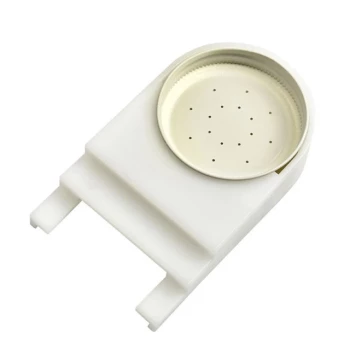
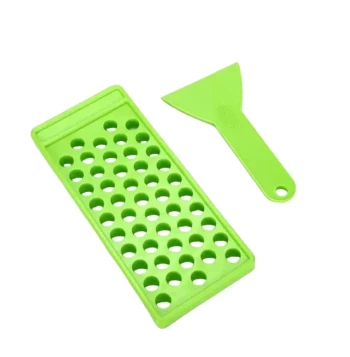
Specialized feeding containers and trays serve as essential instruments for precise apiary management and research. By enabling exact control over the volume and sugar concentration of artificial nectar provided to a colony, these tools allow you to isolate variables and directly measure the ratio of immediate resource consumption against long-term storage within the hive.
Core Takeaway These tools function as simulators for natural nectar flows, allowing you to quantify how varying sugar concentrations (such as 30% vs. 70%) impact colony behavior, specifically the speed of cell filling and the decision-making process behind honeycomb capping.
The Mechanics of Controlled Input
Precision in Volume and Concentration
Standard feeding methods often introduce variability that makes data collection difficult. Specialized containers solve this by allowing you to define the exact total volume of resources introduced to the hive.
This control extends to the chemical composition of the feed. You can dictate precise sugar concentrations, eliminating the guesswork associated with natural foraging variables.
Simulating Nectar Flows
These trays allow you to mimic specific environmental conditions.
By adjusting the feed, you can simulate a "dearth" or a "heavy flow." For example, you can alternate between 30 percent and 70 percent sucrose solutions to observe how the colony reacts to changes in resource richness.
Measuring Biological Outputs
The Consumption-to-Storage Ratio
The primary analytical value of these tools is the ability to quantify where the resources go.
By measuring the input against the hive's weight and frame density, you can determine the specific ratio of consumption to storage. This reveals how much energy the bees burn for immediate maintenance versus how much they stockpile for winter.
Speed of Cell Filling
High-concentration inputs often trigger different behaviors than low-concentration inputs.
Using specialized trays to deliver high-density resources allows you to measure the velocity of cell filling. This metric helps you understand the colony's maximum processing capacity under ideal conditions.
Honeycomb Capping Decisions
Storage is not just about filling cells; it is about preservation.
These tools help demonstrate how resource input directly affects honeycomb capping decisions. By controlling the flow, you can identify the thresholds of storage density required for bees to seal the comb, signaling that the "honey" is cured and stable.
Understanding the Trade-offs
Simulation vs. Natural Foraging
While these tools provide excellent quantitative data, they remain a simulation.
Artificial feeding trays remove the energy cost of foraging flights. Therefore, the storage ratios observed during these controlled tests may be higher than those seen during a natural nectar flow, where bees expend significant energy locating flowers.
Complexity of Setup
Achieving precise quantification requires rigorous protocols.
Simply placing a tray is insufficient; the concentration must be mixed accurately (e.g., strictly 30% or 70%), and measurements must be taken consistently to yield valid data regarding consumption speeds.
Making the Right Choice for Your Goal
To effectively utilize specialized feeding containers for quantification, align your methodology with your specific objective:
- If your primary focus is Colony Health Assessment: Use low-concentration solutions (approx. 30%) to measure immediate consumption rates and gauge the daily energy requirements of the colony.
- If your primary focus is Production Optimization: Use high-concentration solutions (approx. 70%) to test the colony's maximum storage capacity and the speed at which they fill and cap honeycomb cells.
By controlling the input, you convert the hive from a black box into a measurable system.
Summary Table:
| Feature | 30% Sucrose Solution (Low) | 70% Sucrose Solution (High) |
|---|---|---|
| Primary Use | Colony Health Assessment | Production Optimization |
| Focus Area | Immediate Consumption Rates | Storage Capacity & Velocity |
| Goal | Gauge daily energy requirements | Measure cell filling & capping speed |
| Simulation | Natural Nectar Dearth | Heavy Nectar Flow |
Maximize Your Apiary Efficiency with HONESTBEE
At HONESTBEE, we understand that precision is the key to scaling your beekeeping business. Whether you are a commercial apiary tracking resource consumption or a distributor seeking high-quality gear, we provide the full spectrum of professional tools needed for success. From specialized feeding systems and hive-making machines to high-capacity honey-filling equipment, our comprehensive wholesale offering ensures your operation runs like a well-oiled machine.
Ready to optimize your production? Contact us today to learn how our hardware and industry consumables can drive your growth.
References
- Michael Eyer, Vincent Dietemann. A Look into the Cell: Honey Storage in Honey Bees, Apis mellifera. DOI: 10.1371/journal.pone.0161059
This article is also based on technical information from HonestBee Knowledge Base .
Related Products
- Professional In-Hive Bee Feeder HONESTBEE Frame for Beekeeping
- Classic Boardman Entrance Bee Feeder Hive Front Feeding Solution
- HONESTBEE Professional Hive Top Bee Feeder Feeding Solution
- HONESTBEE Entrance Bee Feeder Efficient Hive Front Liquid Feeding Solution for Beekeeping
- Professional Hive Top Bee Feeder for Beekeeping
People Also Ask
- When should beekeepers stop feeding their bees? Let Your Bees Tell You
- Why is the use of a beekeeping feeder for syrup supplementation important? Boost Colony Growth and Survival
- What are the common types of internal and external feeders used in beekeeping? Choose the Right Feeder for Your Hive
- What is a feeder in the context of beekeeping? Optimize Your Hive Nutrition and Growth
- How do specialized feeders contribute to effective artificial feeding? Scientific Apiary Management & Colony Health