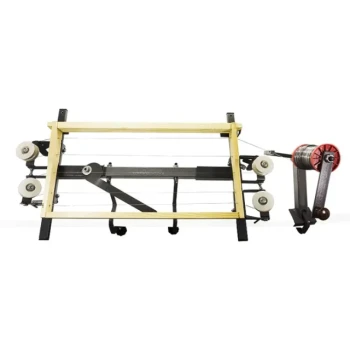
Standardized honeycomb frames function as a calibrated measurement unit within the hive, transforming subjective observations into hard data. By providing a fixed physical dimension, these frames allow breeders to objectively assess colony traits by counting the number of frames covered by bees and measuring the precise surface area of sealed brood.
By stabilizing the physical environment, standardized frames ensure that any observed differences in colony performance are due to genetics or management strategies, rather than variations in hive structure.
Establishing a Uniform Metric
Quantifying Population Density
Standardized frames serve as a consistent spatial benchmark for estimating total population.
Technicians can calculate the number of frames fully covered by bees to derive an accurate adult bee count. This is often based on an established ratio, such as 3,000 adult bees per standard frame, converting a visual inspection into a numerical value.
Measuring Reproductive Capacity
The uniform dimensions of the frame allow for the precise calculation of capped brood area.
This metric is critical for determining a queen's laying rate and the colony's overall development potential. By measuring the surface area of sealed brood against the known area of the frame, breeders can objectively rank colonies based on reproductive output.
Evaluating Resource accumulation
Standardization permits the consistent comparison of non-biological traits, such as wax-building capacity and propolis collection.
Because every colony starts with the exact same foundation area, any deviation in comb construction speed or propolis deposition levels can be directly attributed to the specific bee group’s behavior.
Eliminating Experimental Error
Creating a Baseline for Comparison
To accurately evaluate breeding programs, the hardware environment must be identical across all test groups.
Standardized frames facilitate this by ensuring that "one frame of bees" represents the same volume and surface area in every hive. This effectively removes equipment variables, allowing researchers to isolate the impact of feeding strategies or genetic lineages.
Monitoring Seasonal Resilience
The structural consistency of these frames allows for the tracking of colony strength through critical seasonal transitions.
Breeders can assess winter hardiness and spring development by monitoring the number of occupied inter-frame spaces, known as bee ways. This provides longitudinal data on how well a colony preserves its population during dormant periods.
Understanding the Trade-offs
Estimation vs. Exact Counting
While standardized frames provide a strong metric, they rely on visual estimation and ratios.
Using a fixed number (like 3,000 bees per frame) is an approximation that may fluctuate based on how tightly the bees are clustering due to temperature or stress. It provides a relative index of strength rather than an absolute census.
Inspection Disruption
Although modular frames allow for independent extraction, the act of inspection still disrupts the colony.
While the design minimizes structural damage, frequent removal of frames to measure brood area can alter the hive's thermal environment, potentially influencing the very traits you are trying to measure if not done efficiently.
Applying Standardization to Breeding Goals
To get the most value from standardized frames, align your measurement strategy with your specific breeding objective:
- If your primary focus is Rapid Population Growth: Track the rate at which the colony expands to cover new frames to estimate adult population spikes.
- If your primary focus is Reproductive Consistency: Measure the total area of capped brood on a strict schedule to quantify the queen's laying performance.
- If your primary focus is Overwintering Success: Record the number of occupied bee ways before and after winter to calculate the colony's specific survival rate.
Standardized frames are not just hive components; they are the technical foundation that turns beekeeping into a measurable science.
Summary Table:
| Metric Type | Assessment Method | Key Benefit to Breeding |
|---|---|---|
| Population Density | Counting frames covered by adult bees | Quantifies colony strength using fixed ratios (e.g., 3,000 bees/frame). |
| Reproductive Rate | Measuring surface area of sealed brood | Precisely ranks queen laying performance and development potential. |
| Resource Metrics | Comparing wax-building & propolis levels | Isolates genetic behavior by ensuring identical foundation area. |
| Seasonal Resilience | Tracking occupied "bee ways" over time | Provides longitudinal data on winter survival and spring buildup. |
Scale Your Apiary Operations with HONESTBEE Precision Equipment
Transition from estimation to expert-level beekeeping with high-quality, standardized hardware. At HONESTBEE, we empower commercial apiaries and global distributors by supplying a complete spectrum of wholesale beekeeping tools and machinery. Whether you need precise hive-making machines for custom manufacturing or honey-filling equipment to streamline your production, our portfolio is designed to enhance your efficiency and scientific accuracy.
Our value to your business:
- Comprehensive Wholesale Range: From specialized hardware to essential industry consumables.
- Industrial Efficiency: High-performance machinery tailored for large-scale operations.
- Cultural Merchandise: Unique honey-themed products to diversify your market appeal.
Ready to upgrade your breeding program and supply chain? Contact us today to discuss how HONESTBEE can support your growth with premium beekeeping solutions!
References
- Zarema M. Dolgieva, Khamzat H. Evloev. Breeding of a new breed type "Ingush" of the grey mountain Caucasian breed of bees, adapted to local climatic conditions. DOI: 10.55196/2411-3492-2024-1-43-61-69
This article is also based on technical information from HonestBee Knowledge Base .
Related Products
- Professional Sectional Comb Honey Frame with 250g Cassette System for Beekeeping
- Professional 500g Sectional Comb Honey Frame System for Beekeeping
- Heart-Shaped Comb Honey Frame and Honeycomb Cassette
- Plastic Honey Comb Frames Cassette Box for Honey
- Heavy Duty Castellated Iron Frame Spacer for Honey Supers
People Also Ask
- How are honeybee combs utilized for non-destructive colony monitoring? Master Population Density Tracking
- What is the technical purpose of exchanging honeycomb frames? Master Apiary Equalization for Growth
- What frame to use for honeycomb? Choose the Right System for Pure, Edible Comb
- What is a honeycomb frame? The Key to Modern, Sustainable Beekeeping
- What are the recommended temperature and duration settings for freezing honey frames? Ensure Pest-Free Comb Storage