Swarm lures and lemongrass oil function as potent chemical beacons for honeybee colonies in transit. They assist scout bees by chemically simulating specific honeybee pheromones, which validates a catch box or swarm trap as a safe, desirable nesting site. By placing these attractants inside your equipment, you significantly increase the probability that scouts will select your trap and subsequently guide the entire swarm to inhabit it.
Success in trapping swarms relies on olfactory signaling; lemongrass oil is effective because it mimics the natural pheromones bees use to communicate, effectively tricking the scout bees into identifying an empty box as a prime location for a new colony.
The Science of Attraction
Mimicking Natural Chemistry
The core mechanism behind lemongrass oil and commercial swarm lures is biomimicry. Honeybees rely heavily on chemical signals to communicate complex information.
Lemongrass oil specifically mimics distinct honeybee pheromones. When a scout bee encounters this scent, it triggers a natural biological response associated with hive location and orientation.
Validating the "Real Estate"
Scout bees are tasked with a critical mission: finding a secure location for the colony's survival.
Visual cues are often not enough to confirm a site's suitability. The presence of these specific scents acts as a chemical confirmation, signaling to the scout that the environment is appropriate for habitation.
Operational Mechanics
From Scout to Swarm
The process begins with a single scout identifying the lure. Once the scout validates the site—aided by the attractant—she returns to the swarm cluster to communicate the location.
Because the attractant makes the site highly desirable, the scout advocates for it more vigorously. This leads to a consensus decision by the colony to relocate to the box containing the lure.
Placement Strategy
For these agents to be effective, they must be placed inside the catch box or swarm trap.
External application may attract bees to the general area, but placing the scent internally encourages the scouts to enter and explore the cavity. This internal exploration is necessary for the scouts to measure the space and deem it suitable for the colony.
Understanding the Trade-offs
Probability vs. Certainty
While lures increase the likelihood of attraction, they are not a guarantee.
A lure serves as an invitation, but the physical characteristics of the box (size, height, and location) must still meet the colony's requirements. A strong scent cannot compensate for a trap that is too small or poorly positioned.
Chemical Potency
Beekeepers must rely on the correct dosage.
The reference indicates these are attractants, but implicit in chemical usage is balance. The goal is to mimic a pheromone trace, not to overwhelm the scouts with a chemical irritant.
Making the Right Choice for Your Goal
To effectively utilize these tools in your apiary management, consider your specific objectives:
- If your primary focus is maximizing swarm capture rates: Utilize lemongrass oil or commercial lures internally to leverage the pheromone-mimicking effect that scouts instinctively prefer.
- If your primary focus is passive trap management: rely on these long-lasting chemical attractants to keep your equipment appealing to passing scouts without constant maintenance.
By aligning your equipment with the natural chemical language of the honeybee, you turn a random search for a home into a targeted relocation.
Summary Table:
| Feature | Lemongrass Oil / Swarm Lures | Role in Colony Relocation |
|---|---|---|
| Mechanism | Chemical Biomimicry | Mimics natural honeybee orientation pheromones |
| Scout Response | Validation & Recruitment | Confirms site suitability and encourages hive advocacy |
| Placement | Internal Application | Drives scouts to explore the cavity volume |
| Success Factor | Olfactory Signaling | Increases the probability of colony selection |
| Target Audience | Commercial Apiaries | Maximizes swarm capture efficiency and equipment ROI |
Maximize Your Apiary Productivity with HONESTBEE
Are you looking to scale your commercial beekeeping operations or expand your distribution catalog? HONESTBEE is your premier partner for professional-grade beekeeping solutions. From high-potency swarm lures to advanced hive-making and honey-filling machinery, we provide the full spectrum of equipment and consumables required for modern apiculture.
Why partner with us?
- Wholesale Excellence: Bulk supplies for commercial apiaries and global distributors.
- Industrial Precision: Reliable machinery designed for high-volume honey production.
- Comprehensive Portfolio: A one-stop shop for everything from hardware to honey-themed cultural merchandise.
Take the guesswork out of swarm management and production. Contact us today to discover how our wholesale offerings can enhance your business efficiency and yield.
Related Products
- HONESTBEE Collapsible Tiered Bee Swarm Catcher for Beekeeping
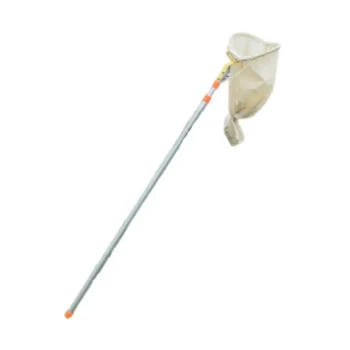
- HONESTBEE Professional Telescopic Pole Bee Swarm Catcher
People Also Ask
- What should be done if the swarm is situated on the bottom of a tree limb? A Guide to Methodical Bee Capture
- What role do swarm catchers play in maintaining the production scale of an apiary? Turn Colony Loss into Growth.
- What role does a Swarm Catcher play in the process of expanding apiary colony scale? Optimize Growth & Reduce Costs
- What information should be gathered before attempting to catch a swarm of bees? A Safe and Successful Guide
- What precautions can be taken to prevent a newly captured swarm from absconding? Secure Your Swarm with Proven Methods