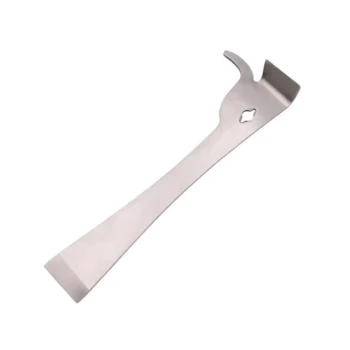
The physical dimensions of a hive tool dictate both the mechanical leverage you can apply and the precision with which you can separate hive components. A longer tool provides the necessary torque to pry apart sticky propolis seals, while the thickness of the blade determines how easily the tool slides between boxes without damaging the wood. Balancing these factors is essential for efficient, damage-free hive management.
While an eight to ten-inch tool serves as the industry standard for general utility, the optimal choice depends on balancing the need for leverage against the need for precision. Thinner blades offer cleaner entry into tight spaces, whereas thicker blades provide the durability required for heavy-duty prying.
The Mechanics of Tool Length
Optimizing for Leverage
The primary function of length in a hive tool is mechanical advantage. Longer tools allow you to generate significantly more force with less physical exertion.
This extra leverage is critical when separating boxes that have been cemented together by strong or aged propolis.
The General-Purpose Standard
For most beekeepers, a length of eight to ten inches is the ideal "sweet spot."
This size provides sufficient leverage for the majority of tasks while remaining compact enough to carry and handle easily.
Ergonomics and Hand Size
Control over the tool is just as important as the force it generates.
Individuals with smaller hands may find tools shorter than the standard eight inches to be more comfortable. A tool that fits the hand properly ensures safer manipulation and reduces fatigue.
Blade Geometry and Function
The Advantage of Thinner Blades
A blade with a thin profile acts as a precision instrument.
It is designed to slip easily into the tightest cracks between hive boxes, allowing you to break the propolis seal with minimal resistance.
Strength of Thicker Bevels
Blades featuring a thicker bevel are engineered for durability and strength.
They possess higher breaking strength, making them less likely to snap or warp when subjected to the high stress of prying apart stubborn equipment.
Understanding the Trade-offs
The Risk of Equipment Damage
There is a distinct downside to using a heavy-duty, thick blade.
Because a thick bevel requires a wider opening to be inserted, forcing it into a tight crack can crush or gouge the wooden edges of your hive boxes.
Balancing Durability with Finesse
Thinner blades preserve the wood but are structurally weaker.
If you apply too much torque to a thin blade, you risk bending the metal; conversely, a thick blade will withstand the force but lacks the finesse needed for delicate separations.
Making the Right Choice for Your Goal
Select your tool based on your specific physical requirements and the age or condition of your woodenware.
- If your primary focus is heavy prying: Choose a longer tool (10 inches or more) to maximize leverage against stubborn propolis.
- If your primary focus is equipment preservation: Opt for a tool with a thinner blade that can separate boxes without gouging the wood edges.
- If your primary focus is ergonomics: Select a standard eight to ten-inch model, or a smaller size if you have petite hands, to ensure a secure and comfortable grip.
Ultimately, the best tool is one that fits your hand comfortably while providing the specific balance of strength and precision your hives require.
Summary Table:
| Tool Feature | High Performance Attribute | Primary Benefit | Best Used For |
|---|---|---|---|
| Longer Length | Increased Mechanical Leverage | Easier prying with less effort | Stuck boxes and heavy propolis |
| Shorter Length | Enhanced Control & Ergonomics | Reduced hand fatigue | Small hands and precise movements |
| Thin Blade | Precision Insertion | Prevents wood damage/gouging | Delicate hive maintenance |
| Thick Blade | High Structural Strength | Superior durability under pressure | Commercial use and heavy-duty prying |
Scale Your Beekeeping Success with HONESTBEE
Equipping your apiary with the right tools is the first step toward operational efficiency. At HONESTBEE, we specialize in supporting commercial apiaries and distributors with a comprehensive wholesale catalog. From precision-engineered hive tools that protect your woodenware to advanced hive-making and honey-filling machinery, we provide the full spectrum of equipment and consumables your business needs to thrive.
Ready to elevate your production? Contact us today to discuss our wholesale offerings and discover how our industry-leading hardware and honey-themed merchandise can add value to your portfolio.
Related Products
- Professional Multi-Function Stainless Steel Hive Tool
- Professional Stainless Steel Pry-Bar Hive Tool
- HONESTBEE Professional Long Handled Hive Tool with Precision Cutting Blade
- HONESTBEE Premium Italian Style Hive Tool with Hardwood Handle
- Ergonomic Plastic Frame Spacer Tool for Rapid Hive Management Beekeeping
People Also Ask
- Why are professional hive tools considered indispensable? Master Beekeeping Maintenance with Precision Leverage
- What is the role of professional hive tools in routine apiary maintenance? Expert Tips for Hive Health and Longevity
- What are the benefits of a multi-functional hive tool? Streamline Your Apiary Workflow with One Tool
- What advantages do multi-functional hive tools offer? Maximize Your Apiary Efficiency and Workflow
- What are the common construction features of hive tools? Key Insights for Superior Beekeeping Efficiency