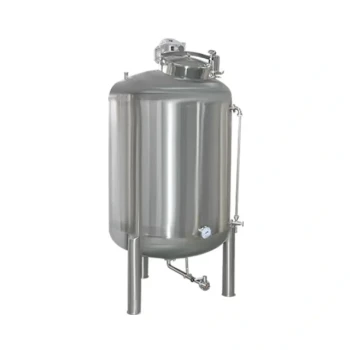
A honey heating tank improves fluidity primarily by utilizing thermal energy to drastically reduce viscosity. By raising the temperature of the honey in a controlled environment, the tank transforms thick or crystallized raw honey into a smooth liquid. This physical change is essential for enabling the honey to move effortlessly through pumps, filters, and bottling machinery.
The core function of a heating tank is to convert variable, viscous honey into a consistent fluid that prevents processing bottlenecks. However, its operational success depends on achieving this flow without exceeding the thermal thresholds that damage the honey's natural biology.
The Mechanics of Viscosity Reduction
Overcoming Resistance and Crystallization
Raw honey is naturally viscous and often prone to crystallization. A heating tank (often called a melter) applies gentle heat to break down sugar crystals and lower internal friction. This ensures the product is sufficiently fluid to be pumped without straining mechanical equipment.
Establishing Uniform Flow
Beyond simple liquefaction, these tanks ensure the honey achieves a consistent flow rate. Variations in viscosity can cause delays or inconsistencies in bottling lines. By maintaining a uniform temperature, the tank guarantees that the processing speed remains stable and predictable.
Enhancing Filtration Capabilities
Removing Debris Effectively
Fluidity is the prerequisite for effective filtration. When honey is warmed and less viscous, it passes through fine mesh filters with minimal resistance. This allows operators to easily capture and remove impurities such as wax particles, bee parts, and other debris.
Improving Visual Clarity
The result of this enhanced filtration is a clearer, more visually appealing final product. While a heating tank prepares the honey for this stage, it is distinct from a maturator (settling tank), which relies on gravity during a stationary phase to let air bubbles rise to the surface. The heating tank actively facilitates the mechanical removal of solids.
Preserving Bio-Chemical Integrity
The Necessity of Controlled Heating
Fluidity must not come at the expense of quality. High-quality heating tanks utilize gentle, regulated heat rather than aggressive boiling. This precision is vital because honey is a biological product sensitive to thermal stress.
Protecting Enzymes and Flavor
Proper use of a heating tank maintains the honey's natural profile. By keeping temperatures at an optimal level, the process preserves critical components like enzymes, beneficial compounds, flavor, and aroma. This ensures the honey remains nutritious and meets quality standards despite being heated for processing.
Understanding the Trade-offs
The Risk of Thermal Degradation
While heat improves flow, excessive heat destroys value. If the heating tank is set too high or the honey is exposed to heat for too long, you risk degrading the very enzymes and nutrients you are trying to sell. There is a fine line between "fluid enough to bottle" and "overheated."
Equipment Specificity
It is a common error to assume one tank does it all. A heating tank is designed for flow and melting. It does not replace the need for a maturator if your goal is to remove fine air bubbles via buoyancy. These are separate stages in the processing chain that require different equipment.
Making the Right Choice for Your Goal
To maximize the utility of your honey heating tank, align its use with your specific production targets:
- If your primary focus is Production Speed: Utilize the tank to maintain a specific, constant temperature that matches the optimal intake rate of your bottling machine to prevent line stoppages.
- If your primary focus is Product Purity: Use the heating tank specifically to prepare the honey for fine filtration, ensuring it is fluid enough to pass through tight meshes without pressure buildup.
- If your primary focus is Quality Preservation: Prioritize tanks with precise thermal controls to liquefy the honey at the lowest possible temperature, safeguarding enzymes and aroma.
The heating tank is not just a melting pot; it is the control point where processing efficiency meets product quality.
Summary Table:
| Feature | Function | Benefit to Production |
|---|---|---|
| Viscosity Reduction | Applies controlled thermal energy | Enables faster pumping and prevents equipment strain |
| Crystal Liquefaction | Breaks down sugar crystals | Transforms granulated honey into a smooth, liquid state |
| Enhanced Filtration | Lowers internal friction | Easily removes wax and debris through fine mesh filters |
| Thermal Regulation | Gentle heating technology | Protects delicate enzymes, flavor, and natural aromas |
Elevate Your Honey Processing with HONESTBEE
Are you a commercial apiary or a distributor looking to scale your production without sacrificing quality? HONESTBEE provides the industry-leading equipment you need to succeed. From specialized honey heating tanks that ensure perfect fluidity to high-capacity honey-filling machines and complete hive-making hardware, we supply everything the professional beekeeper requires.
Why choose HONESTBEE?
- Comprehensive Wholesale Range: One-stop shop for tools, machinery, and consumables.
- Precision Engineering: Equipment designed to protect the biological integrity of your honey.
- Global Support: Tailored solutions for large-scale apiaries and equipment distributors.
Contact our experts today to optimize your bottling line!
Related Products
- Stainless Steel Heated Honey Tank Warming Heating Tank
- Honey Tank Heater Drum Heating Blanket for Honey Barrel
- Heavy Duty Stainless Steel Honey Processing Machine Decrystallizing Tank
- Stainless Steel Honey Storage Tank with Lid for Honey
- Professional Honey Storage Tank with Agitation System
People Also Ask
- What are the benefits of precise temperature control in honey heating tanks? Preserve Quality and Efficiency
- How do honey heating tanks offer scalability for growing beekeeping operations? Strategic Equipment Growth Solutions
- What features of a honey heating tank contribute to hygiene? Ensure Purity with Stainless Steel & Sanitary Design
- What is the primary role of a honey heating tank? Enhance Your Honey Processing Flow and Quality
- What is the purpose of using heating tanks or constant temperature water baths in honey dehydration? Optimize Purity & Flow