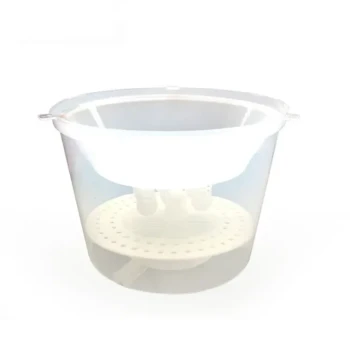
A pollen trap functions as a mechanical filter installed directly at the entrance of a beehive. It forces returning forager bees to crawl through a grid of holes specifically calibrated to be just large enough for the bee's body, but too narrow for the pollen pellets attached to their hind legs. As the bee squeezes through the aperture, the pellets are mechanically stripped off and fall into a collection tray situated below the entrance.
The device relies on precise physical barriers to separate raw pollen from the insect without causing harm, ensuring the collection of pure material while allowing the bee to enter the hive.
The Mechanics of Separation
The Restrictive Grid
The core component of the trap is a grid or screen placed over the hive entrance. This acts as a partial restriction that modifies the traffic flow of the colony.
The holes in this grid have specific aperture specifications. They are engineered to permit the passage of a worker bee but create significant friction against the bee's legs.
Stripping the Pollen Baskets
Forager bees carry pollen in specialized structures called pollen baskets located on their hind legs. When the bee navigates the tight opening of the trap, the edges of the grid scrape against these baskets.
This friction dislodges the pollen pellets, stripping them away from the bee's body. Importantly, the design is intended to remove the pollen without injuring the insect.
Gravity-Fed Collection
Once the pollen pellets are separated from the bee, gravity takes over. The dislodged pellets fall through a secondary screen or gap that bees cannot enter.
They land in a drawer-type receiving tray located at the bottom of the device. This isolates the harvested pollen from the colony, keeping it clean for the beekeeper to harvest.
Understanding the Trade-offs
Impact on Colony Resources
While the trap is effective, it functions by depriving the hive of incoming resources. The primary reference notes that the trap dislodges some of the pollen, not all of it, which allows the colony to retain a portion of its food supply.
However, continuous use can stress the colony's nutritional stores. Beekeepers often limit usage to peak foraging times (such as 6:00 AM to 11:00 AM) to balance harvest yield with colony health.
Restriction of Drones
The specific aperture size designed for worker bees is often too small for drones (male bees) and the queen, who have larger bodies. A trap left in place permanently can prevent drones from entering or exiting the hive.
To mitigate this, many traps feature a grille that can be slid out or lifted. This restores an open entrance, providing unimpeded access for drones and allowing the colony to forage freely when harvesting is not in progress.
Making the Right Choice for Your Goal
To use a pollen trap effectively, you must balance production goals with the biological needs of the hive.
- If your primary focus is Commercial Harvesting: Deploy the trap specifically during peak foraging hours (mornings) to maximize the collection of pure, high-quality pollen.
- If your primary focus is Colony Sustainability: Ensure the trap is equipped with a removable grille or bypass mechanism to allow drones to fly and to let the colony replenish its own pollen stores periodically.
Effective pollen trapping is about managing the flow of resources so both the beekeeper and the bees prosper.
Summary Table:
| Component | Function | Benefit |
|---|---|---|
| Restrictive Grid | Calibrated holes strip pollen from bee legs | Mechanical separation without harming bees |
| Pollen Baskets | Target area on the bee's hind legs | Ensures maximum harvest from forager bees |
| Collection Tray | Gravity-fed drawer at the hive base | Keeps pollen clean and isolated for easy harvest |
| Bypass Grille | Removable screen for drones/queen | Maintains colony health and genetic diversity |
Elevate Your Commercial Pollen Production with HONESTBEE
Are you looking to scale your apiary operations or expand your wholesale catalog? HONESTBEE provides professional-grade beekeeping equipment designed for efficiency and durability. From precision-engineered pollen traps to high-capacity honey-filling machines and specialized hive-making hardware, we support commercial apiaries and distributors with premium tools and essential consumables.
Why partner with HONESTBEE?
- Comprehensive Wholesale Range: Access the full spectrum of beekeeping machinery and tools.
- Expert Engineering: Our equipment is designed to maximize yields while ensuring colony sustainability.
- Diverse Portfolio: We offer everything from heavy-duty machinery to honey-themed cultural merchandise.
Ready to enhance your business efficiency? Contact us today to explore our wholesale offerings!
Related Products
- Removable Plastic Pollen Trap With Ventilated Tray for Bees Pollen Collector
- 30 cm Plastic Entrance Hole Bee Pollen Trap and Collector
- Plastic Bee Pollen Trap Strips Comb Catcher Collector
- High-Efficiency Diamond Maze Bee Escape for Clearing Supers
- Professional Bucket Style Wasp and Moth Pheromone Trap
People Also Ask
- What are the design principles and advantages of pollen traps in the collection of bee pollen? Boost Your Apiary Yield
- What is the function of professional pollen traps in evaluating honey plants? Quantifying Pollination and Crop Potential
- What functions do pollen traps serve for bee bread production? Optimize Your Raw Material Collection
- What maintenance and pest prevention measures should be taken for pollen traps? Protect Your Hive and Harvest Quality
- How does the use of pollen traps in honeybee hives enhance crop fertilization? Boost Your Yield Through Induced Activity