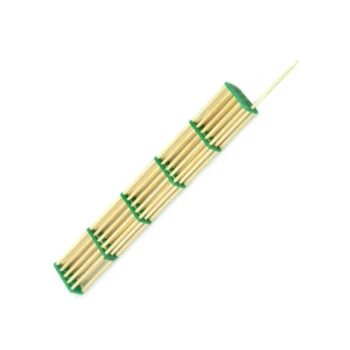
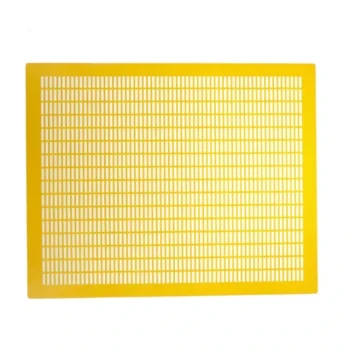
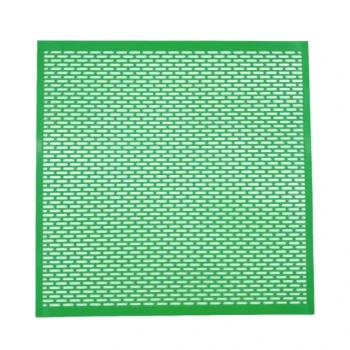
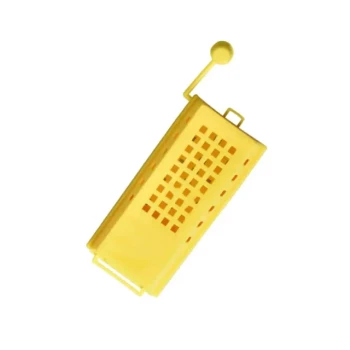
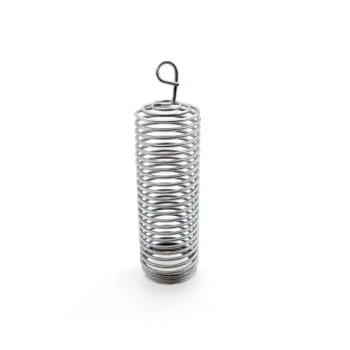
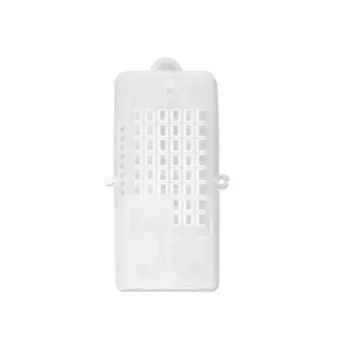
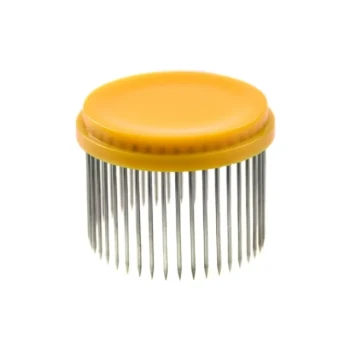
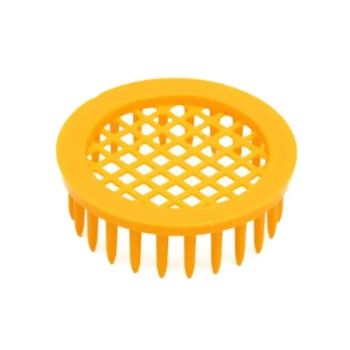
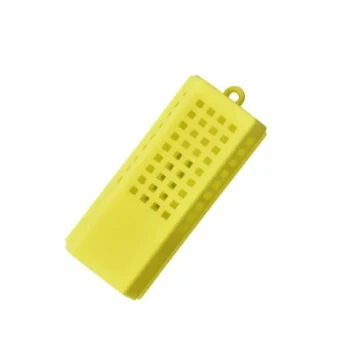
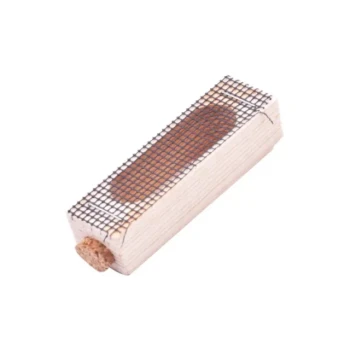
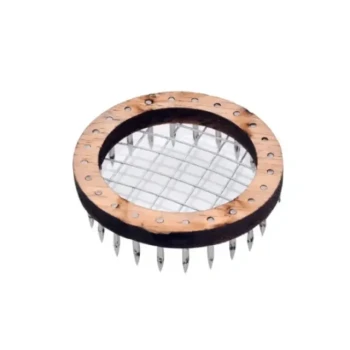
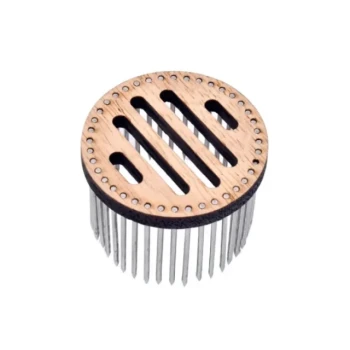
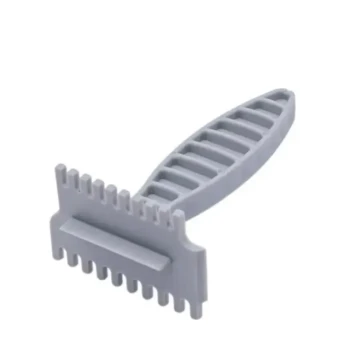
A queen excluder cage functions by establishing a precise, controlled environment directly upon a honeycomb. It utilizes specific mesh dimensions to physically confine the queen to a designated experimental area while permitting smaller worker bees to pass through freely for essential feeding and grooming. This isolation allows researchers or apiarists to measure the exact number of eggs laid within a fixed timeframe, such as 24 hours.
Core Takeaway The queen excluder cage transforms the variable behavior of egg-laying into a standardized, quantifiable metric. By fixing the variables of space and time while maintaining colony integration, it allows for the objective evaluation of a queen's reproductive fitness under specific biological pressures.
The Mechanics of Precision Monitoring
To accurately measure a biological rate, you must control the environment. The queen excluder cage achieves this through two specific mechanisms.
Selective Permeability
The device relies on a mechanical barrier with precise gap dimensions. These gaps are large enough for worker bees to traverse but too small for the larger abdomen of the queen.
This distinction is critical. If the queen were completely isolated, she would lack the nutrition and grooming provided by workers, which would artificially halt her egg-laying. The mesh ensures she remains physiologically supported by the colony while being geographically restricted.
Spatiotemporal Control
In a standard hive, a queen moves randomly across multiple frames. This makes calculating a "rate" (eggs per day) nearly impossible without disturbing the entire nest.
The excluder cage confines the queen to a single experimental honeycomb or a specific section of it. By marking the start and end time of her confinement—typically a 24-hour cycle—you establish a fixed denominator for your calculation.
Evaluating Reproductive Fitness
Once the control mechanisms are in place, the cage serves as a diagnostic tool for the queen's biological performance.
Standardized Data Collection
Because the queen is restricted to a known surface area for a known time, the resulting data is standardized. This allows for direct comparisons between different queens or different environmental conditions.
For example, you can assess how a specific environmental pressure affects a queen's output by comparing her 24-hour count in the cage against a baseline.
Integration with Counting Tools
While the cage facilitates the laying of the eggs in a specific spot, it is often paired with grid rulers for the analysis.
Technicians place standard grids (e.g., 5x5cm or 2x2cm) over the comb after the queen is removed. This allows for a rapid, proportional calculation of egg density, converting the visual evidence into hard data regarding reproductive efficiency.
Understanding the Trade-offs
While effective for measurement, using an excluder cage introduces artificial constraints that must be considered.
Contextual Limitations
The data obtained represents the queen's performance within a confined space, not her free-range behavior. While highly accurate for assessing physiological capability (fitness), it forces laying intensity that might differ slightly from her natural pacing across a full hive.
Distinction from Other Tools
It is vital not to confuse this measuring tool with other "cages" or "excluders."
- Hive Body Excluders: These separate boxes (supers) to keep brood out of honey or find the queen, but they do not offer the precision required for counting daily egg rates.
- Marking Cages: Tools like "tube cages" or "push-in cages" are designed for immobilization to apply paint marks, not for allowing the queen to lay freely over a 24-hour period.
Making the Right Choice for Your Goal
The queen excluder cage is a specialized instrument. Ensure you are applying the right tool to your specific objective.
- If your primary focus is Scientific Data: Use a mesh excluder cage on a single comb for 24 hours to generate a standardized egg-laying rate (eggs/day).
- If your primary focus is Colony Management: Use a standard queen excluder between hive bodies to restrict the queen from honey supers or to narrow down her location for inspections.
- If your primary focus is Identification: Use a push-in or tube cage to safely immobilize the queen for marking, rather than for monitoring reproductive output.
Effective data collection relies on balancing the queen's biological needs with the physical constraints required for accurate measurement.
Summary Table:
| Feature | Functionality | Purpose in Measurement |
|---|---|---|
| Selective Permeability | Allows workers through; confines queen | Ensures queen nutrition while restricting movement |
| Spatiotemporal Control | Fixes area (comb section) and time (24h) | Creates a standardized denominator for 'eggs per day' |
| Mechanical Barrier | Precise mesh dimensions | Prevents queen from wandering to other hive frames |
| Data Integration | Pairs with grid rulers | Facilitates rapid, proportional density calculations |
Maximize Your Apiary’s Potential with HONESTBEE
Precise measurement is the first step toward superior queen genetics and colony health. As a leading partner for commercial apiaries and global distributors, HONESTBEE provides the professional-grade tools you need to scale your operations efficiently.
Our comprehensive wholesale range includes:
- Precision Beekeeping Tools: From specialized monitoring cages to queen-marking equipment.
- Advanced Machinery: High-efficiency hive-making and honey-filling machines.
- Industry Consumables: A full spectrum of hardware and honey-themed merchandise.
Ready to elevate your beekeeping business with reliable, high-quality equipment? Contact us today to explore our wholesale solutions and see how our expertise can drive your success.
References
- Shihao Dong, James C. Nieh. Honey bee social collapse arising from hornet attacks. DOI: 10.1127/entomologia/2023/1825
This article is also based on technical information from HonestBee Knowledge Base .
Related Products
- Professional Bamboo Queen Isolation Cage
- Professional Queen Catcher and Introduction Queen Cage
- Wooden Queen Bee Excluder for Beekeeping
- Professional Plastic Queen Excluder for Modern Beekeeping
- Premium Wood Framed Metal Wire Queen Bee Excluder
People Also Ask
- Why are specialized queen bee cages used for the banking of mated queen bees? Maximize Commercial Apiary Storage Efficiency
- What is the mechanism of action for using temporary queen bee cages? Master Successful Queen Introduction
- How does the side ventilation design of a queen bee cage impact the safety of the queen during long-distance transport?
- What should you do if the queen is still in the cage and the worker bees have not accepted her? Protect Your Colony from Queen Rejection
- What technical precaution must be taken regarding the mesh or grill side of a queen bee cage? Ensure Queen Survival