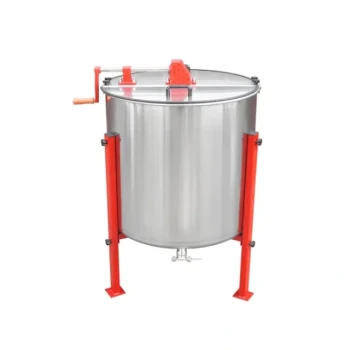
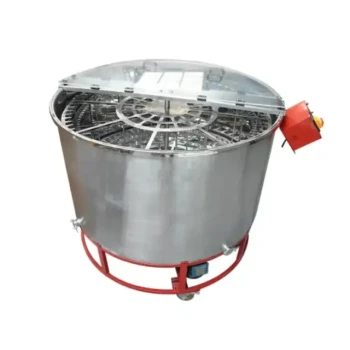
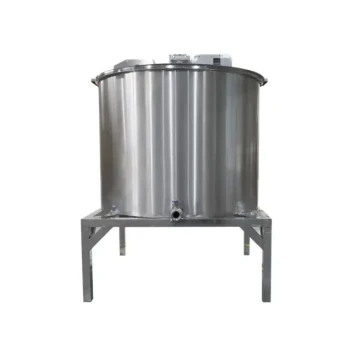
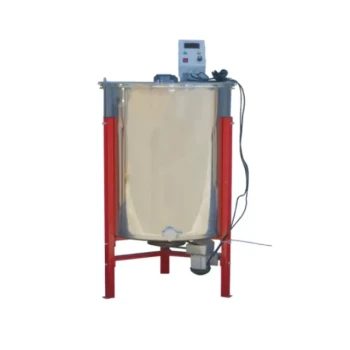
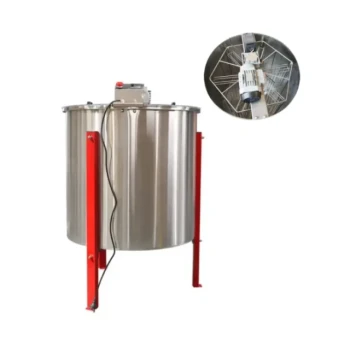
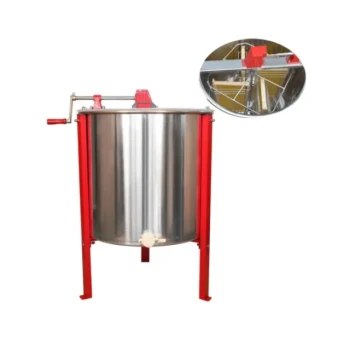
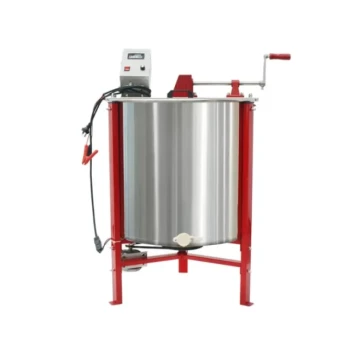
A tangential extractor operates by positioning honey frames vertically with the flat face of the comb oriented toward the outer wall of the drum. Through centrifugal force, the machine pulls honey out of the uncapped cells from only the outward-facing side of the frame. Because the inner side remains full, the operator must stop the machine and manually flip the frames to extract the remaining honey.
The Core Insight While tangential extraction requires more manual labor than radial methods, it is the superior choice for preserving wax integrity. By distributing force across the entire face of the comb rather than the top bar, it prevents "blowouts" in fragile or warm honeycomb.
The Mechanics of Extraction
Frame Orientation
Unlike radial extractors which arrange frames like wheel spokes, tangential extractors use a basket-style design. The frames sit flat against a mesh screen, tangent to the circle of the drum.
Utilizing Centrifugal Force
As the basket spins, centrifugal force pushes the honey out of the cells and onto the inner wall of the drum. The honey then drips down the walls to a collection valve or pump at the bottom.
Power Options
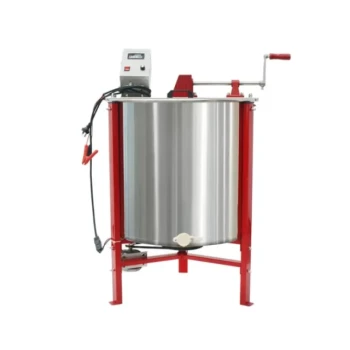
These extractors are available in both manual hand-crank and motorized versions. regardless of the power source, the mechanical principle of single-side extraction remains the same.
The Critical Extraction Sequence
The Risk of Comb Breakage
If you extract the first side of a frame completely at high speed, the weight of the honey remaining on the inner side can crush the wax structure against the basket wire. This is a common failure point for beginners.
The "Partial Spin" Technique
To prevent damage, experts recommend a three-step process rather than a simple flip. First, spin the frames slowly to remove a portion of the honey from the first side to reduce weight.
Completing the Cycle
Once the weight is reduced, flip the frames to fully extract the second side at normal speed. Finally, flip the frames one last time to finish extracting the remaining honey from the first side.
Understanding the Trade-offs
Gentleness on Equipment
The primary advantage of the tangential method is that it is significantly gentler on honeycomb. Because the force is distributed over a large surface area, it is the ideal method for extracting from older, darker, or structurally fragile combs without destroying them.
Efficiency and Volume
The downside is labor and time. Because you must stop the machine to flip frames, the process is slower than using a radial extractor.
Capacity Limitations
Tangential extractors are generally smaller, typically holding between 2 to 9 frames. This makes them excellent for hobbyists but less viable for large-scale commercial operations requiring high throughput.
Making the Right Choice for Your Goal
Tangential extractors are specific tools that solve specific problems. Here is how to decide if this architecture fits your apiary:
- If your primary focus is preserving comb: Choose a tangential extractor, as it minimizes the risk of structural blowouts on fragile wax.
- If your primary focus is budget or starting small: This is the ideal entry point, as these units are often less expensive and perfectly sized for small harvests.
- If your primary focus is speed and volume: You should likely avoid this style in favor of a radial extractor, which eliminates the manual flipping step.
This method trades pure speed for control, offering the safest way to harvest honey while protecting your wax investment.
Summary Table:
| Feature | Tangential Extractor Details |
|---|---|
| Mechanism | Centrifugal force applied to one side of the frame at a time |
| Frame Orientation | Flat face parallel (tangent) to the drum wall |
| Capacity | Typically 2 to 9 frames (ideal for hobbyists) |
| Primary Benefit | Maximum wax preservation; prevents comb "blowouts" |
| Key Technique | Three-step partial spin and manual flipping |
| Power Source | Available in manual hand-crank or motorized models |
Elevate Your Beekeeping Operation with HONESTBEE
At HONESTBEE, we understand that protecting your wax investment is just as important as the honey harvest itself. Whether you are a growing distributor or managing a commercial apiary, our comprehensive wholesale range provides the professional-grade tools you need. From precision-engineered honey extractors and honey-filling machines to specialized hive-making hardware and cultural merchandise, we supply everything required to scale your business.
Ready to upgrade your equipment? Partner with a supplier that values durability and efficiency. Contact us today to explore our wholesale catalog and tailored machinery solutions!
Related Products
- Electric 4 Frame Tangential Honey Extractor
- Stainless Steel Manual 8 Frame Radial Honey Extractor Machine for Beehives
- Commercial Electric 12 Frame Honey Extractor Spinner Motorized Honey Extractor
- 6 Frame Manual Stainless Steel Honey Extractor Beekeeping Equipment
- HONESTBEE 72 Frame Industrial Electric Honey Extractor for Beekeeping
People Also Ask
- What are the characteristics of electric honey extractors? Boost Your Apiary Efficiency with Automated Technology
- What are the disadvantages of using an electric honey extractor? Weighing Cost, Power, and Comb Safety
- What are the advantages of an electric honey extractor? Boost Efficiency and Scale Your Honey Production
- What are the advantages of electric honey extractors? Boost Harvest Speed & Efficiency
- What are the technical advantages of electric honey extractors? Maximize Yield and Protect Your Bee Colony