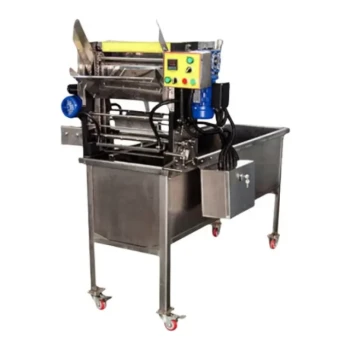
Automated labeling equipment serves as the critical link between raw production and consumer trust. It supports branding by transforming generic packaging into professional, uniform products that clearly display origin and variety, while simultaneously enabling robust traceability through the precise application of unique identifiers like batch codes and QR codes.
In a fragmented and competitive market, automated labeling acts as a validator of quality. It converts honey from a simple commodity into a verifiable asset, allowing producers to prove geographical origin, prevent counterfeiting, and access premium retail channels.
Elevating Brand Identity and Market Position
Establishing Professional Uniformity
Manual packaging often results in a "crude" or inconsistent appearance associated with small-scale workshops. Automated labeling ensures every unit features precise, uniform placement, creating the polished visual presentation required to compete on retail shelves. This consistency is the first step in establishing a reliable brand image.
Differentiating Through Detail
Honey consumers prioritize specific attributes, such as floral source (e.g., acacia, linden) and geographical origin. Automated systems allow producers to clearly and securely display these unique selling points. By highlighting these details, producers can differentiate their products from generic blends in a crowded marketplace.
Unlocking Premium Markets
High-end supermarkets and export markets have strict packaging standards that manual labeling cannot efficiently meet. Standardized branding via automation is a prerequisite for entering these higher-value channels. It signals compliance with international marketing regulations and prepares the product for global distribution.
Ensuring Traceability and Consumer Trust
Creating a Digital Chain of Custody
Automated systems apply unique identifiers, such as batch codes or QR codes, directly to the packaging. This establishes a complete information chain that tracks the honey from the specific apiary to the retail shelf. If a quality issue arises, the product can be instantly traced back to its source.
Validating Geographical Origin
For products with Protected Designation of Origin (PDO) or Protected Geographical Indication (PGI) status, proof of origin is mandatory. Labeling equipment allows for the integration of official verification marks and regulatory codes. This ensures regulatory bodies and consumers can verify the manufacturing process and location at any time.
Protecting Against Counterfeiting
Counterfeit honey is a significant threat to legitimate producers. Specialized labeling equipment can apply anti-counterfeiting marks and intellectual property details, such as patent numbers. These physical markers act as evidence of legal protection, safeguarding the producer's reputation and ensuring consumers receive the authentic product they paid for.
Understanding the Trade-offs
The Balance of Scale and Cost
While automation adds significant value, it requires an upfront capital investment that must be justified by production volume. Small-scale producers must weigh the cost of equipment against their current output. Moving to automation too early can strain financial resources if the distribution channels are not yet ready to absorb the increased capacity.
Maintenance and Technical Expertise
Transitioning from manual to automated labeling introduces a need for technical maintenance. The equipment requires regular calibration to maintain precision. Producers must be prepared to manage the hardware to prevent downtime, which adds a layer of operational complexity to the beekeeping business.
Making the Right Choice for Your Goals
To maximize the value of automated labeling, align your equipment choice with your specific market objectives.
- If your primary focus is International Export: Prioritize systems capable of printing complex QR codes and unique serial numbers to meet strict cross-border safety and traceability standards.
- If your primary focus is Boutique Retail: Focus on high-precision application equipment that enhances the visual aesthetics of the packaging to support premium pricing strategies.
- If your primary focus is Brand Protection: Invest in machinery that supports anti-counterfeiting features and tamper-evident sealing to secure your intellectual property.
By treating labeling not just as a final step, but as a core component of your business strategy, you secure both the integrity of your product and the loyalty of your customers.
Summary Table:
| Feature | Impact on Branding | Impact on Traceability |
|---|---|---|
| Precise Application | Ensures professional uniformity and premium shelf appeal. | Prevents label detachment, securing identification data. |
| Batch & QR Coding | Displays floral source and origin details clearly. | Enables digital chain of custody from apiary to consumer. |
| Anti-Counterfeit Marks | Protects brand reputation and intellectual property. | Validates geographical origin (PDO/PGI) and authenticity. |
| Automated Integration | Facilitates entry into high-end retail and export markets. | Allows for instant product recall and regulatory compliance. |
Scale Your Honey Business with HONESTBEE Precision
At HONESTBEE, we specialize in empowering commercial apiaries and distributors with the tools needed to dominate the global market. From automated honey-filling and labeling machines to high-quality hive-making equipment and honey-themed merchandise, we provide a comprehensive wholesale solution for every stage of your production.
Why partner with HONESTBEE?
- Standardize Your Brand: Transition from manual inconsistency to retail-ready, polished packaging.
- Global Compliance: Easily implement QR codes and batch tracking to meet international export standards.
- Comprehensive Supply Chain: Access a full spectrum of beekeeping machinery and essential industry consumables in one place.
Ready to elevate your production and secure your brand's future? Contact our expert team today to discuss how our wholesale equipment solutions can transform your apiary operation.
References
- Titanilla Oravecz, Ildikó Kovács. Qualitative study of preferences and attitudes towards honey consumption in Hungary. DOI: 10.14232/analecta.2019.2.52-58
This article is also based on technical information from HonestBee Knowledge Base .
Related Products
- Fully Automatic Honey Filling Packaging Machine for Processing Line
- Precision Automated Packaging Turntable Honey Spoon Filling Sealing Packing Machine
- Automatic Single-Dose Snap & Squeeze Honey Sachets Packing Machine
- Automatic Honey Frame Uncapper Machine for Beekeeping
- Automatic Honey Filling and Filtering Machine for Beekeeping Bottle Filling
People Also Ask
- Why are fully automatic honey filling and packaging lines essential? Boost Your Honey's Market Value and Quality
- What is a fully-automatic honey filler? Streamline Your Production with High-Precision Automation
- How do automated honey filling and packaging machines affect profitability? Boost Margins with HONESTBEE Technology
- How do automated honey filling and packaging machines contribute to the market value of honey products? Maximize Your ROI
- How do industrial-grade automated honey filling and packaging machines mitigate the risk of physical contamination?