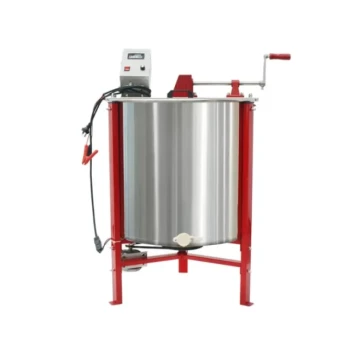
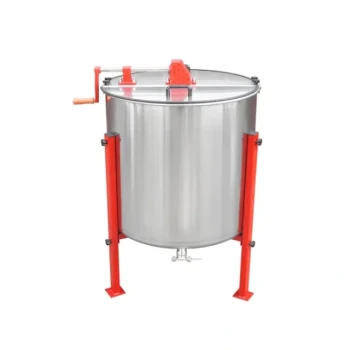
Disassembling a honey extractor allows you to access and clean internal components individually. By removing these parts, you can reach hidden surfaces that would otherwise trap honey and wax buildup, ensuring the highest standards of hygiene are met before the equipment is placed in storage.
While surface wiping removes visible debris, true sanitation requires disassembly. Removing internal components eliminates hidden pockets of residue that can lead to contamination, spoilage, or mechanical wear over time.
The Mechanics of Thorough Sanitation
Eliminating Hidden Residue
Standard cleaning methods often miss crevices located behind or between internal mechanisms. Honey and wax naturally migrate into these tight spaces during extraction.
Disassembly exposes these concealed areas. This allows you to verify that every square inch of the machine is free from organic matter.
Preventing Spoilage and Fermentation
Leftover honey is not just a sticky mess; it is a biological contaminant. If allowed to remain in hidden nooks, it can ferment or spoil.
This spoilage can create odors and introduce bacteria. Thoroughly cleaning disassembled parts ensures your next batch remains pure and free from cross-contamination.
Addressing Wax and Propolis Buildup
Beyond liquid honey, extractors accumulate hard substances like wax and propolis. These materials can adhere stubbornly to frames and internal cages.
Removing these parts provides the access needed to use scraping tools effectively. You can apply the necessary pressure to remove hardened debris without damaging the main drum.
Understanding the Trade-offs
The Necessity of Drying
Disassembly creates a new challenge: moisture management. When you wash individual parts with warm water and detergent, water can get trapped in complex geometries.
You must allow every component to dry completely before reassembling. Reassembling damp parts can lead to mold growth or rust during storage.
Time Investment vs. Equipment Health
Taking equipment apart is significantly more time-consuming than a simple surface rinse. It requires patience and a systematic approach to keep track of components.
However, skipping this step risks the equipment's longevity. Sticky residues left on moving parts increase friction, leading to premature wear and tear.
Optimizing Your Cleaning Routine
Proper cleaning is a balance between hygiene requirements and equipment maintenance. Use the following guide to determine your approach.
- If your primary focus is regulatory compliance: Disassemble completely to ensure zero contamination or fermentation risks, satisfying health and safety requirements for selling honey.
- If your primary focus is equipment longevity: Remove internal parts to clean away abrasive wax and propolis that cause premature wear and tear on the mechanism.
By prioritizing disassembly, you transform cleaning from a cosmetic task into a critical maintenance protocol that protects both your harvest and your hardware.
Summary Table:
| Cleaning Benefit | Impact on Extraction | Maintenance Detail |
|---|---|---|
| Eliminate Residue | Prevents fermentation & bacteria | Accesses hidden crevices and mechanisms |
| Remove Wax/Propolis | Reduces mechanical friction | Allows effective scraping of internal cages |
| Biological Safety | Ensures high-grade honey purity | Satisfies regulatory health & safety standards |
| Dry Management | Prevents mold and rust | Ensures all geometries are moisture-free |
Elevate Your Beekeeping Operations with HONESTBEE
Maintaining professional hygiene standards is essential for commercial apiaries and distributors. At HONESTBEE, we support your growth by providing a comprehensive wholesale range of high-performance beekeeping tools, from honey-filling machines to specialized honey extractors and essential consumables.
Whether you are scaling your production or supplying the industry, our hardware and expert support ensure your harvest remains pure and your equipment lasts for seasons to come.
Ready to upgrade your apiary's efficiency? Contact us today to explore our full spectrum of professional beekeeping machinery and wholesale solutions.
Related Products
- HONESTBEE 72 Frame Industrial Electric Honey Extractor for Beekeeping
- Commercial Electric 12 Frame Honey Extractor Spinner Motorized Honey Extractor
- HONESTBEE 6 Frame Self Reversing Electric Honey Extractor for Beekeeping
- HONESTBEE 3-Frame Manual Acrylic Honey Extractor
- Stainless Steel Manual 8 Frame Radial Honey Extractor Machine for Beehives
People Also Ask
- What is the importance of balancing honeycomb frames within a honey extractor? Ensure Stability and Protect Machinery
- How is honey separated from the frames after they are uncapped? Efficient Extraction Methods for High Yields
- What are the main benefits of using a honey extractor? Maximize Yields and Protect Your Honeycomb
- What are the recommended methods for removing honey from the honeycomb? Top Extraction Techniques for Maximum Efficiency
- How do manual honey extractors compare to electric honey extractors? Choosing the Right Tool for Your Apiary Growth