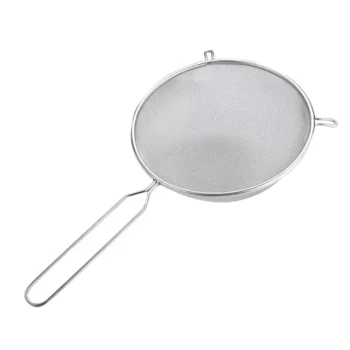
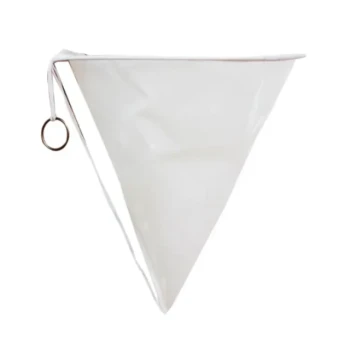
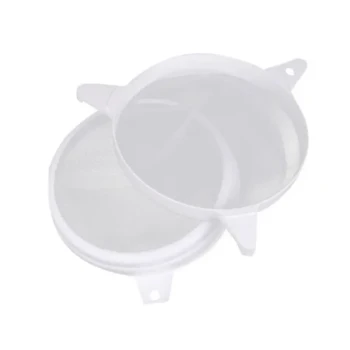
Honey filtration equipment fundamentally alters product quality by using specialized mesh to mechanically separate beeswax residue, bee fragments, and environmental debris from raw honey. This physical purification directly improves the honey's transparency and flavor profile while removing the solid particulate matter that acts as a catalyst for premature crystallization.
Core Takeaway: Filtration transforms raw honey into a commercially viable commodity by removing physical impurities that compromise aesthetics and chemical stability. This process creates a standardized, clear product with an extended liquid shelf life, directly supporting a higher market valuation.
Enhancing Physical and Sensory Attributes
Achieving Visual Clarity
Raw honey often contains suspended wax particles and organic debris that create a cloudy appearance. Filtration equipment uses specialized mesh screens to intercept these solids.
The result is a highly transparent product that meets consumer expectations for purity. This visual clarity is often the primary indicator of quality for retail consumers.
Refining the Flavor Profile
Unfiltered impurities, such as larval remains or excessive wax, can impart off-flavors to the final product. By removing these contaminants, the equipment ensures the taste profile remains clean.
This allows the distinct notes of the specific floral source to shine through without interference from organic debris.
Improving Product Stability and Shelf Life
Delaying Crystallization
Crystallization is a natural process, but it is accelerated by the presence of solid particles. These micro-impurities act as "nucleation sites" where sugar crystals begin to form.
By eliminating these solids through fine filtration, the equipment significantly delays the crystallization process. This extends the honey's liquid state, making it more shelf-stable for retail environments.
Removing Spoilage Risks
Organic debris left in honey can sometimes harbor yeasts or retain unwanted moisture pockets. These factors can lead to fermentation or spoilage over time.
Filtration removes the physical hosts for these spoilage agents. This contributes to a safer, more stable food product that meets modern safety standards.
The Economic Impact of Filtration
Standardization for Retail
To enter high-end markets, honey must meet strict physicochemical standards. Filtration equipment transforms variable raw harvests into a consistent, standardized product.
This consistency allows producers to scale their operations. It ensures that every bottle appearing on a shelf meets the same rigorous quality criteria.
Commanding a Higher Premium
Honey that is clear, free of debris, and resistant to crystallization generally grades higher in commercial evaluations. This improved grading allows producers to price their goods as high-end trade products.
Conversely, honey containing visible debris is often relegated to lower-tier bulk markets or industrial use.
Understanding the Trade-offs
Balancing Clarity with Pollen Content
While fine filtration improves clarity and shelf life, it also reduces the pollen count in the final product. Pollen is a natural component of honey that some consumers value for its potential health benefits.
Producers must weigh the need for a crystal-clear product against the demand for "raw" honey, which requires coarser filtration to retain pollen.
Processing Precision
Moving from manual extraction to mechanical filtration introduces complexity. The process requires precise management of mesh sizes and flow rates.
If not managed correctly, aggressive processing can strip the honey of too many natural characteristics. It is a balance between purification and preservation.
Making the Right Choice for Your Goal
Depending on your target market, the degree of filtration you employ will determine your product's success.
- If your primary focus is mass retail distribution: Prioritize fine filtration to maximize transparency and delay crystallization, ensuring the product remains attractive on the shelf for months.
- If your primary focus is the "raw" or health food market: Utilize coarser filtration settings to remove only the largest debris (wax and bee parts) while retaining microscopic pollen to validate the "raw" claim.
Ultimately, effective filtration aligns the physical properties of your honey with the specific sensory and stability expectations of your buyer.
Summary Table:
| Impact Factor | Effect of Filtration | Benefit to Producer |
|---|---|---|
| Visual Clarity | Removes wax, bee parts, and debris | Increases consumer trust and product grade |
| Crystallization | Eliminates nucleation sites (solids) | Extends liquid shelf life for retail display |
| Flavor Profile | Removes organic contaminants | Ensures pure, floral-specific taste profiles |
| Product Safety | Extracts hosts for yeast and moisture | Reduces risk of fermentation and spoilage |
| Market Tier | Standardizes variable raw harvests | Commands premium pricing in high-end markets |
Elevate Your Honey Production with HONESTBEE
As a dedicated partner to commercial apiaries and global distributors, HONESTBEE understands that the right equipment defines your product's market success. We provide a comprehensive range of professional beekeeping tools, advanced honey-filling machines, and high-precision filtration systems designed to optimize your output.
Whether you are scaling your wholesale operations or seeking specialized machinery to maintain "raw" honey integrity, our expertise ensures your honey meets the highest industry standards. Contact us today to explore our full spectrum of beekeeping hardware and consumables, and let us help you deliver a superior product to your customers.
References
- Samuel Périchon, Chet Bhatta. La tradition de la cueillette du miel est-elle un frein au développement de l’apiculture dans l’Aire de Conservation de l’Annapurna (Népal) ?. DOI: 10.4000/ethnoecologie.5675
This article is also based on technical information from HonestBee Knowledge Base .
Related Products
- Electric Double Wall Honey Filtering Machine Purifier Equipment for Honey Processing Plant
- Professional Stainless Steel Honey Filtering Machine with Water Bath Heating for Beekeeping
- 0.5T Capacity Honey Dehumidifier Dryer with Vacuum Heating and Thickening Filtering Machine
- Honey Concentrating and Filtering Dehumidifier Machine 2T Capacity for Honey
- Professional Stainless Steel Honey Filter with Support Handle
People Also Ask
- What is the process of filtering honey? A Guide to Clean, Pure, and Market-Ready Honey
- What types of equipment are used in honey filtering? Build an Efficient System for Pure, Marketable Honey
- What is the overall importance of using the right equipment in honey filtering? Boost Quality & Marketability
- What are the benefits of drying honey filtering equipment after use? Protect Your Honey Quality & Equipment Investment
- What is a potential concern associated with filtering honey? Balancing Clarity and Pollen Preservation