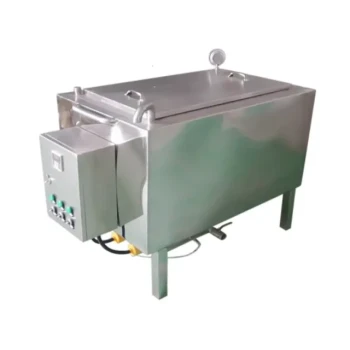
Industrial heating equipment facilitates decontamination by delivering precise thermal energy required to neutralize Nosema apis spores on beekeeping tools. By maintaining a constant, uniform temperature of 60°C for a minimum of 15 minutes, these systems provide a reliable method for sterilizing hardware that physical cleaning alone cannot match.
Reliable decontamination requires more than just surface cleaning; it demands penetration. Industrial dry heat reaches into the gaps and crevices of hardware to ensure the bulk harmless treatment of equipment contaminated with microsporidiosis pathogens.
The Mechanics of Thermal Inactivation
To effectively manage Nosema apis, one must understand that the pathogen is resilient. Industrial heating equipment addresses this by creating an environment where the spore cannot survive.
Precise Temperature Regulation
The core requirement for inactivation is maintaining a specific thermal threshold. Industrial equipment is designed to hold a steady 60°C.
This stability is critical. Fluctuations below this temperature may fail to kill the spores, leaving the colony vulnerable to reinfection.
The Importance of Duration
Heat treatment is not instantaneous. The equipment must sustain the target temperature for at least 15 minutes.
This duration ensures that the thermal energy fully penetrates the biological structure of the Nosema apis spores, resulting in complete inactivation.
Advantages Over Conventional Methods
While traditional methods like rinsing remove visible debris, they often fail to address the microscopic threat of pathogens. Industrial heating solves the limitations of manual cleaning.
Deep Penetration of Hardware
Beekeeping tools are full of complex geometries, gaps, and crevices. Conventional rinsing often skips these hard-to-reach areas.
Dry heat treatment permeates every part of the hardware. It effectively sanitizes hidden recesses where spores typically linger and survive liquid treatments.
Scalability and Bulk Treatment
Managing an apiary involves a significant volume of equipment. Manual decontamination is labor-intensive and inconsistent.
Industrial heating units allow for the bulk treatment of hardware. This ensures that large batches of tools can be sterilized simultaneously with uniform efficacy.
Understanding the Trade-offs
While heat treatment is superior for pathogen control, it introduces operational considerations that differ from simple washing.
Equipment Suitability
The term "harmless treatment" refers to the removal of the pathogen without destroying the tool. However, the operator must ensure the specific hardware materials can withstand sustained exposure to 60°C.
Energy and Infrastructure
Unlike cold rinsing, industrial heating requires a power source and specific infrastructure to maintain the thermal environment. This shifts the cost from labor (scrubbing) to energy consumption.
Integrating Heat Treatment into Apiary Management
Adopting industrial heating is a strategic decision for disease management. Here is how to align this technology with your operational goals.
- If your primary focus is Disease Eradication: Prioritize the 15-minute exposure at 60°C protocol to ensure deep crevices are sterilized, preventing the recurrence of Nosema apis.
- If your primary focus is Operational Efficiency: Utilize the bulk treatment capability to sanitize large volumes of hardware between seasons, reducing the manual labor required for individual tool cleaning.
By leveraging controlled dry heat, you transform decontamination from a manual chore into a precise, scalable process that safeguards colony health.
Summary Table:
| Feature | Industrial Heat Treatment | Manual Rinsing |
|---|---|---|
| Target Temp | 60°C (Stable) | Ambient/Variable |
| Duration | 15 Minutes | Varies |
| Effectiveness | Full spore inactivation | Surface debris removal only |
| Penetration | Deep (reaches crevices/gaps) | Limited (surface only) |
| Efficiency | High (Bulk processing) | Low (Labor intensive) |
Secure Your Apiary’s Health with Professional Equipment
At HONESTBEE, we specialize in empowering commercial apiaries and distributors with the high-performance tools needed to combat pathogens like Nosema apis. From hive-making and honey-filling machinery to industrial-grade sterilization solutions, our comprehensive wholesale portfolio covers the full spectrum of beekeeping hardware and consumables.
Protect your investment and streamline your operations with our specialized beekeeping tools. Contact HONESTBEE today to discuss how our wholesale equipment and machinery can enhance your apiary management and disease prevention strategy.
References
- Mira Stanković, Ksenija Radotić. Investigating the Impact of Nosema Infection in Beehives on Honey Quality Using Fluorescence Spectroscopy and Chemometrics. DOI: 10.3390/foods14040598
This article is also based on technical information from HonestBee Knowledge Base .
Related Products
- Automatic Continuous Heat Sealing Machine
- Honey Tank Heater Drum Heating Blanket for Honey Barrel
- Stainless Steel Heated Honey Tank Warming Heating Tank
- HONESTBEE Commercial Upright Honey Melter
- Professional Thermostatic Conical Honey Melter
People Also Ask
- How is a heat sealer used in the production of honey sticks? Master the Art of Leak-Proof Sealing
- What is a sealing machine called? Choose the Right Heat Sealer for Your Packaging
- How do I choose a heat sealer? A Guide to Matching the Right Machine to Your Needs
- What is the function of sealing machines? Ensure Product Integrity and Extend Shelf Life
- What is a sealing machine? Protect Your Product Quality and Brand Reputation