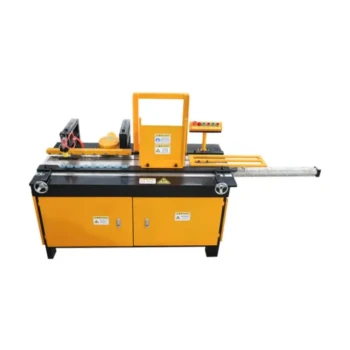
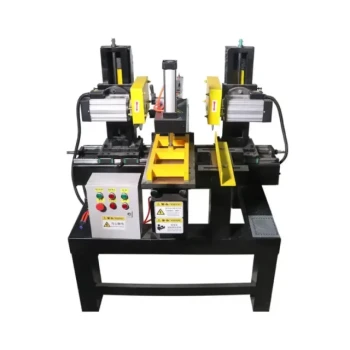
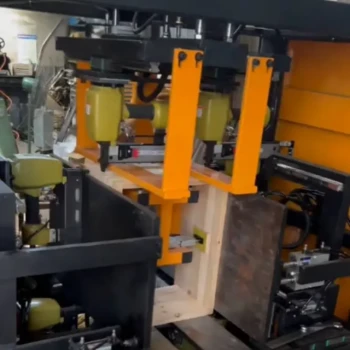
Industrial hive-making machinery acts as a rapid-response logistical tool, enabling beekeepers to scale operations immediately following the destruction of forest fires. By facilitating the mass production of standardized components, this technology allows operators to quickly adjust colony sizes and deploy hives to precise locations based on nectar source distribution maps, mitigating the effects of habitat fragmentation on honey yields.
The Core Insight While forest regeneration is slow, industrial machinery accelerates the physical reconstruction of the apiary. By decoupling hive production from manual labor constraints, beekeepers can synchronize their infrastructure scale-up with the emergence of surviving or recovering nectar sources.
Bridging the Gap in Fragmented Habitats
Rapid Mass Production and Mobilization
Forest fires create a fragmented landscape where nectar sources are scattered and scarce. Industrial machinery allows for the high-volume creation of hive bodies, enabling beekeepers to expand their inventory swiftly. This speed is critical to deploying colonies the moment recovery maps indicate an area is viable for foraging.
Precision Deployment to Nectar Sources
Successful recovery depends on placing bees within optimal foraging radii of surviving vegetation. By utilizing mass-produced infrastructure, operations can distribute colonies to match precise nectar source distribution maps. This strategic placement reduces the energy bees spend traveling, maximizing honey yields even in damaged ecosystems.
Supporting Early Spring Expansion
Post-fire environments often require rapid colony growth during short seasonal windows. The ability to manufacture hives quickly ensures that physical infrastructure never becomes a bottleneck during critical early spring periods. This supports the swift expansion of colonies needed to capture nectar from early-blooming pioneer plants.
Ensuring Durability in Exposed Conditions
Precision Joinery for Weather Resistance
Forests recovering from fire often lack the canopy cover that usually protects hives from wind and rain. Industrial machines use high-precision cutting to guarantee tight component fits and interchangeability. This precision creates a necessary physical barrier against water leakage and pests, significantly improving colony survival rates in variable outdoor conditions.
Structural Stability
The structural integrity of a hive is the fundamental baseline for bee breeding and survival. Mechanized manufacturing ensures consistent quality control that manual construction often lacks. Rigid, well-fitted components ensure the hive remains stable, protecting the delicate brood regardless of the rugged terrain where the hive is placed.
Standardization and Sustainability
Objective Colony Assessment
Standardized manufacturing, such as that used for Langstroth hives, creates uniform living spaces. This allows researchers and beekeepers to use universal visual assessment formulas. By counting occupied frames and brood coverage in identical boxes, operators can objectively quantify colony strength and recovery progress across the entire operation.
Sustainable Resource Utilization
Traditional manual hive construction can be wasteful, a critical issue when timber resources are scarce due to fire. Professional machinery optimizes the cutting process, reducing the volume of raw wood required per unit. Furthermore, these machines can process sustainable materials or waste wood, alleviating ecological pressure on the remaining primary forest.
Understanding the Trade-offs
Infrastructure vs. Biology
While machinery solves the housing crisis for bees, it does not solve the biological crisis. A perfect hive cannot sustain a colony if the forage is insufficient. Beekeepers must ensure that their capacity to manufacture hives does not outpace the environment's carrying capacity during the slow process of forest regeneration.
Dependence on Manufacturing consistency
Reliance on industrial machinery assumes a continuous supply of specific raw materials and maintenance of the equipment itself. Operational bottlenecks can shift from the field to the workshop. If the machinery fails or raw timber is unavailable, the entire recovery strategy—predicated on rapid deployment—can stall.
Making the Right Choice for Your Goal
To effectively utilize industrial machinery in post-fire reconstruction, align your manufacturing strategy with your specific recovery objectives:
- If your primary focus is Yield Maximization: Prioritize volume production to saturate mapped areas with hives, placing them strictly within the optimal foraging radius of surviving nectar patches.
- If your primary focus is Colony Health Monitoring: Leverage the standardization of the machinery to produce identical Langstroth frames, enabling precise, comparable data collection on brood coverage and population density.
- If your primary focus is Environmental Sustainability: Configure machinery to utilize waste timber or bamboo, eliminating the need to fell surviving trees and preventing destructive honey-hunting practices.
Ultimately, industrial machinery transforms hive construction from a manual craft into a scalable logistics solution, providing the speed and precision necessary to outmaneuver the limitations of a damaged ecosystem.
Summary Table:
| Recovery Challenge | Role of Industrial Machinery | Impact on Operations |
|---|---|---|
| Habitat Loss | Rapid mass production of hive bodies | Quick deployment to surviving nectar patches |
| Exposed Terrain | Precision joinery and weather-tight fits | Enhanced colony protection and survival rates |
| Colony Assessment | Standardized Langstroth components | Precise, data-driven health monitoring |
| Resource Scarcity | Optimized material cutting and waste reduction | Sustainable use of available timber/materials |
| Logistics Delay | Decoupling production from manual labor | Infrastructure scale-up synchronized with bloom |
Rebuild Your Apiary with Industrial Precision
Forest fires demand a rapid, large-scale response. HONESTBEE empowers commercial apiaries and distributors to overcome environmental disasters with our professional range of beekeeping tools and machinery. From high-precision hive-making machines that ensure structural durability to automated honey-filling systems and essential consumables, we provide the full spectrum of equipment needed to restore your operations and maximize honey yields.
Don't let manual labor bottlenecks slow your recovery. Partner with HONESTBEE for the scalable hardware and industry expertise you need to rebuild stronger.
Contact us today to explore our wholesale machinery solutions
References
- Athanasios Antonopoulos, Konstantinos Karantzalos. Hierarchical Deep Learning Framework for Mapping Honey-Producing Tree Species in Dense Forest Ecosystems Using Sentinel-2 Imagery. DOI: 10.3390/agronomy15122858
This article is also based on technical information from HonestBee Knowledge Base .
Related Products
- High-Efficiency Pneumatic Bee Hive Making Machine for Rapid Box Assembly
- Beehive Handle and Frame Rest Cutting Machine: Your Specialized Hive Machine
- Automatic Finger Joints Joint Making Machine for Bee Box and Hive Making
- Beehive Machine Double End Saw for Precision Hive Component Manufacturing
- Mini Desktop Bee Hive Frame Forming Making Machine
People Also Ask
- How does the introduction of professional beehive-making machinery benefit sustainable beekeeping? Scale Your Apiary
- Why is specialized beehive-making machinery critical for low-defense breeding? Enhance Selection with Precision Tools
- How does the introduction of specialized beehive making machinery contribute to increasing the scale of regional beekeeping industries?
- What is the importance of specialized beehive making machinery in a circular bio-economy? Build Local Sustainability
- Why is specialized beehive-making machinery essential? Scale Your Apiary with Precision Industrial Standards