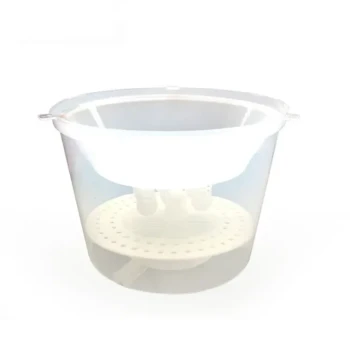
Industrial-grade pollen traps utilize precise geometric grids installed at hive entrances to mechanically intercept pollen pellets without harming the bees. By forcing returning foragers through specifically calculated apertures, the design cleanly strips pollen from the bees' hind legs into dry collection trays, immediately isolating the harvest from environmental humidity to prevent microbial spoilage.
The core success of these traps lies in their ability to decouple the harvest from environmental variables immediately upon collection, utilizing moisture-controlling trays to preserve the biochemical stability and purity of the pollen.
Engineering for Mechanical Interception
Precise Geometric Control
The primary mechanism for quality assurance is the physical grid located at the hive entrance. These grids feature specific apertures designed to accommodate the body of a worker bee while being too narrow for the pollen pellets attached to their hind legs.
Non-Destructive Separation
As bees navigate these apertures, the edges brush against the pollen baskets. This action dislodges the pellets, causing them to fall, while allowing the bee to pass through unharmed. This ensures that the collection process does not contaminate the product with insect debris or stress the colony excessively.
Preservation of Biochemical Integrity
Mitigating Environmental Humidity
Once separated from the bee, the pollen falls into a collection tray designed specifically for "dry collection." This is the most critical design element for preserving product quality.
Preventing Microbial Contamination
By immediately sequestering the pollen in a dry environment, the design minimizes exposure to ambient moisture. This rapid reduction in humidity is essential for inhibiting the growth of mold and bacteria, which are common issues in raw agricultural products.
Retaining Biological Activity
Excessive moisture degrades the delicate biochemical compounds found in bee pollen. The dry collection tray mechanism ensures that the nutritional and medicinal properties of the pollen remain stable from the moment of harvest until processing.
Understanding the Trade-offs
Balancing Yield vs. Colony Health
While the design targets high-efficiency collection, it must not achieve 100% interception. The apertures are calculated to strip a significant portion of pollen, but the system relies on the assumption that enough pollen bypasses the trap to support colony breeding and growth.
The Risk of Over-Collection
If the grid geometry is too restrictive, it may starve the colony, leading to a collapse in population and a subsequent halt in all production. Industrial application requires monitoring to ensure the colony retains sufficient nutritional supplies.
Optimizing Your Collection Strategy
When selecting or designing pollen trap systems, align the hardware specifications with your specific production goals.
- If your primary focus is Pharmaceutical Grade Quality: Prioritize traps with advanced dry collection trays to maximize biochemical stability and minimize microbial counts.
- If your primary focus is Colony Sustainability: Ensure the aperture design allows for a calculated percentage of pollen bypass to maintain the hive's nutritional intake.
Effective pollen collection is not just about volume; it is about securing the product before environmental factors can degrade its value.
Summary Table:
| Feature | Design Mechanism | Impact on Quality |
|---|---|---|
| Geometric Grid | Precise aperture sizing | Ensures clean mechanical separation without insect debris. |
| Dry Collection Tray | Humidity-controlled isolation | Prevents microbial growth and mold by sequestering pollen from moisture. |
| Biochemical Protection | Rapid sequestration | Retains nutritional and medicinal properties by stabilizing compounds. |
| Aperture Calibration | Selective interception | Balances high-yield harvest with colony health and sustainability. |
Maximize Your Harvest Quality with HONESTBEE
Are you looking to scale your pollen production while maintaining pharmaceutical-grade standards? HONESTBEE provides professional-grade solutions tailored for commercial apiaries and global distributors. From precision-engineered pollen traps to industrial-scale honey-filling machines and specialized hive-making hardware, we supply the full spectrum of beekeeping equipment and consumables.
Our expertise helps you minimize spoilage and maximize biological activity in your products. Partner with us to streamline your operations with reliable machinery and high-quality industry consumables.
Contact HONESTBEE today to optimize your commercial apiary operations!
References
- Fahriye Kan. Biochemical Impacts of Bee Pollen: An Overview. DOI: 10.64012/istanusjabs.2025.1.1.e4
This article is also based on technical information from HonestBee Knowledge Base .
Related Products
- Removable Plastic Pollen Trap With Ventilated Tray for Bees Pollen Collector
- 30 cm Plastic Entrance Hole Bee Pollen Trap and Collector
- Plastic Bee Pollen Trap Strips Comb Catcher Collector
- High-Efficiency Diamond Maze Bee Escape for Clearing Supers
- Professional Multi-Component Bucket Wasp Trap
People Also Ask
- What are the design principles and advantages of pollen traps in the collection of bee pollen? Boost Your Apiary Yield
- What is the function of professional pollen traps in evaluating honey plants? Quantifying Pollination and Crop Potential
- What functions do pollen traps serve for bee bread production? Optimize Your Raw Material Collection
- What maintenance and pest prevention measures should be taken for pollen traps? Protect Your Hive and Harvest Quality
- How does the use of pollen traps in honeybee hives enhance crop fertilization? Boost Your Yield Through Induced Activity