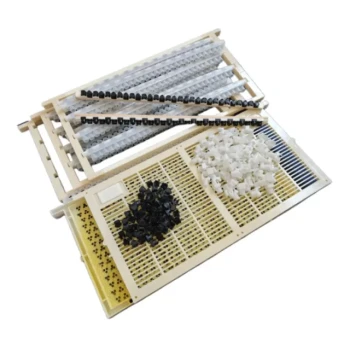
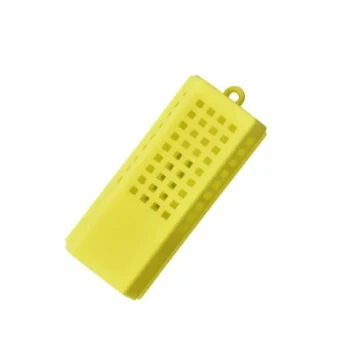
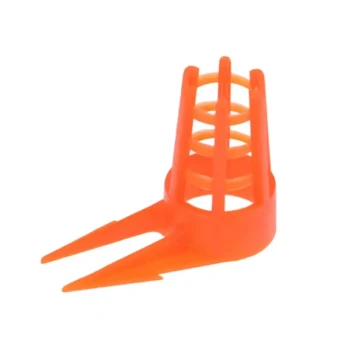
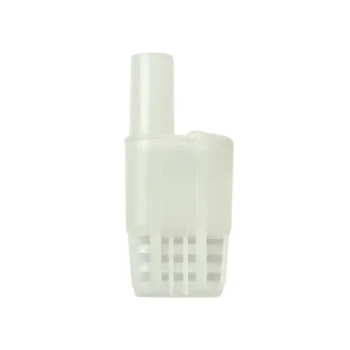
Multi-layered queen-rearing bars are designed to drastically improve apiary efficiency by exploiting the vertical volume of the hive frame. This configuration allows breeders to stack multiple rows of grafted larvae—often in a three-tier arrangement—to significantly increase the capacity of a single nurse colony. Beyond simple volume, this design leverages the hive's natural internal thermodynamics to improve larva acceptance and development.
The efficiency of multi-layered bars lies in their ability to multiply production capacity within the same physical footprint while simultaneously utilizing natural thermal gradients to ensure high larval acceptance rates and consistent queen quality.
Maximizing Density and Workflow
Vertical Space Utilization
The primary contribution to efficiency is the intensification of land and equipment use. By utilizing a multi-tiered design, such as a three-tier system, a single frame can accommodate approximately 45 queen cells (15 per tier).
This high-integration design effectively triples the output of a standard frame without requiring additional hive boxes or nurse colonies.
Streamlined Batch Management
Multi-layered bars facilitate the simultaneous cultivation of large groups of queens. Because the cells are integrated into a single frame, they can be introduced, inspected, and harvested as a single unit.
This synchronization ensures that queen bees emerge within the same production cycle, allowing for predictable schedules and reduced labor costs associated with colony management.
Optimizing the Microclimate
Leveraging Thermal Gradients
The hive is not a uniform environment; it possesses distinct heat convection and moisture distribution patterns. Multi-layered bars place larvae in the optimal "incubation zone" within the center of the hive.
This positioning exposes the developing queens to ideal humidity and temperature levels, which directly correlates to higher acceptance rates by nurse bees.
Quality and Weight
Efficiency is not just about numbers; it is about viable product. The optimized environment provided by these bars results in heavier, higher-quality queen bees.
Queens reared in these thermally stable zones develop more robustly, ensuring better performance and longevity once introduced to a new colony.
Managing Environmental Stress
The adjustable nature of these bars allows for dynamic response to weather. By adjusting the height of the rearing bars (top, middle, or bottom), beekeepers can navigate heat stress.
During high-temperature seasons, shifting bars to cooler vertical zones ensures larvae are not overheated, maintaining production stability even during extreme summer conditions.
Understanding the Trade-offs
The Resource Limit of Nurse Bees
While the bars allow for high density, they do not increase the biological resources of the nurse colony.
Cramming 45 cells into a colony that lacks sufficient population or royal jelly reserves will lead to malnourished, inferior queens. The efficiency of the hardware must be matched by strong, well-fed biological support.
Vertical Variability
While gradients are useful, they can also be risks. If the hive ventilation is poor, the temperature difference between the top and bottom bars can be significant.
Beekeepers must monitor the colony to ensure the bottom tier does not become too cool or the top tier too hot, which would result in uneven hatching times or developmental issues.
Making the Right Choice for Your Goal
To maximize the benefits of multi-layered rearing bars, align their use with your specific operational targets:
- If your primary focus is Volume Production: Utilize the full three-tier capacity to maximize unit output per hive, but ensure the nurse colony is exceptionally populous and well-fed to support the load.
- If your primary focus is Seasonal Management: actively adjust the vertical position of your bars based on ambient temperature—lowering them during heat waves and raising them during cooler spells to maintain thermal consistency.
Success with multi-layered bars requires balancing the hardware's high capacity with the biological limits of the nurse colony.
Summary Table:
| Feature | Single-Layer Bar | Multi-Layer Bar (3-Tier) | Efficiency Impact |
|---|---|---|---|
| Cell Capacity | ~15 cells per frame | ~45 cells per frame | 3x production density |
| Space Utilization | Horizontal only | Vertical & Horizontal | Maximizes hive volume |
| Thermal Control | Limited to one zone | Multi-zone adjustment | Better larval acceptance |
| Labor Input | High (multiple frames) | Low (integrated batches) | Streamlined management |
| Output Quality | Standard | High (Optimized weight) | Consistent queen health |
Scale Your Queen Production with HONESTBEE Professional Equipment
Maximize your apiary's output and operational efficiency with HONESTBEE’s high-capacity queen-rearing solutions. As a dedicated partner to commercial apiaries and global distributors, we provide more than just tools—we deliver competitive advantages. Our comprehensive wholesale catalog includes:
- Precision Machinery: Advanced hive-making and honey-filling machines for industrial scaling.
- High-Yield Equipment: Specialized multi-layered rearing bars and professional beekeeping hardware.
- Industry Consumables: A full spectrum of essential supplies to keep your colonies thriving.
- Cultural Merchandise: Unique honey-themed products to diversify your retail portfolio.
Whether you are expanding a commercial operation or stocking a distribution network, HONESTBEE offers the expertise and inventory to support your growth. Contact our wholesale team today to optimize your supply chain.
References
- Azza Helmy, Aml A. A. Abdelmawla. THE EFFECT OF GENETIC ORIGIN OF THE GRAFTED LARVAE AND REARING COLONIES ON THE ACCEPTANCE RATE, WEIGHT AND CELL LENGTH OF APIS MELLIFERA QUEENS.. DOI: 10.21608/fjard.2016.191277
This article is also based on technical information from HonestBee Knowledge Base .
Related Products
- JZBZ Langstroth Queen Rearing Frame for Beekeeping
- Premium Nicot Style Cell Bar Holder and Queen Cell Cup Holder System
- Premium Nicot Style Queen Rearing Kit with Hair Roller Bee Cages
- JZBZ Type Wide Base Plastic Queen Cell Cups for Base Mounting and Queen Rearing
- No Grafting Queen Rearing Kit: System for Royal Jelly Production and Queen Rearing
People Also Ask
- Why use finishing colonies for queen cell capping? Secrets to Superior Queen Quality and Performance
- How do queen rearing frames and grafting needles function together? Master the Doolittle Method for High-Quality Queens
- What is the purpose of queen rearing frames? Master Controlled Queen Production for Your Apiary
- What are the functions of queen rearing frames and artificial queen cells? Master Bee Genetic Improvement
- What roles do professional queen rearing frames and artificial queen cells play? Scaling Your Queen Bee Production