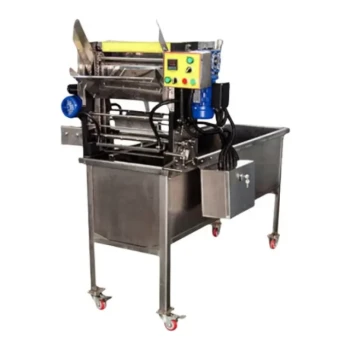
The specific geometry of your desired packaging is the primary determinant in machine selection, effectively dictating the mechanical architecture required for your production line. If you plan to produce honey sticks or tubes, you must invest in a stick pack machine designed for narrow, flexible forming; conversely, packaging honey in rigid containers like bottles and jars requires dedicated bottle filling equipment.
Core Takeaway: The physical format of your package—whether a rigid jar, a flexible tube, or a sachet—requires a distinct class of machinery. While production volume dictates the speed of the machine, the packaging type dictates the fundamental technology you must deploy.
Matching Machinery to Container Format
Rigid Containers (Jars and Bottles)
For traditional retail packaging, such as glass jars or plastic bottles, you require bottle filling equipment. These machines are engineered to handle stable, rigid containers that stand upright during the filling process.
This equipment focuses on precise liquid displacement into a pre-formed vessel. The machinery must be compatible with the specific opening diameter and height of your jars to ensure clean, waste-free filling.
Flexible Single-Serve Formats (Sticks and Tubes)
If your goal is to produce portable, single-serving products, standard bottle fillers will not work. You need specialized honey tube filling machines or stick pack machines.
These units are designed to fill and seal narrow, tube-like packaging. The mechanism involves forming the package and filling it simultaneously, a process vastly different from filling a pre-made jar.
High-Volume Sachets
For flat, single-use packets, multi-lane sachet packing machines are the standard. These systems are designed to fill and seal multiple sachets simultaneously across several lanes.
This format is inextricably linked to high-volume output. The machinery is constructed to maximize speed and efficiency, often processing hundreds of units per hour to make the low-margin single-serve format economically viable.
Understanding the Trade-offs
Adaptability vs. Specialization
While some machines offer versatility, most are optimized for a specific format class. A machine that excels at filling rigid jars generally cannot be re-tooled to produce flexible honey sticks.
However, within a specific format, adaptability is possible. Look for machines that allow adjustments to settings to accommodate various container sizes, which helps future-proof your operation if you expand your product line.
Automation Levels and Format
The packaging format often dictates the necessary level of automation. Rigid jar filling can be done efficiently on a semi-automatic model for small batches (50 to 200 jars per day).
In contrast, sachet and stick production almost always requires fully automatic, multi-lane systems. The nature of forming, filling, and sealing flexible film is difficult to achieve efficiently with manual or semi-automatic intervention.
Labeling Considerations
Your choice of packaging also dictates your labeling hardware. A labeling machine must be matched to the container's surface profile—a machine designed to wrap labels around round jars will likely fail to label flat sachets or thin tubes accurately.
Making the Right Choice for Your Goal
- If your primary focus is standard retail sales: Prioritize bottle filling equipment that can handle glass or plastic jars, ideally with adjustable settings for different sizes.
- If your primary focus is samples or convenience products: Invest in multi-lane sachet or stick pack machines, as these are the only systems capable of producing these formats efficiently.
- If your primary focus is cost-effective scalability: Start with a semi-automatic machine for jars to balance initial cost with efficiency, upgrading to fully automatic lines only when volume demands it.
Select the machine that solves for your package's physical constraints first, and its production volume second.
Summary Table:
| Packaging Format | Machine Type Required | Key Feature | Best For |
|---|---|---|---|
| Rigid Jars & Bottles | Bottle Filling Equipment | Precise liquid displacement | Standard retail sales |
| Sticks & Tubes | Honey Tube Filling Machine | Simultaneous form and fill | Portability & convenience |
| Single-Use Sachets | Multi-lane Sachet Machine | High-speed multi-lane sealing | High-volume samples |
| Variable Sizes | Adjustable Semi-Auto Fillers | Flexible settings for volume | Cost-effective scaling |
Elevate Your Honey Production with HONESTBEE
Choosing the right equipment is the foundation of a successful commercial apiary. HONESTBEE specializes in supporting commercial beekeepers and distributors with a complete range of professional-grade beekeeping tools and machinery.
Whether you need specialized bottle filling machines for retail jars, high-speed honey-filling lines for sticks and sachets, or hive-making machinery to scale your operation, we provide the technical expertise and robust hardware to grow your business. Beyond machinery, we offer a wide array of essential industry consumables and honey-themed cultural merchandise to help you stand out in the market.
Ready to optimize your packaging line? Contact our experts today to find the perfect machinery solution tailored to your specific honey products!
Related Products
- Automatic Single-Dose Snap & Squeeze Honey Sachets Packing Machine
- Fully Automatic Honey Filling Packaging Machine for Processing Line
- Precision Automated Packaging Turntable Honey Spoon Filling Sealing Packing Machine
- Economy Small Honey Filling Machine Honey Bottle Filler Packaging Machine
- Honey Stick Filler Vertical Paste Sachet Packing Machine for Honey Sachets
People Also Ask
- What are the advantages of honey sachet packing machines? Boost Efficiency & Unlock New Markets
- What are the main functions of a honey sachet packing machine? Boost Efficiency with Automated Precision
- How does an industrial-grade honey sachet packaging machine assist beekeepers in accessing public institution markets?
- Why is automated packaging machinery essential for scaling industrial honey production? Drive Commercial Scalability
- How does the viscosity of honey influence packaging choices? Selecting the Best Containers & Machinery