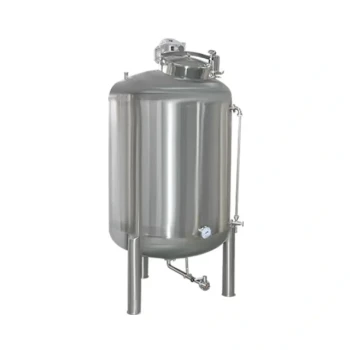
The establishment of a specialized honey processing facility acts as the critical bridge between artisanal beekeeping and industrial-scale commerce. By transitioning production into a standardized, hygienic environment, these facilities integrate disjointed stages—such as extraction, filtration, and storage—into a cohesive workflow that ensures every batch meets the strict consistency and safety requirements necessary for formal market access.
Core Takeaway Industrial scaling is not just about volume; it is about reproducibility and compliance. A specialized facility centralizes operations to guarantee product uniformity and hygiene, allowing producers to adhere to regulatory standards and significantly increase the commercial value-added of their honey.
The Role of Standardization in Market Access
Establishing Regulatory Compliance
In an artisanal setting, honey quality can fluctuate significantly between harvests. A specialized facility mitigates this by utilizing integrated processing lines.
By standardizing how honey is centrifuged, filtered, and stored, the facility ensures that the final product consistently meets the chemical and physical standards required by food safety regulators. This consistency is the prerequisite for selling to major retailers or export markets.
Creating Commercial Value
Raw agricultural products often command lower prices due to the presence of impurities or inconsistencies. Industrial processing transforms raw material into a refined commercial good.
Through precise filtration and automated handling, the facility removes beeswax fragments and other debris without compromising the honey's character. This elevates the product from a raw ingredient to a premium, shelf-ready consumer good, unlocking higher price points.
Enhancing Quality via Specialized Hardware
Preserving Nutritional Integrity
Scaling production often risks degrading the product, particularly through overheating. However, modern specialized equipment mitigates this by using low-heat or non-heated processing methods.
Industrial-grade filling machinery and pressing equipment apply controlled physical pressure rather than thermal stress. This approach retains natural antibacterial components, phenolic compounds, and active enzymes, preserving the honey's medicinal value even at scale.
Advanced Contamination Control
Hygiene is the greatest challenge when moving large volumes of food. Specialized facilities utilize industrial-grade equipment designed with food-grade materials to maintain a strictly sterile environment.
This hardware prevents external bacterial contamination and physical impurities during the jarring process. Automated lines further reduce human contact, ensuring the biological activity and sensory quality remain intact from the hive to the consumer.
Operational Efficiency and Yield
Maximizing Extraction Rates
Traditional extraction can be wasteful or damaging to the comb. Industrial centrifugal extractors apply precise force to remove honey efficiently while keeping the honeycomb structure intact.
This efficiency reduces waste, ensuring the maximum amount of saleable product is recovered from every frame.
Boosting Apiary Productivity
The benefits of specialized extraction extend back to the bees. Because industrial extractors preserve the integrity of the honeycombs, they can be returned to the hives for reuse.
This allows bees to bypass the energy-intensive process of secreting new wax to build combs. Instead, they can focus their energy immediately on collecting nectar, significantly improving the overall honey yield of the apiary during short flowering seasons.
Understanding the Trade-offs
Automation vs. Complexity
While automated processing centers extend shelf life and control moisture levels precisely, they introduce technical complexity.
Integrating filtering, dehydration, and refining into a single automated line requires significant capital investment and specialized maintenance. Producers must weigh the cost of this technology against their actual production volume to ensure the return on investment is positive.
Specificity of Equipment
Not all equipment suits all honey types. For example, high-viscosity honey requires specific pressure-based extraction gear rather than standard centrifugal force.
Choosing the wrong industrial configuration can lead to bottlenecks or inefficient extraction. Facilities must be designed with the specific viscosity and floral source of the local honey in mind.
Making the Right Choice for Your Goal
To leverage a processing facility for industrial scaling effectively, align your equipment choices with your specific market strategy:
- If your primary focus is Mass Market Volume: Prioritize industrial centrifugal extractors and automated packing lines to maximize throughput and honeycomb reuse for faster apiary turnover.
- If your primary focus is Premium Medicinal Honey: Invest in high-precision, low-heat filling machinery and physical pressing equipment to guarantee the retention of enzymes and bioactive compounds.
True industrial scaling is achieved when processing efficiency enhances, rather than compromises, the natural quality of the product.
Summary Table:
| Aspect of Scaling | Impact on Production | Key Benefit |
|---|---|---|
| Standardization | Consistent filtration & moisture control | Ensures regulatory compliance & market access |
| Hardware Quality | Low-heat processing & sterile filling | Preserves nutritional integrity & enzymes |
| Operational Efficiency | Automated extraction & comb preservation | Maximizes yield & accelerates apiary turnover |
| Value Addition | Refinement of raw agricultural product | Unlocks premium pricing for shelf-ready goods |
Scale Your Honey Production with HONESTBEE Professional Solutions
Transitioning from artisanal methods to industrial-scale success requires the right technical partner. HONESTBEE empowers commercial apiaries and global distributors by providing a comprehensive suite of professional beekeeping machinery and equipment. From high-capacity hive-making machines and precise honey-filling lines to a full spectrum of industrial consumables, we offer the tools needed to ensure consistency, hygiene, and high yield.
Whether you are building a new facility or upgrading your existing workflow, our expert-grade hardware is designed to maximize your ROI and elevate your brand's market value.
Ready to industrialize your honey operation? Contact HONESTBEE Today to discuss our wholesale offerings and customized equipment solutions.
References
- Themis Jesus Silva, Rafael Navas. Apicultura como atividade de desenvolvimento e conservação do bioma Caatinga. DOI: 10.14393/rct153816
This article is also based on technical information from HonestBee Knowledge Base .
Related Products
- Double Wall Honey Heating Stirring Homogenizer Mixing Machine with Various Capacity
- Honey Concentrating and Filtering Dehumidifier Machine 2T Capacity for Honey
- Electric Double Wall Honey Filtering Machine Purifier Equipment for Honey Processing Plant
- 0.5T Capacity Honey Dehumidifier Dryer with Vacuum Heating and Thickening Filtering Machine
- Heavy Duty Stainless Steel Honey Processing Machine Decrystallizing Tank
People Also Ask
- What impact do homogenizers or oscillating equipment have on honey microbial detection? Ensure Testing Accuracy
- Why is thorough mechanical stirring and homogenization emphasized in honey processing? Ensure Sample Accuracy
- How do heating equipment and homogenizers liquefy crystallized honey? Expert Guide to Professional Honey Processing
- How does the honey mixer handle different types of honey? Master Viscosity for Perfect Blends
- What are the main components of the honey mixer? Engineered for Gentle, Efficient Honey Processing