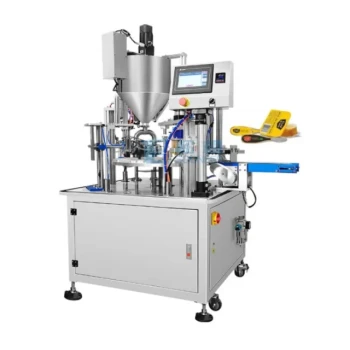
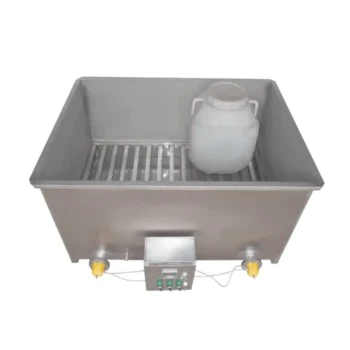
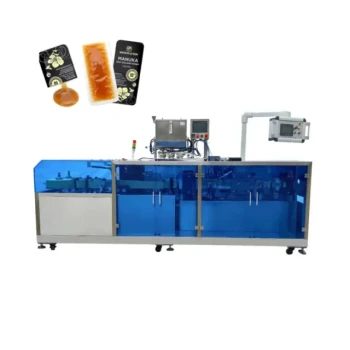
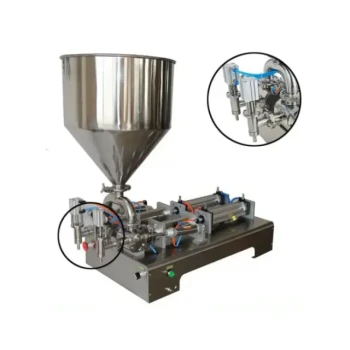
Industrial honey-filling and processing machinery serves as the economic backbone that sustains commercial beekeeping operations. By automating the extraction, filtration, and packaging processes, this equipment transforms raw honey into a high-value commercial product, providing the necessary financial stability for beekeepers to maintain the massive colonies required for agricultural pollination.
Core Takeaway Beekeeping relies on a delicate balance between biology and economics. Industrial machinery stabilizes this industry by maximizing the profit margins of honey products, creating a "dual-revenue" model that effectively subsidizes the maintenance of large-scale pollinator populations needed for global agriculture.
The Economic Engine of Beekeeping
The primary function of this machinery is to increase the commercialization rate and added value of honey. Without efficient processing, honey remains a low-margin byproduct; with it, honey becomes a scalable financial asset.
Transforming Raw Yield into Commodities
Industrial-grade machinery converts bulk honey into standardized commercial products. High-efficiency filling machines utilize automated workflows to ensure that raw harvest is processed quickly, preserving quality while meeting the volume demands of the market.
Accessing Global Markets via Standardization
To enter high-value retail markets, honey must meet strict international trade requirements. Professional machinery ensures high hygiene standards and quality stability, allowing even small-scale outputs to be aggregated and sold into global supply chains.
Precision and Cost Reduction
Automated filling equipment ensures precision metering and high-speed processing. This significantly reduces labor costs and eliminates product waste, maximizing the revenue generated from every hive.
The Critical Link to Pollination
The connection between a filling machine and a crop field is financial. The profitability secured by processing equipment provides the incentive to keep bees on a professional, industrial scale.
Subsidizing Pollination Services
Pollination services alone often do not cover the full cost of managing an apiary. The revenue generated from value-added honey products helps subsidize the management costs of keeping bees, effectively paying for the "hardware" (hives) and "labor" (bees) required for pollination.
Incentivizing Scale
Large-scale agricultural production requires high-intensity pollination that hobbyists cannot provide. The financial stability offered by efficient processing creates a clear incentive for beekeepers to expand their operations, resulting in larger, more reliable bee populations available for farmers.
Funding Colony Health
Maintaining a healthy bee population requires significant investment in scientific management and disease prevention. The commercial value captured through efficient processing provides the resources necessary to invest in colony health, ensuring the pollinators remain viable year after year.
Understanding the Trade-offs
While industrial machinery provides stability, it introduces specific challenges that operators must navigate to ensure long-term sustainability.
High Capital Expenditure (CapEx)
Implementing industrial-grade filling lines requires a substantial upfront investment. For smaller operations, the cost of automation can outweigh the immediate efficiency gains, potentially creating a financial barrier to entry before economies of scale are reached.
Technical Complexity and Maintenance
Transitioning from manual to automated processing shifts the operational focus from pure agriculture to industrial management. Operators must account for the costs of specialized maintenance, sanitation protocols, and technical training to keep the lines running efficiently.
Making the Right Choice for Your Goal
The level of machinery investment should align with your specific position in the supply chain and your long-term objectives.
- If your primary focus is global export and volume: Prioritize high-speed, fully automated filling lines that guarantee hygiene compliance and standardized packaging to meet international retailer requirements.
- If your primary focus is local pollination support: Invest in flexible, semi-automated systems that reduce labor costs without the high overhead of full industrial lines, freeing up capital to focus on hive health and logistics.
Ultimately, investing in processing machinery is not merely about packaging a sweetener; it is about securing the financial foundation necessary to sustain the biological workforce that modern agriculture relies upon.
Summary Table:
| Feature | Impact on Sustainability | Key Benefit |
|---|---|---|
| Automated Filling | Reduces labor costs & product waste | Higher profit margins for hive maintenance |
| Hygiene Standardization | Meets global export & retail requirements | Access to high-value international markets |
| High-Speed Processing | Rapid conversion of raw yield to cash | Improved cash flow for seasonal pollination |
| Precision Metering | Minimizes overfill & resource loss | Maximum ROI on every honey harvest |
Scale Your Apiary Operations with HONESTBEE
At HONESTBEE, we understand that high-quality machinery is the backbone of a profitable beekeeping business. We specialize in supporting commercial apiaries and distributors with a comprehensive range of honey-filling machines, hive-making equipment, and industrial processing tools.
Our solutions are designed to help you reduce labor costs, meet international hygiene standards, and maximize the commercial value of your honey harvest—allowing you to focus on the health of your colonies and the success of your pollination services.
Ready to modernize your production line? Contact us today to explore our wholesale equipment catalog and see how we can help you achieve sustainable, large-scale growth.
References
- Tura Bareke, Admassu Addi. Effect of honeybee pollination on seed and fruit yield of agricultural crops in Ethiopia. DOI: 10.15406/mojes.2019.04.00155
This article is also based on technical information from HonestBee Knowledge Base .
Related Products
- Fully Automatic Honey Filling Packaging Machine for Processing Line
- Precision Durable Efficient HONESTBEE Rotary Honey Filling Machine
- Economy Small Honey Filling Machine Honey Bottle Filler Packaging Machine
- Automatic Honey Filling and Filtering Machine for Beekeeping Bottle Filling
- Commercial Rotary Honey Filling Machine for Production
People Also Ask
- Why are fully automatic honey filling and packaging lines essential? Boost Your Honey's Market Value and Quality
- What is a fully-automatic honey filler? Streamline Your Production with High-Precision Automation
- How do automated honey filling and packaging machines affect profitability? Boost Margins with HONESTBEE Technology
- How do automated honey filling and packaging machines contribute to the market value of honey products? Maximize Your ROI
- How do industrial-grade automated honey filling and packaging machines mitigate the risk of physical contamination?