Natural beekeeping fundamentally alters the operational logic of honey processing. While traditional industrial models prioritize maximum output, natural methods often result in reduced yields as bees prioritize energy for colony defense and wintering. Consequently, the technical requirement for machinery shifts from high-throughput capacity to high flexibility, enabling equipment to adapt to fluctuating volumes of high-value honey without sacrificing efficiency.
Core Insight: Natural beekeeping prioritizes colony resilience over raw output, often leading to lower, inconsistent yields. Therefore, processing machinery must be selected not for maximum speed, but for its adaptability to variable batch sizes to balance ecological sustainability with the economic requirements of high-value organic markets.
The Shift from Throughput to Flexibility
Adapting to Biological Prioritization
In natural beekeeping, the biological needs of the colony take precedence over extraction targets. Bees conserve energy for defense and survival during winter months, leading to a "strategic reduction" in harvestable honey.
The Requirement for Variable Volume Handling
Because yields are not maximized at the expense of the hive, the flow of raw material into the processing facility becomes less predictable. Filling and harvesting machinery must be capable of handling fluctuating volumes efficiently.
Modularity Over Mass Production
Equipment should ideally support modular operation rather than continuous, large-scale flow. This ensures that smaller, high-quality batches can be processed without the operational overhead required for massive industrial runs.
Enhancing Quality and Value Preservation
Reducing Impurities via Mechanization
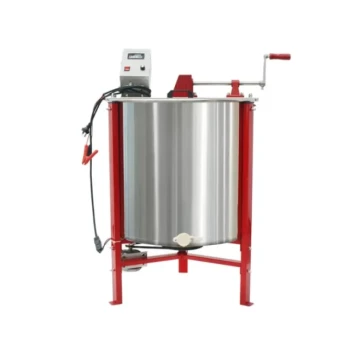
Despite lower volumes, mechanized extraction remains superior to manual methods for natural beekeeping. Industrial-grade machinery significantly reduces impurities introduced during extraction, preserving the high-purity status required for organic certification.
Standardization for Market Competitiveness
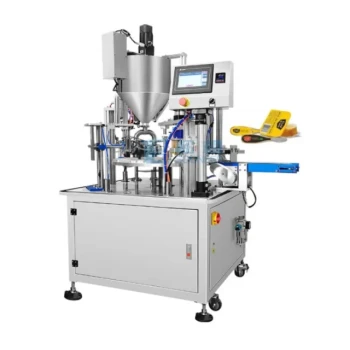
Natural honey often commands a market premium. To justify this price, the final product requires professional polish. Advanced filling machinery ensures standardized packaging and precise filtration, converting raw organic honey into a competitive, high-value commodity.
Supporting Diversified Revenue Streams
Flexible machinery allows operations to pivot beyond liquid honey. Specialized equipment enables the processing of value-added byproducts like beeswax and propolis, providing stable revenue streams that buffer against the risks of irregular honey yields.
Optimizing the Upstream Process
The Role of Precision Hive Manufacturing
Efficiency in natural beekeeping starts before the harvest. Professional beehive-making machinery produces standardized hives that are superior to traditional options.
improving Colonization and Harvesting
Precision-manufactured hives better meet the biological needs of the bees, increasing colonization rates. Furthermore, standardized hive dimensions simplify the mechanical harvesting process, ensuring the machinery interfaces cleanly with the frames.
Understanding the Trade-offs
Volume vs. Value
There is an inherent trade-off between the volume of production and the unit value of the product. Natural methods produce less honey, meaning the machinery amortizes over fewer units. The equipment must justify its cost through precision and waste reduction rather than sheer volume.
Capital Investment vs. Utilization
High-end filtration and filling machines are capital-intensive. In a natural beekeeping context, these machines may face periods of lower utilization compared to industrial farms. Operators must carefully calculate ROI based on the premium price of the end product, not just the total tonnage processed.
Making the Right Choice for Your Goal
When selecting machinery for your operation, align your technical requirements with your biological strategy:
- If your primary focus is Scalable Commodity Production: Prioritize high-throughput, continuous-flow machinery and invest in landscape enrichment to maximize raw output volume.
- If your primary focus is Organic/Natural Certification: Prioritize flexible, batch-oriented machinery that guarantees high purity and can efficiently handle variable, lower-volume yields.
Success in natural beekeeping relies on matching your mechanical capabilities to the biological rhythms of your hives.
Summary Table:
| Technical Aspect | Traditional Industrial Beekeeping | Natural Beekeeping Requirements |
|---|---|---|
| Machinery Focus | High-throughput & continuous flow | High flexibility & batch-oriented |
| Yield Logic | Maximum volume output | Biological resilience & variable volume |
| Key Value Driver | Economies of scale | High purity & organic certification |
| Equipment Need | Standardized mass production | Modular & adaptable machinery |
| Revenue Strategy | Commodity liquid honey sales | High-value honey & byproduct diversity |
Elevate Your Organic Apiary with HONESTBEE
Transitioning to natural beekeeping demands precision tools that respect biological rhythms while maintaining professional standards. HONESTBEE empowers commercial apiaries and distributors with the specialized machinery needed to turn lower-yield, high-value harvests into premium market-ready products.
Our Value to Your Operation:
- Precision Machinery: From hive-making machines that ensure colony health to honey-filling systems designed for flexible batch sizes.
- Full-Spectrum Supply: We provide everything from heavy equipment to essential industry consumables and honey-themed cultural merchandise.
- Market Competitiveness: Our tools reduce impurities and standardize packaging, ensuring your organic honey commands the premium it deserves.
Ready to optimize your production for the organic market? Contact HONESTBEE today to explore our comprehensive wholesale offerings.
References
- Raffaele Dall’Olio. Why You Shouldn’t Miss David Heaf's ‘Treatment-Free Beekeeping’ Book. DOI: 10.1080/0005772x.2021.1879433
This article is also based on technical information from HonestBee Knowledge Base .
Related Products
- Precision Durable Efficient HONESTBEE Rotary Honey Filling Machine
- Automatic Honey Filling and Filtering Machine for Beekeeping Bottle Filling
- Economy Small Honey Filling Machine Honey Bottle Filler Packaging Machine
- Fully Automatic Honey Filling Packaging Machine for Processing Line
- Commercial Rotary Honey Filling Machine for Production
People Also Ask
- What is a key feature of the new generation of the honey filling machine? The Advanced Electronic Control Unit
- How do high-precision honey filling machines ensure quality? Optimize Your Commercial Production with HONESTBEE
- What are the common types of bottling machines used for honey? Choosing the Right Solution for Your Apiary
- How do honey filling machines work? Achieve Precision & Speed for Your Apiary
- How do honey filling and processing machines aid native bee product conservation? Boost Value with HONESTBEE Technology